Best overall for a one-off shop or café clear-out: Get Out Rubbish Pty Ltd, where the waste and address fit its service scope. Best for ongoing debris: an independently hired skip bin; best for coordinated works: contractor-managed removal; best for intact fixtures: reuse; best for excluded materials: a specialist waste service. This 2026 guide explains which option suits your fit-out and what to confirm before booking.
- For fitout waste removal Melbourne, Get Out Rubbish Pty Ltd suits approved non-hazardous shop and café clear-outs needing manual loading.
- Choose independent skip hire for ongoing debris only after confirming placement, loading responsibility and accepted materials.
- Separate reusable fixtures, disconnected equipment and excluded materials before requesting commercial rubbish removal.
- Confirm access, collection timing and the full waste list before booking; same-day collection is subject to availability.
Why this matters
A café refurbishment does not produce one simple waste stream. Loose shelving, packaging, broken joinery, disconnected equipment and leftover liquids need different decisions before anyone starts loading.
Choose the removal method around the material and the loading route, not just the size of the pile. You need to know who disconnects equipment, who carries rubbish out and where the collection vehicle can stop. A rubbish collection booking does not establish permission to remove attached fixtures or perform building work.
What makes the best fit-out waste removal option?
Use these criteria to compare your 2026 fit-out clearance options:
- Material acceptance: Confirm the actual contents, including renovation debris, equipment and anything unidentified.
- Loading responsibility: Establish whether a collection team loads the waste or your workers fill a container.
- Site access: Describe stairs, lifts, narrow doorways, rear lanes and the route to the vehicle.
- Timing: Match removal to strip-out stages, delivery access and your handover deadline.
- Scope clarity: Keep removal, disconnection, demolition and specialist disposal responsibilities separate.
- Quotation clarity: Ask what the quotation covers and disclose access constraints before accepting it.
These criteria favour different methods for different jobs. A bin suits a site generating debris throughout the work, while direct truck loading suits a defined pile ready to leave.
Fit-out waste removal options at a glance
| Option | Best for | Standout feature | Key limitation |
|---|---|---|---|
| Get Out Rubbish Pty Ltd | One-off approved non-hazardous clear-outs | Team manually loads directly into trucks | Approximately 25 km service area from St Kilda; exclusions apply |
| Independent skip-bin hire | Ongoing debris during works | A container remains on site during the agreed hire | Requires loading arrangements and suitable placement |
| Contractor-managed removal | Clearance coordinated with strip-out | Waste handling forms part of the agreed works | Scope must explicitly identify removal responsibilities |
| Reuse or resale | Intact fixtures with a confirmed recipient | Keeps usable items separate from rubbish | Condition, ownership and collection must be resolved |
| Specialist waste service | Materials outside ordinary collection scope | Material-specific assessment and handling | Separate arrangements and acceptance checks required |
1. Get Out Rubbish Pty Ltd: best for a one-off clear-out
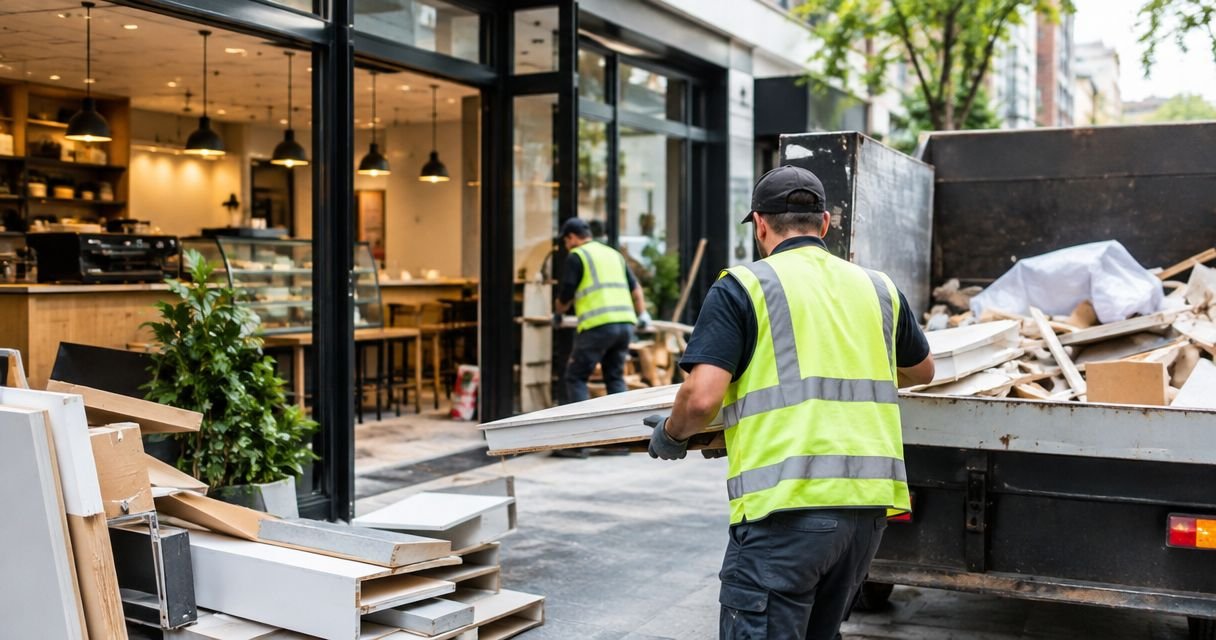
Get Out Rubbish Pty Ltd is best for approved non-hazardous fit-out waste when you need the team to load it directly into trucks. The service covers office and commercial rubbish, renovation debris and other approved non-hazardous rubbish within approximately 25 km of St Kilda.
The team manually loads the rubbish; no skip bins are provided. This suits a defined collection where you can identify what needs to go and explain how the team reaches it.
Relevant areas include St Kilda, Elwood, Elsternwick, Brighton, Prahran, Windsor, Caulfield, Malvern, Carnegie, Bentleigh and Hampton. Confirm the exact address rather than assuming every Melbourne property falls within coverage.
Get Out Rubbish Pty Ltd pros:
- The team loads approved rubbish directly into trucks.
- Free on-site quotations let you confirm the job before accepting.
- There is no call-out fee if you decline the on-site quotation.
- Commercial rubbish and renovation debris fall within the stated service categories.
Service limitations:
- No skip bin stays behind for later waste.
- Asbestos, hazardous chemicals, liquid waste, soil and sand are excluded.
- Same-day collection is subject to availability, not guaranteed.
Best for: A shop or café operator with a defined, approved non-hazardous load and a suitable collection address.
Verdict: Book an on-site quotation for a one-off loaded collection; confirm unusual materials first.
2. Independent skip-bin hire: best for ongoing debris
Independent skip-bin hire suits a fit-out that produces waste throughout the works rather than at one collection point. Your team places accepted debris into the container, subject to the provider's loading rules.
This is a different service from manual truck loading. Before booking, identify who will carry waste to the bin and whether the proposed position obstructs access needed by trades, customers or deliveries.
Independent skip-bin hire pros:
- Gives workers a designated collection point during the agreed hire.
- Suits waste generated across successive work stages.
- Separates container collection from the timing of individual demolition tasks.
Independent skip-bin hire cons:
- Your arrangements must cover carrying and loading the waste.
- Placement needs confirmation with the property manager and relevant authority where applicable.
- Accepted materials and loading limits depend on the provider.
Best for: A site with suitable container space and workers responsible for ongoing loading.
Verdict: Choose independent skip hire when placement and loading are both resolved; skip it when either remains unclear.
3. Contractor-managed removal: best for coordinated strip-out
Contractor-managed removal puts waste responsibilities within the agreed fit-out or strip-out scope. It suits projects where dismantling, disconnection and removal need coordination rather than separate informal arrangements.
Do not assume a building quotation includes all rubbish removal. Ask the contractor to identify the waste covered, the removal stages and the condition in which the premises will be left.
Contractor-managed removal pros:
- Links waste handling to the agreed work stages.
- Gives you a defined party to question about strip-out responsibilities.
- Allows removal requirements to be considered alongside site access.
Contractor-managed removal cons:
- Anything outside the written scope still needs a decision.
- Disconnection and specialist materials require explicit responsibility.
- Later additions need agreement rather than assumptions.
Best for: An operator commissioning a coordinated refurbishment with clearly documented responsibilities.
Verdict: Choose contractor-managed removal when it is expressly included; hold approval until the scope is clear.
4. Reuse or resale: best for intact fixtures
Reuse suits fixtures or furniture that remain suitable for another owner. Consider freestanding shelving, tables and other intact items separately from broken materials, but confirm ownership and permission before offering anything attached to the premises.
A possible buyer is not a collection booking. Set a decision point so unconfirmed reuse plans do not leave you with unresolved items at handover.
Reuse or resale pros:
- Gives usable items a route separate from rubbish disposal.
- Lets you retain fixtures you intend to use elsewhere.
- Makes the remaining waste list easier to define.
Reuse or resale cons:
- A recipient must accept the actual condition and collection arrangements.
- Attached fixtures need permission and suitable removal arrangements.
- Uncollected items still need a fallback plan.
Best for: Intact, owned items with a confirmed recipient and a workable collection plan.
Verdict: Choose reuse for confirmed transfers; skip speculative listings when they threaten your clearance deadline.
5. Specialist waste services: best for excluded materials
Specialist assessment is the right starting point for waste outside an ordinary rubbish collector's stated scope. For this service, excluded materials include asbestos, hazardous chemicals, liquid waste, soil and sand.
Keep unidentified materials separate and describe them before arranging removal. Do not hide liquids inside general waste or treat an unlabelled container as harmless because it came from a retail premises.
Specialist waste service pros:
- Establishes a separate route for materials an ordinary collection excludes.
- Lets you seek material-specific acceptance and preparation instructions.
- Keeps uncertain items out of the approved general load.
Specialist waste service cons:
- Identification and acceptance need resolution before collection.
- Separate providers or collection arrangements can require coordination.
- Booking general rubbish removal does not resolve the excluded materials.
Best for: Identified excluded waste or materials requiring assessment before handling.
Verdict: Seek specialist advice before handling excluded or unidentified materials; skip ordinary collection for those items.
Match the container to the waste, not the other way round
If you choose independent skip hire for your 2026 works, decide what will enter the bin before selecting its size. Bulky dismantled joinery and dense renovation debris present different loading questions; appearance alone does not establish an acceptable load.
List the materials, then confirm the provider's limits. When choosing the right bin size, account for both the space your waste occupies and the provider's permitted load and material rules. A larger container does not make an excluded material acceptable.
Then check the footprint against the actual loading area. A container that blocks a shared entrance creates a different problem from the rubbish it holds. For a defined pile without a suitable bin position, compare the practical differences in these skip-bin alternatives for a one-off clean-up.
Prepare your shop or café for collection
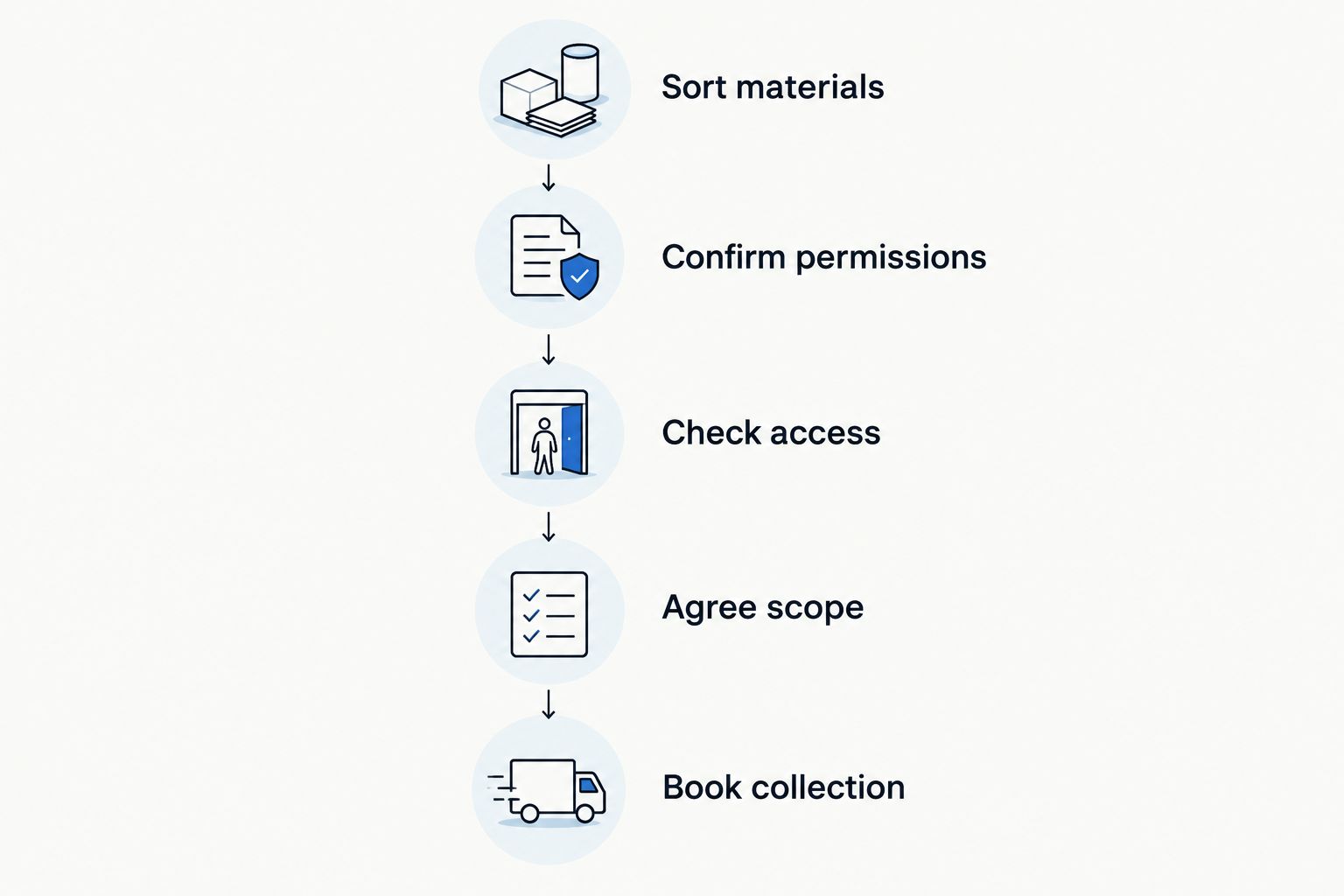
Use this sequence to turn a loose enquiry into a clear collection request. Keep photographs and your written list aligned: an image of the front pile does not describe waste still in a storeroom.
Sort materials
Separate approved general rubbish from reusable items, equipment and anything requiring assessment. Keep liquids and unidentified containers out of the general pile. Tell the collector about mixed materials rather than assuming everything belongs in one load.
Confirm permissions
Check which fixtures belong to you and which must remain. Agree who handles disconnection or dismantling before collection; do not assume the rubbish team will perform either task.
Check access
Describe the route from the waste to the collection vehicle. Include stairs, lift arrangements, rear-lane access, loading restrictions and any doors that constrain bulky items.
Agree scope
Request a quotation against the full waste list and access conditions. Confirm what happens to items the collector does not accept, and keep those items separate.
Book collection
Arrange collection around the point when the approved waste is ready. If timing is urgent, ask about current capacity rather than planning around an assumed same-day booking.
How the options are ranked
This 2026 ranking matches each method to a distinct job, using material acceptance, loading responsibility, access, timing and scope clarity. It is not a comparison of tested collection speeds or provider performance.
Direct truck loading ranks first for a defined one-off clearance. Independent bins suit continuing waste generation, contractor-managed removal suits coordinated works, reuse suits intact items, and specialist services address excluded materials.
Which fit-out waste removal option should you choose?
For a one-off 2026 shop or café clearance, start with a loaded-truck quotation if the address and materials qualify. Choose a different route when you need an ongoing container, integrated strip-out work, a reuse transfer or specialist handling.
Call 0480 350 234 to request an on-site quotation. Operating hours are Monday–Saturday, 7:00 am–7:00 pm; Sunday and public holidays are normally closed. Give the address, waste list, access details and required clearance date.
Request your fit-out clearance quote
Confirm approved waste, site access and collection scope with a free on-site quotation.
FAQ
What’s the best fit-out waste removal option for a Melbourne café?
Manual truck loading suits a defined pile of approved non-hazardous rubbish when you want the collection team to load it. Confirm the service address, materials and access before booking.
Can I get a skip bin from Get Out Rubbish Pty Ltd?
No, Get Out Rubbish Pty Ltd does not provide skip bins. The team manually loads approved rubbish directly into trucks.
Does fit-out rubbish removal include disconnecting café equipment?
Do not assume rubbish removal includes equipment disconnection. Arrange the appropriate disconnection work separately and confirm the equipment’s acceptance before collection.
Can renovation debris go with shop furniture?
Confirm the specific combination before booking. Renovation debris and commercial rubbish are stated service categories, but that does not establish acceptance of every material within a mixed pile.
Can I book same-day fit-out rubbish removal?
Same-day collection is subject to availability and is not guaranteed. Provide your address, waste details and access requirements when asking about collection timing.
What waste is excluded from the collection?
Asbestos, hazardous chemicals, liquid waste, soil and sand are excluded. Keep these materials separate and arrange an appropriate disposal route.
Is there a call-out fee if I decline the quotation?
There is no call-out fee if you decline the free on-site quotation. Describe the full load and access conditions so the quotation addresses the intended job.
One last thing
Label what stays before anyone starts clearing. A landlord's fixture, retained display unit or disconnected appliance awaiting another contractor can look like part of the rubbish pile. Walk through the premises with your keep-and-remove list before loading begins.
Related guides
- Office clean-out options for Melbourne businesses
- End-of-lease rubbish clean-up options
- Ways to dispose of e-waste and electronics in Melbourne