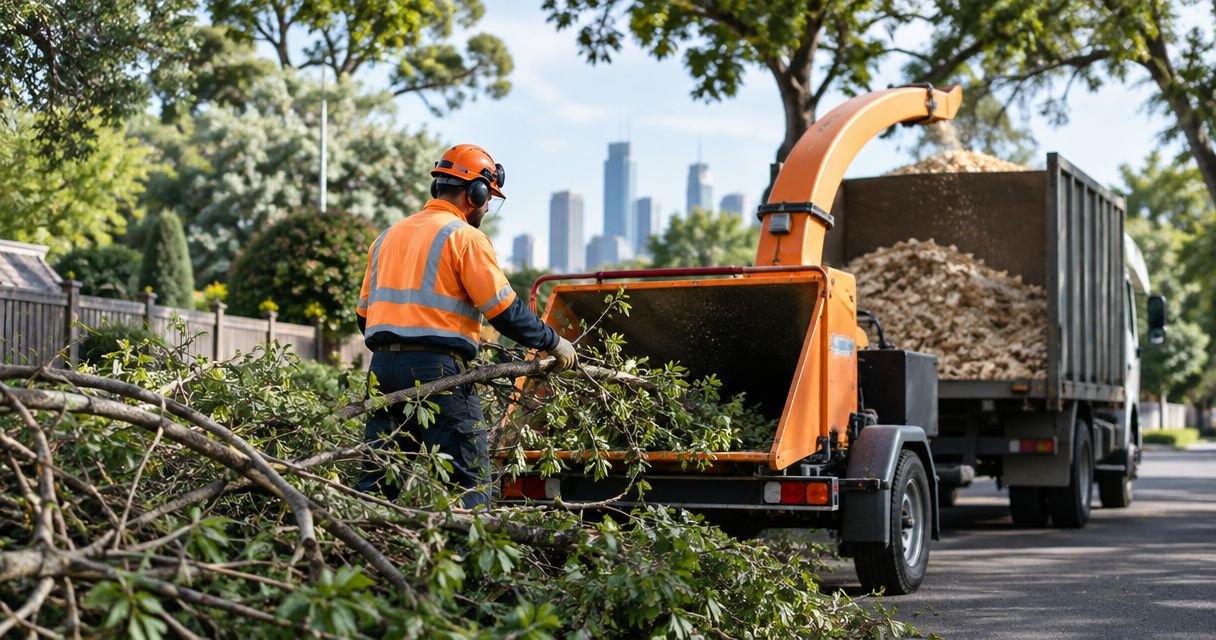

Real estate agents’ rubbish removal is the authorised clearance of unwanted items from managed or listed properties to prepare them for handover, inspections or sale. This 2026 guide explains how to separate disposal decisions from collection work, organise access and keep a clear record of what leaves the property.
- Rubbish removal for real estate agents starts with written disposal authority, not a collection booking.
- Get Out Rubbish Pty Ltd suits agents needing team-loaded rubbish removal near St Kilda, without skip bins.
- Record the items, access restrictions and exclusions before requesting an on-site quotation.
- Same-day collection is subject to availability; confirm the booking before scheduling dependent work.
Why rubbish removal matters for real estate agents
A property clearance involves more than an unwanted sofa. You need to know who can authorise disposal, which belongings must stay and how the collection fits around cleaners, trades and prospective occupants. A fast collection does not resolve unclear instructions.
For your 2026 property handover checklist, treat clearance as a separate job with its own approval and completion record. That keeps a cleaning instruction from becoming an open-ended direction to remove everything.
Get Out Rubbish Pty Ltd is best for agents needing team-loaded rubbish removal within approximately 25 km of St Kilda. The team loads approved rubbish directly into trucks; no skip bins are provided. You can request a free on-site quotation through Get Out Rubbish Pty Ltd, with no call-out fee if you decline it.
The service area includes Elsternwick, Brighton, Elwood, St Kilda, Caulfield, Prahran, Windsor, Malvern, Carnegie, Bentleigh, Hampton and surrounding suburbs. Confirm the property address before arranging access rather than assuming every Melbourne listing falls within coverage.
How to organise an authorised property clearance
Use the same approval sequence whether you are clearing a rental, preparing a vendor’s property or coordinating a deceased estate. The collection method comes after the disposal decision, not before it.
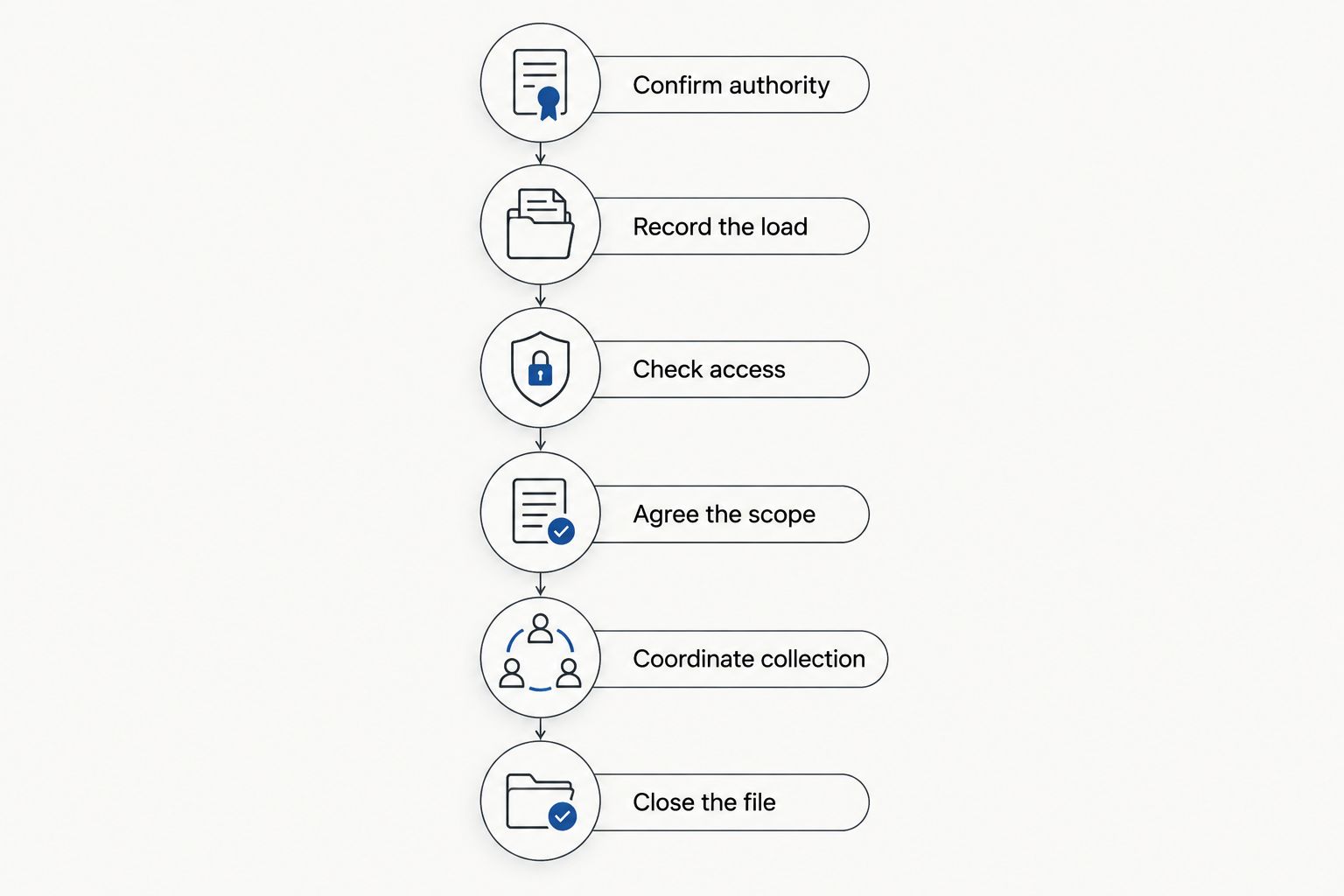
Confirm authority
Start with the management agreement, owner instructions and any other relevant authority already held on file. Identify who owns the items and who can approve their disposal. An empty property is not, by itself, permission to clear its contents.
For belongings left by a renter, follow the current Consumer Affairs Victoria guidance on goods left behind and your agency’s legal process. Do not treat an ordinary collection booking as a substitute for that process. For a deceased estate, obtain instructions from the person authorised to act for the estate.
Keep the approval specific enough for someone else to understand without a phone call. Separate authority to dispose of belongings from approval to pay for collection.
- Name the person authorising disposal and record their instructions.
- Identify items approved for removal and items expressly retained.
- Resolve disputed ownership before including an item in the load.
- Confirm who approves the quotation and receives the invoice.
- Store the approval with the property’s clearance instructions.
Record the load
Walk through the property before asking anyone to collect rubbish. Use a room-by-room list and photographs to distinguish loose household rubbish, furniture, mattresses, garden waste and renovation debris. Include garages, sheds and outdoor areas if they form part of the authorised scope.
Describe the contents rather than relying on phrases such as ‘a small clean-up’. A pile beside a wardrobe does not tell a collector whether the wardrobe stays. Keep documents, keys, valuables and personal effects outside the disposal scope until their status is resolved.
Your 2026 inspection photos should show both the items and their location. Images help explain the job, but do not replace an on-site assessment or disposal authority.
- Photograph each room or area included in the clearance.
- List bulky items separately from bags and loose rubbish.
- Mark retained belongings clearly and keep them apart where practical.
- Identify uncertain materials without opening or handling them.
- Update the list if more items are added before collection.
Check access
First, check the route yourself or ask the person attending the property to document it. Note stairs, lift access, narrow doorways, locked gates and the distance between the items and a suitable loading position. Do not promise access that depends on someone else’s approval.
For apartments, confirm building requirements with the relevant manager or owners corporation contact. A unit clearance can involve shared corridors, lift bookings and loading restrictions; these are separate from the owner’s permission to dispose of furniture. The guide to rubbish removal options for strata properties in Melbourne covers that setting in more detail.
If your agency cannot supply lifting labour, team-loaded collection is an alternative to organising staff or owners to move everything. Get Out Rubbish Pty Ltd manually loads approved rubbish directly into trucks, but the access arrangements still need to be agreed.
- Confirm who supplies keys and attends the property.
- Describe stairs, lifts, doorways and locked access points.
- Check building rules before arranging a loading position.
- Keep emergency exits and shared access routes clear.
- Tell the collector about access changes before attendance.
Agree the scope
Turn the inspection notes into a clear collection brief. State what should leave, what must remain and what needs separate assessment. Ask the collector to confirm the accepted materials rather than assuming every item in a property counts as ordinary rubbish.
Get Out Rubbish Pty Ltd handles household rubbish, furniture, mattresses, green waste, renovation debris, office rubbish and other approved non-hazardous waste. Relevant jobs include deceased estate clearance, garage and shed clean-outs, and end-of-lease rubbish removal. Asbestos, hazardous chemicals, liquid waste, soil and sand are excluded.
The free on-site quotation is the point to confirm the proposed work and obtain approval before loading. An approved scope is more useful than a vague instruction to clear the property. If the contents change, ask for the change to be assessed rather than treating it as part of the original instruction.
- Supply the item list, photographs and access notes together.
- State excluded rooms, cupboards and retained belongings.
- Flag renovation materials and anything of uncertain composition.
- Confirm the person authorised to accept the quotation.
- Record any agreed change before additional items are removed.
Coordinate collection
Build the clearance around a confirmed appointment, not a hoped-for collection. Schedule dependent cleaning, photography or handover work only after the collection arrangements are agreed. Tell everyone involved which tasks depend on the rubbish leaving first.
Operating hours are Monday–Saturday, 7:00 am–7:00 pm; Sunday and public holidays are normally closed. Same-day collection is subject to availability, never guaranteed. For a time-sensitive job in 2026, call 0480 350 234 with the address, item list and required completion time.
Keep a named agency contact reachable during attendance. If the team finds an unlisted item or a material outside the agreed scope, the person on site needs a clear way to obtain instructions without making disposal decisions themselves.
- Confirm the appointment and access arrangements before notifying trades.
- Nominate a contact who can answer scope questions.
- Keep retained belongings separate from the collection area.
- Tell occupants and building contacts what access is required.
- Agree how unresolved or excluded items will be left safely.
Request an on-site rubbish quote
Free on-site quotation, with no call-out fee if you decline. The team loads approved rubbish into trucks.
Close the file
Check completion against the approved list, not against a general impression that the property looks better. Take photographs from the same positions used for the initial record and note anything left behind. Avoid describing the entire property as cleared when a garage, cupboard or outdoor pile remains outside scope.
Keep the quotation, approval, invoice and completion notes together. These records explain what work was authorised; they do not replace a condition report or decide who is legally responsible for the expense.
For your 2026 clearance records, use precise descriptions such as ‘listed lounge furniture removed’ rather than ‘all goods disposed of’. Specific wording prevents the file from claiming more than the work actually covered.
- Match the completed work to the authorised item list.
- Photograph cleared areas and any remaining items.
- Record exclusions, access problems and scope changes.
- File the accepted quotation and invoice with the approval.
- Notify the next trade only when the relevant area is ready.
Compare clearance options for managed properties
Choose the method after checking authority, materials, access and timing. The right option is the one that fits the actual job, including who will do the lifting and what happens to items the collector does not accept.
For a 2026 booking, verify current council rules and each provider’s acceptance conditions directly. Do not assume a previous property’s collection arrangements apply to the next address.
| Option | Best for | Practical advantage | Key limitation |
|---|---|---|---|
| Team-loaded rubbish collection | Agents who need approved items loaded by the collection team | Avoids assigning loading work to agency staff or owners | Requires confirmed access, an agreed scope and acceptance of the materials |
| Council hard rubbish collection | Properties whose items and timing meet the council’s current rules | Provides a council collection route for eligible items | Collection arrangements, placement rules and accepted items must be checked |
| Skip bin hire | Jobs with someone responsible for loading waste | Provides a container for waste gathered during the job | Requires loading, suitable placement and checks on permissions and accepted materials |
| Donation or reuse | Usable belongings with disposal authority and a confirmed recipient | Keeps accepted items in use | The recipient must agree to take them; it is not a plan for every remaining item |
| Self-haul to an accepting facility | Small, manageable loads with suitable transport and labour | Lets the responsible person organise transport directly | Requires safe handling, a suitable vehicle and confirmation that the facility accepts the load |
Team-loaded collection suits an agent who needs the loading handled, not a container left for someone else to fill. Get Out Rubbish Pty Ltd does not provide skip bins. Its service still requires agreement on access and approved waste; excluded materials need a different disposal arrangement.
Common mistakes real estate agents make
Treating abandoned-looking belongings as rubbish
A broken chair or a bag left in a garage still needs a disposal decision. Separate the legal and ownership question from the physical collection, and keep disputed belongings out of the clearance until instructions are resolved.
Booking cleaners before confirming collection
A cleaning appointment does not make a rubbish booking certain. Confirm clearance arrangements first, then tell the cleaner which areas will be accessible and what, if anything, remains outside the removal scope.
Assuming the kerb is an approved holding area
Do not move belongings onto a nature strip simply to empty the property. Check the relevant council and building requirements before placing items outside, and keep public paths and shared access clear.
Combining all property waste into one instruction
Furniture, garden clippings, unidentified containers and renovation debris need different checks. List each waste type and flag uncertainty before collection rather than describing the whole load as household rubbish.
Promising a collection time before it is confirmed
An owner’s deadline is a requirement to discuss, not a confirmed appointment. Explain the deadline when enquiring, obtain confirmation and avoid promising same-day removal to an owner or renter before the booking is agreed.
FAQ
What’s the best rubbish removal option for real estate agents?
Team-loaded collection suits agents who need approved rubbish removed without organising the lifting themselves. Choose only after confirming disposal authority, accepted materials, property access and the required timing.
Can a property manager arrange removal of belongings left by a renter?
A property manager should arrange removal only after confirming the applicable process and disposal authority. Follow current Consumer Affairs Victoria guidance on goods left behind and the agency’s legal process before treating belongings as rubbish.
Do I need to carry furniture outside before collection?
Get Out Rubbish Pty Ltd manually loads approved items directly into its trucks. Explain where the furniture is located and disclose stairs, lift requirements and restricted access before arranging attendance.
Can I book same-day rubbish removal for an inspection?
Same-day collection is subject to availability and is not guaranteed. Call 0480 350 234 with the property address, access details, waste list and inspection deadline, then wait for booking confirmation.
Which Melbourne suburbs are within the service area?
Service coverage is approximately 25 km from St Kilda, Melbourne. Priority suburbs include Elsternwick, Brighton, Elwood, St Kilda, Caulfield, Prahran, Windsor, Malvern, Carnegie, Bentleigh and Hampton; confirm the specific address when enquiring.
What rubbish cannot go in the collection?
Asbestos, hazardous chemicals, liquid waste, soil and sand are excluded. Flag unidentified materials before collection and obtain an appropriate separate disposal arrangement rather than mixing them with approved rubbish.
Is there a charge if the on-site quotation is declined?
There is no call-out fee if the free on-site quotation is declined. Have the authorised decision-maker ready to review the scope before any loading is approved.
One last thing
Make the retained-items list as clear as the removal list. A photograph of what must stay can be more useful than another general instruction to clear the room, especially when keys pass between an agent, an owner and several trades. For your next 2026 clearance, send both lists together before anyone starts loading.
Related guides
- End-of-lease rubbish clean-ups in Melbourne
- Deceased estate clean-out options in Melbourne
- Same-day rubbish removal options in Melbourne