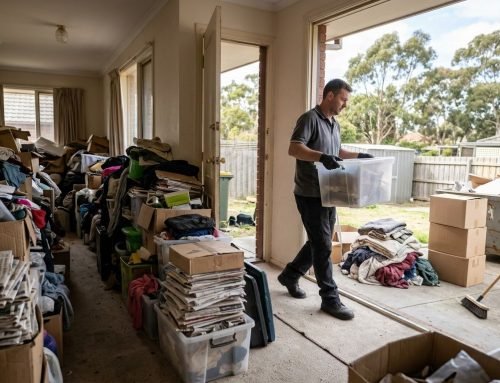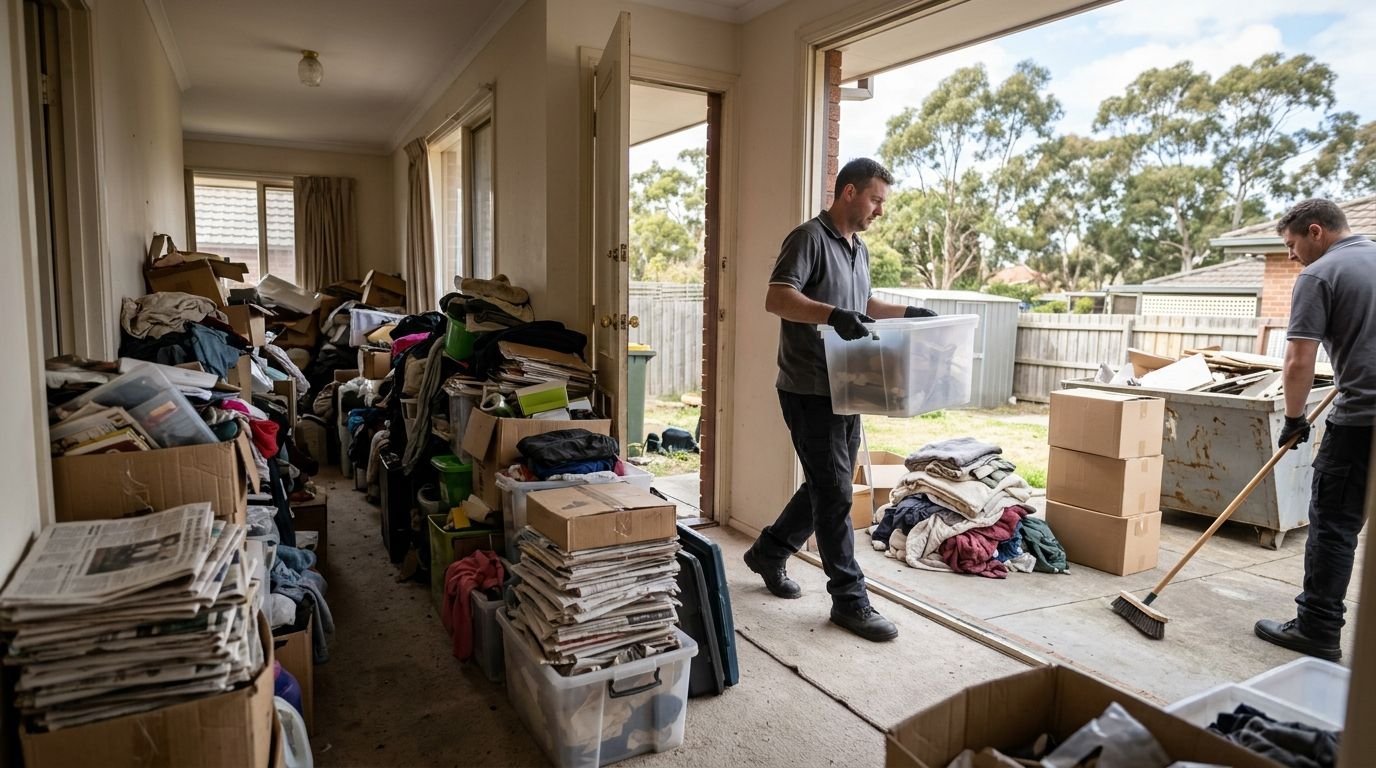

Best for removing unwanted household waste: Getoutrubbish. Best for protecting personal belongings: family-led sorting. Best for saleable contents: second-hand selling. For a deceased estate clean out Melbourne families are organising in 2026, choose the route by what needs keeping, transferring or removing—not simply by how quickly a room can be emptied.
- Getoutrubbish is best for the rubbish-removal stage of a Melbourne deceased estate clean-out.
- Family-led sorting protects documents and sentimental belongings before household rubbish removal begins.
- Second-hand selling suits saleable contents; council hard rubbish suits eligible items under local collection rules.
- Skip hire suits staged loading when you can manage the lifting, placement and accepted waste requirements.
Why this matters
An estate clean-out involves separate decisions: who can authorise removal, which belongings need preserving, and how unwanted contents leave the property. Booking transport does not settle the first two. Decide what can leave before you arrange collection.
The best option in 2026 is not necessarily a single service. You can sort personal possessions with family, sell selected furniture and arrange rubbish removal for the remainder. That division keeps disposal decisions separate from questions about ownership or sentimental value.
Getoutrubbish provides rubbish, junk and hard waste removal to residential and business customers across Melbourne metro. Its role in this comparison is removing unwanted material, not deciding which estate assets should be sold or distributed.
What makes the best deceased estate clean-out option?
Choose your route against these criteria before comparing collection arrangements:
- Authority: The person instructing removal must have authority to make that decision for the estate.
- Contents control: Documents, valuables and keepsakes need separating from items approved for removal.
- Physical workload: Establish who will sort, carry, load and move bulky belongings.
- Waste acceptance: Confirm the actual materials involved rather than describing everything as household rubbish.
- Access and placement: Explain stairs, narrow passages, parking restrictions and any proposed bin location.
- Completion scope: Distinguish rubbish removal from selling contents, donation delivery and final property cleaning.
A route fails when its responsibilities do not match your needs. A skip does not sort possessions, a buyer does not take every unwanted item, and a rubbish-removal booking does not resolve a disagreement between beneficiaries.
Melbourne estate clean-out options at a glance
| Option | Best for | Standout feature | Key limitation |
|---|---|---|---|
| Getoutrubbish | Unwanted household rubbish and hard waste | Melbourne metro rubbish-removal service | Removal is distinct from estate decisions and asset valuation |
| Family-led sorting and donation | Documents, keepsakes and reusable belongings | Direct control over what stays and leaves | Requires time, agreement and recipient acceptance |
| Second-hand selling | Selected saleable contents | Transfers individual items to buyers | Enquiries and collections can interrupt clearance |
| Council hard rubbish | Eligible items under local collection rules | A defined municipal disposal route | Rules, presentation requirements and collection arrangements vary |
| Skip hire | Staged loading by people able to do the work | A container for accumulating accepted waste | Requires suitable placement and your own loading arrangements |
1. Getoutrubbish: best for unwanted household waste
Getoutrubbish is a rubbish, junk and hard waste removal service covering Melbourne metro. For an estate clean-out, it belongs at the point where you have identified unwanted material and need to arrange its removal.
Getoutrubbish is best for the rubbish-removal stage of a Melbourne deceased estate clean-out. Keep decisions about valuables, family distributions and documents outside that removal brief.
Getoutrubbish pros:
- Its stated services include household rubbish, junk and hard waste removal.
- Its service area covers Melbourne metro residential and business customers.
- Its stated work also includes garden and commercial clean-ups, relevant when those areas form part of the clearance.
Getoutrubbish cons:
- Rubbish removal does not replace decisions about ownership or estate administration.
- A collection brief must identify any separate needs, such as valuation, donation handling or final cleaning.
Before booking, describe the contents room by room. Include bulky furniture, outdoor waste, stairs and parking constraints, then confirm the agreed work and exclusions in writing. Do not treat a general clean-out request as confirmation that every material or task is included.
Best for: Executors and families who have approved unwanted contents for removal.
Verdict: Buy this service for the removal stage, after sorting and authority are settled.
2. Family-led sorting: best for personal belongings
Family-led sorting puts the decisions about possessions in the hands of the people authorised to make them. Donation can follow for suitable belongings once the intended recipient confirms acceptance.
This route works as a preparation stage even when you later hire help. It creates a clear boundary between belongings that matter to the estate and material that can leave.
Family-led sorting pros:
- Keeps documents and sentimental items visible during decisions.
- Lets you identify belongings intended for named recipients.
- Separates reusable items from rubbish before collection arrangements begin.
Family-led sorting cons:
- Requires people to contribute time and reach decisions.
- Donation does not guarantee a recipient will accept or collect an item.
- Sorting alone does not solve transport or heavy lifting.
Use 3 sorting groups: keep, transfer and remove. Put uncertain items in the keep group until someone with authority decides; do not place them beside the removal pile. For donations, describe condition honestly and confirm delivery or collection arrangements before moving anything out.
Best for: Estates where personal papers, photographs and family possessions need careful attention.
Verdict: Hold removal of uncertain belongings until the authorised decision-maker approves their destination.
3. Second-hand selling: best for selected saleable contents
Second-hand selling treats selected possessions as items to transfer to buyers rather than waste to remove. You can use direct listings or ask an appropriate second-hand dealer about items within their area of interest.
Selling is a separate project from emptying the property. Choose it for specific contents, not as an assumption that a buyer will take everything left behind.
Second-hand selling pros:
- Keeps usable belongings in circulation.
- Allows individual descriptions and condition photographs.
- Separates potential estate assets from the disposal stream.
Second-hand selling cons:
- Enquiries, inspections and collections require coordination.
- An advertised item is not a completed transfer.
- Unsold belongings still need a fallback plan.
Set a decision date for each listing. Record who can approve a sale, what is included and how the buyer will collect it. For items that appear collectable or otherwise require specialist assessment, obtain appropriate advice before treating them as ordinary second-hand furniture.
Do not let an unresolved listing block access to rooms already approved for clearance. Keep the item physically separate and identify its next destination if the sale does not proceed.
Best for: Selected contents you can describe, manage and release separately.
Verdict: Hold saleable items apart from rubbish, with a clear deadline and fallback route.
4. Council hard rubbish: best for eligible collection items
Council hard rubbish is an option for items accepted under the property's local collection arrangements. Check the relevant council's current 2026 instructions before putting anything outside.
Eligibility, booking, presentation and accepted materials are separate checks. A neighbouring council's instructions are not a substitute for the rules applying to the estate's address.
Council hard rubbish pros:
- Gives eligible household items a defined collection route.
- Provides published instructions you can check before preparation.
- Can handle an approved portion of the clearance separately from other waste.
Council hard rubbish cons:
- Does not replace sorting or carrying items to the required collection point.
- Collection arrangements and material restrictions limit what you can present.
- The collection schedule must fit the property's handover requirements.
Check mattresses, electrical items, garden material and renovation debris individually rather than assuming one hard rubbish booking covers every category. Keep rejected materials out of the collection pile and arrange an appropriate alternative.
If you cannot safely move a bulky item to the required location, council eligibility alone does not solve the job.
Best for: Approved items that fit the local council's rules and your clearance schedule.
Verdict: Skip this route when the collection requirements do not match the contents or deadline.
5. Skip hire: best for staged loading
Skip hire provides a container into which you load accepted waste. It suits a clearance organised around repeated sorting and loading sessions, provided you have suitable placement and people able to do the work.
The container is only one part of the plan. You still need arrangements for handling belongings, keeping access clear and separating anything the provider does not accept.
Skip hire pros:
- Gives approved waste a defined place during staged work.
- Lets you load as sorting progresses within the hire arrangement.
- Separates waste storage from rooms being retained or prepared for handover.
Skip hire cons:
- Requires your own loading arrangements and safe handling.
- Placement, access and any permit requirements need checking.
- Prohibited materials and loading restrictions still apply.
Confirm where the skip can stand before ordering. If the proposed location is on a road or other public land, check the applicable permission requirements rather than assuming placement is allowed.
Ask the provider about the actual waste types, loading rules and removal arrangements. Keep personal papers and belongings under review away from the skip; once mixed into waste, they are harder to retrieve safely.
Best for: Organised teams managing a staged clearance with suitable space and loading capacity.
Verdict: Buy skip hire only when placement, accepted materials and loading responsibilities are confirmed.
How these options are ranked
This 2026 ranking separates removal, decision-making, resale, municipal collection and self-loading. The default recommendation addresses unwanted waste; each alternative owns a different task rather than competing to be an all-purpose estate service.
The criteria are authority, contents control, workload, waste acceptance, access and completion scope. Choose the route that covers your actual task, then arrange the tasks it leaves out.
Prepare the property before collection
A clear brief prevents the removal pile from becoming a second sorting exercise. Use this sequence regardless of which disposal route you choose.
- Confirm authority. Identify who can approve the removal and who will answer questions on collection day.
- Protect belongings. Separate documents, keys, valuables, keepsakes and items awaiting a decision.
- Record contents. Photograph the approved removal areas and describe bulky or unusual material.
- Check access. Explain stairs, doorways, parking and any limits on vehicle access.
- Confirm scope. Agree what leaves, what stays and which tasks require another arrangement.
For a practical photo brief, take 4 photo views: the room overview, the removal pile, the access route and any unusual material. These views help explain the job; they do not replace an agreed scope.
Make 2 final checks before work begins: inspect the keep area, then inspect the removal area. Ask the authorised decision-maker to resolve anything placed in the wrong group.
For a 2026 handover, record separate completion points for contents removal and final cleaning. Empty rooms are not the same deliverable as cleaned rooms.
Plan your rubbish removal
Review Melbourne metro rubbish-removal services before arranging the estate’s unwanted waste collection.
Which estate clean-out option should you choose?
Default to family sorting followed by an appropriate removal route. Use selling or donation for selected belongings, council collection for eligible items, and skip hire when you can manage placement and loading yourself.
Do not book every route automatically. Choose the fewest arrangements that cover the approved contents, the physical work and the property's completion requirements.
FAQ
What’s the best deceased estate clean-out option in Melbourne?
The best option depends on the task: rubbish removal for approved unwanted contents, family-led sorting for personal belongings, and selling for selected saleable items. Separate those decisions before arranging collection.
Can one rubbish-removal booking handle the entire estate?
Do not assume a rubbish-removal booking includes the entire estate process. Confirm sorting, removal, donation handling, specialist materials and final cleaning as separate parts of the scope.
Should I sort the house before booking removal?
Yes, separate belongings that must stay from contents approved for removal. Keep uncertain items out of the removal area until the authorised decision-maker resolves them.
Is council hard rubbish suitable for an estate clean-out?
Council hard rubbish suits items accepted under the property’s local collection rules. Check current instructions, collection arrangements and presentation requirements before placing items outside.
Is skip hire better than rubbish removal?
Skip hire suits staged loading when you can manage the work and container placement. Rubbish removal is the alternative to assess when you need a collection service; confirm the handling included.
What should I do with documents and valuables?
Keep documents and valuables separate from waste and refer decisions to the person authorised to act for the estate. Do not discard uncertain papers or belongings merely to finish a room.
What should an estate clean-out brief include?
Include the approved contents, waste types, access conditions, items staying and the person authorising decisions. Confirm exclusions and distinguish contents removal from final cleaning.
One last thing
An empty drawer is not proof that it has been checked. Before the final removal, inspect drawers, cupboards and furniture compartments for belongings that have not yet been reviewed. Make that check part of your 2026 clearance plan, not a task left until the vehicle is loaded.
Related guides
- Ways to get rid of old furniture in Melbourne
- Green waste removal options for Melbourne gardens
- Mattress disposal options in Melbourne
- Ways to dispose of hard rubbish in Melbourne