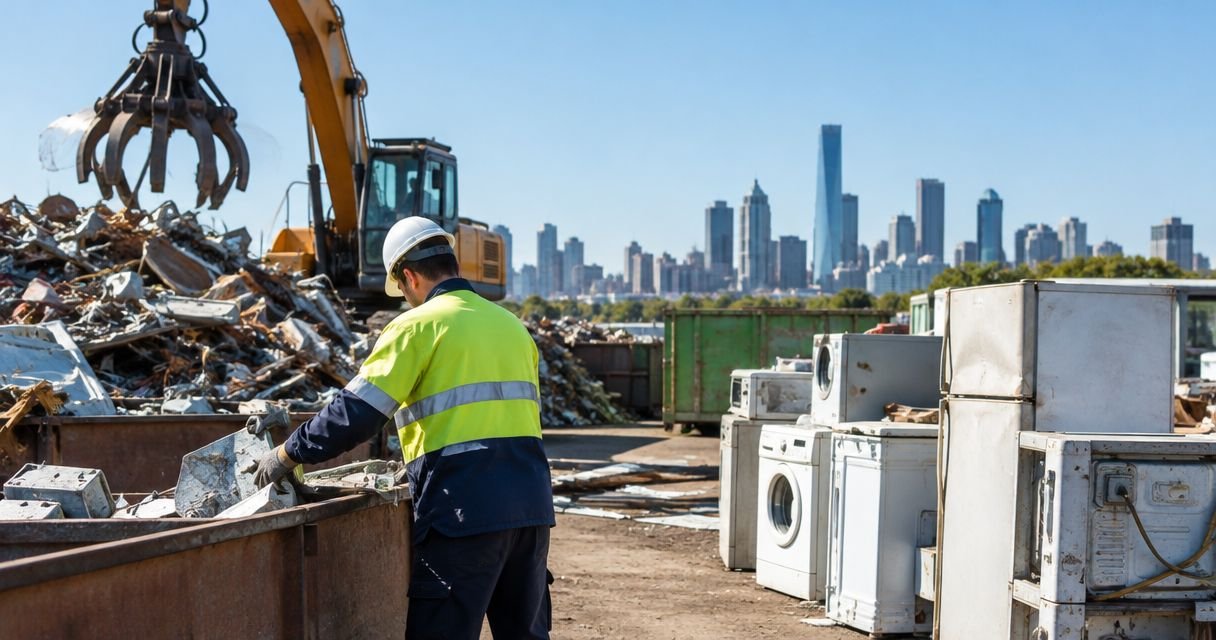
Best for an approved mixed household load without heavy lifting: Get Out Rubbish Pty Ltd. Best for separated scrap metal: a recycler that confirms acceptance; best for a planned collection: your council’s eligible hard rubbish service. This 2026 guide compares Melbourne disposal routes by what you have, who loads it and what needs checking before collection.
- Get Out Rubbish Pty Ltd is best for approved mixed-load rubbish removal when you need the team to do the loading.
- For scrap metal disposal Melbourne enquiries, separate loose metal from appliances and confirm acceptance before arranging transport.
- Council hard rubbish and retailer take-back suit different situations; check the specific item and collection conditions.
- Keep refrigerant-containing appliances intact and use a disposal route that explicitly accepts them.
Why this matters
A pile of metal and an old fridge are not the same disposal job. Loose metal needs an appropriate receiving facility; an appliance can contain electrical components, refrigerant or other materials requiring different handling.
Choose the disposal route by the whole item, not just its metal casing. Before booking anything in 2026, identify what needs removing, whether it still works and whether you can move it safely. That prevents a trip or collection request built around the wrong waste category.
What makes the best scrap metal disposal option?
Use these criteria before choosing a collection or drop-off route:
- Confirmed acceptance: The operator agrees to take the exact appliance or metal item, not merely a broad category described as rubbish.
- Loading responsibility: You know whether the collection team loads everything or you must carry items to a designated point.
- Access requirements: Stairs, narrow hallways, lifts and parking are discussed before collection.
- Material handling: Refrigerant-containing appliances, electrical items and loose metal go through an appropriate route.
- Job fit: A single working appliance, separated metal and a mixed garage clean-out need different solutions.
- Clear arrangements: You understand the quotation, preparation requirements and collection conditions before committing.
The best option removes the item you actually have. A metal drop-off route is not a substitute for carrying a heavy washing machine down stairs, and a household clearance service is not automatically the right destination for specialist waste.
Melbourne disposal options at a glance
| Option | Best for | Standout feature | Key limitation |
|---|---|---|---|
| Get Out Rubbish Pty Ltd | Approved mixed household loads needing manual loading | The team loads rubbish directly into trucks | Appliance and material acceptance need confirmation |
| Scrap metal recycler | Separated metal you can transport safely | Direct discussion of metal types and preparation | Acceptance differs between operators |
| Council hard rubbish service | Eligible household items on a planned timetable | A collection route governed by your council’s rules | Item, address and presentation restrictions apply |
| Retailer appliance take-back | Replacing an appliance through a participating retailer | Removal can be arranged alongside a replacement | Take-back is not automatic with every purchase |
| Donation or direct reuse | Working appliances accepted by a recipient | Keeps a usable item in use | Not a route for broken or unsafe appliances |
1. Get Out Rubbish Pty Ltd: best for mixed-load rubbish removal
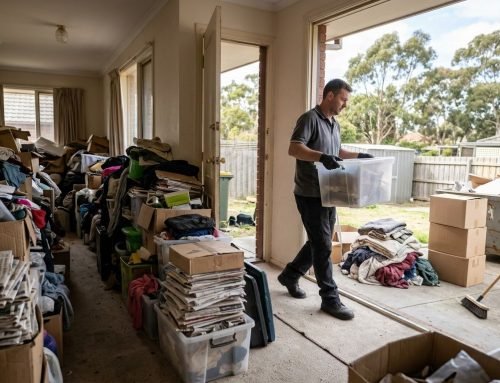
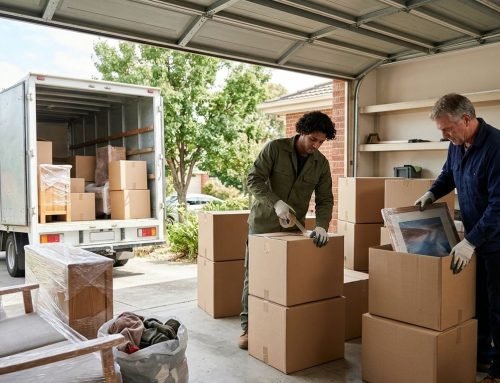
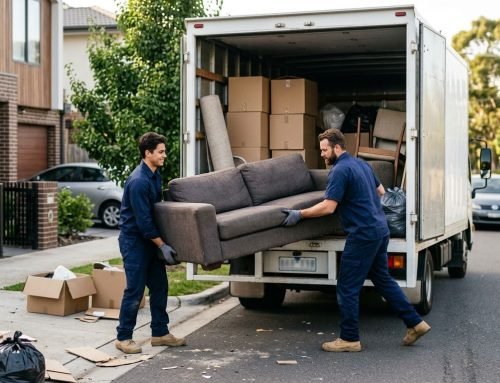
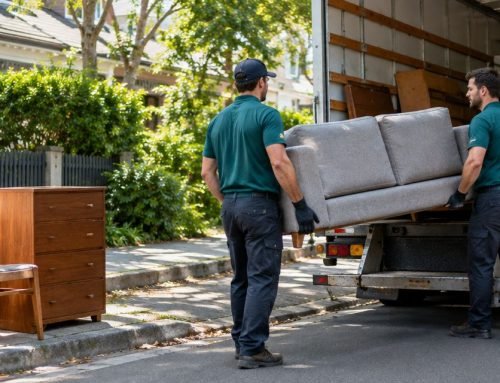
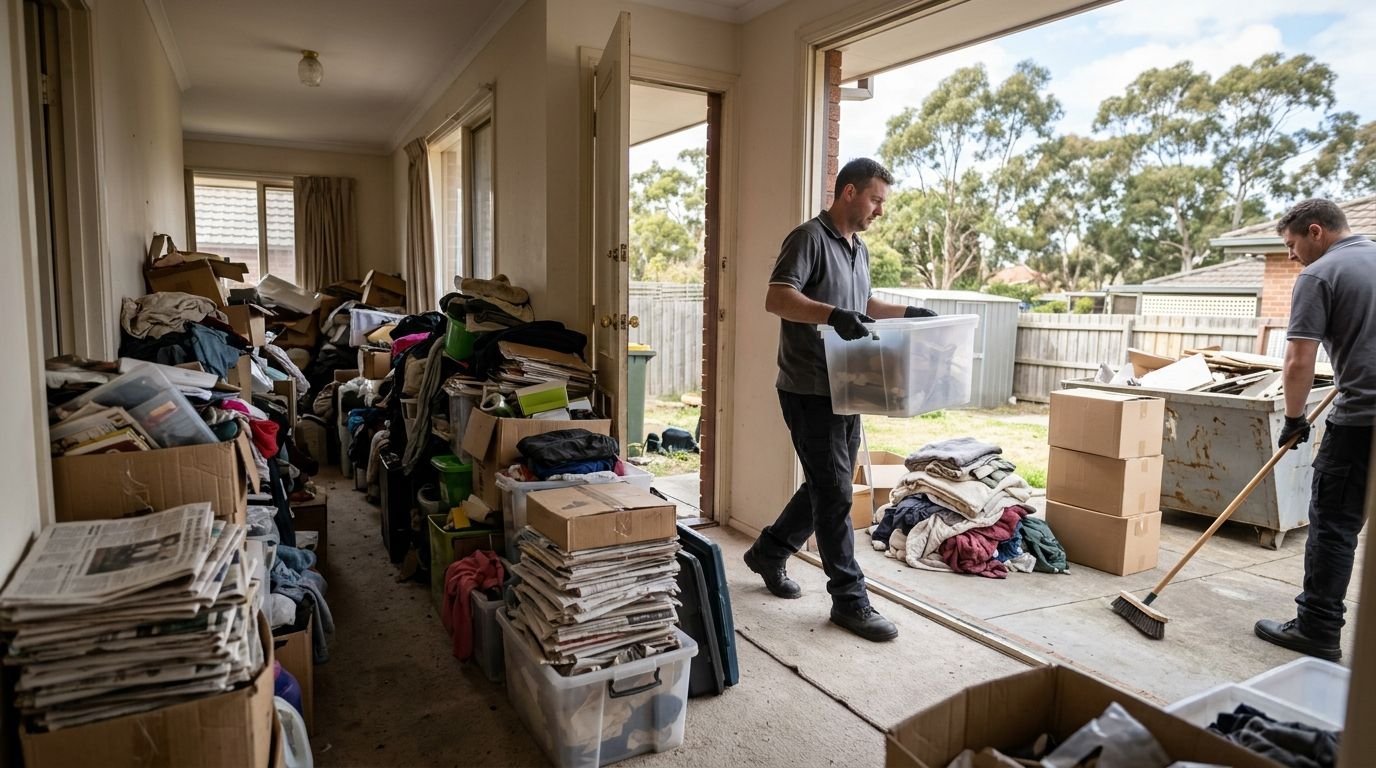
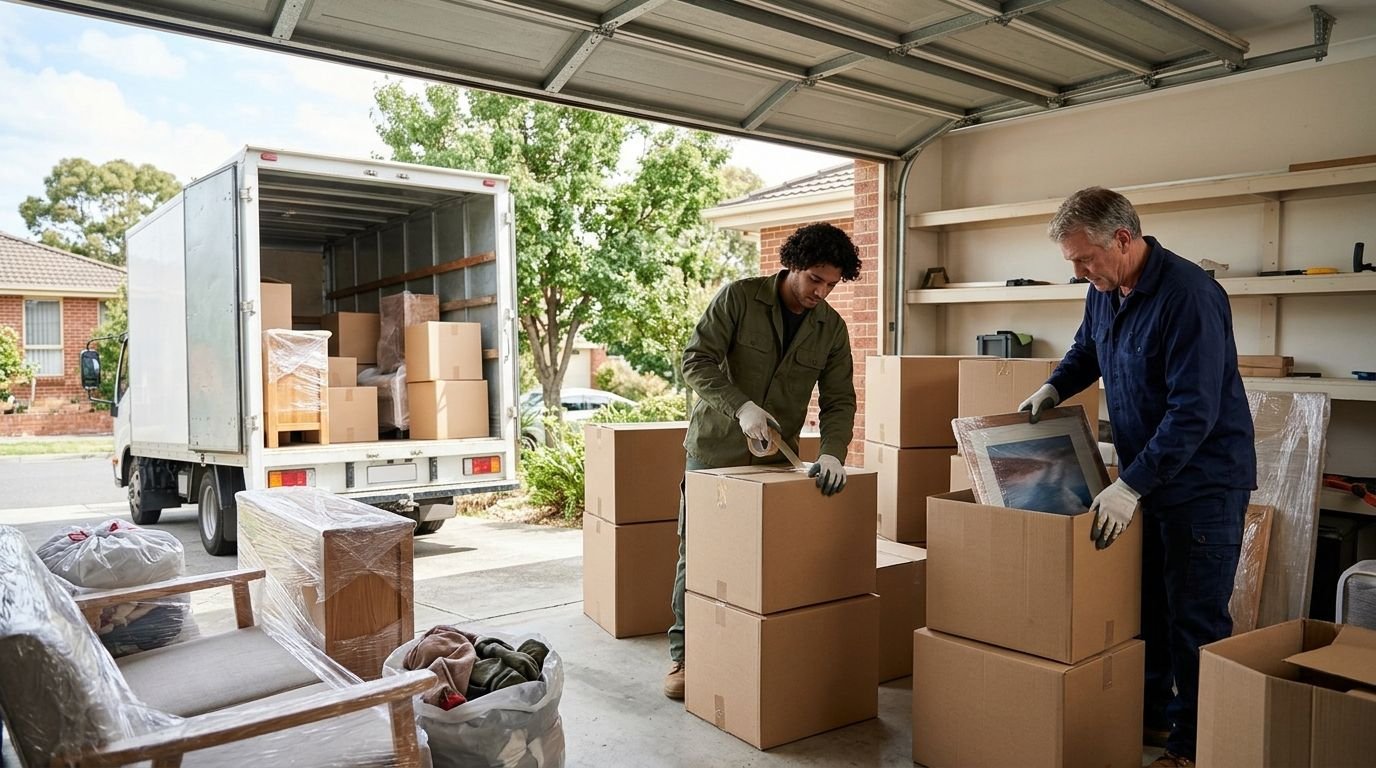
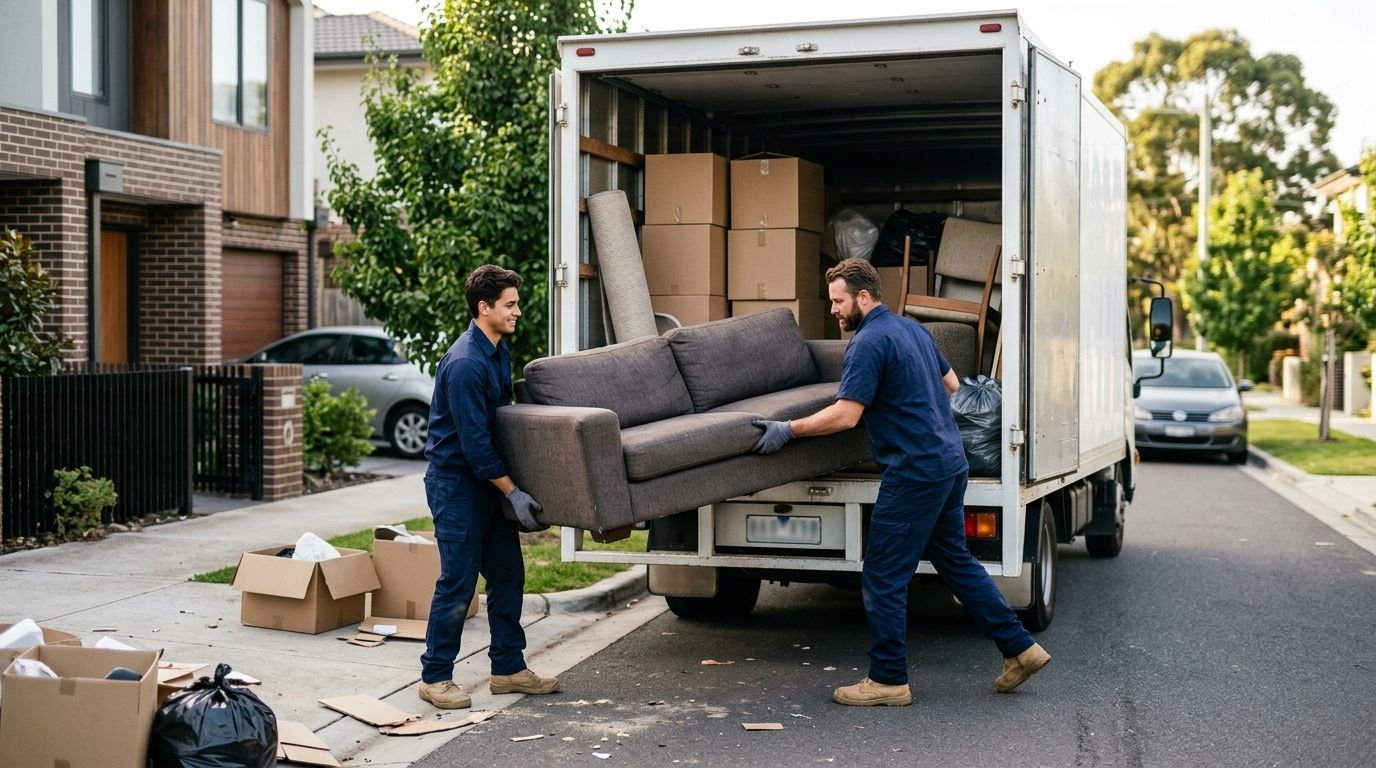
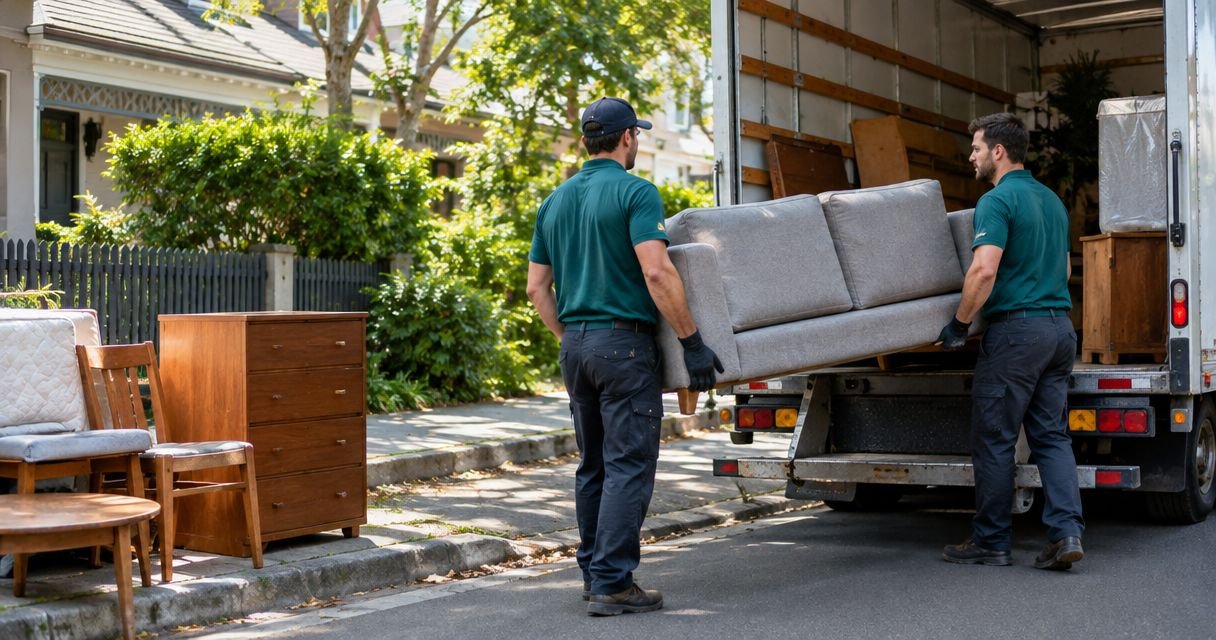
Get Out Rubbish Pty Ltd is best for approved mixed-load rubbish removal when you need the team to do the loading. The team manually loads rubbish directly into trucks; no skip bins are provided.
This route fits a household clear-out involving furniture, general rubbish or other approved non-hazardous items. If scrap metal or appliances form part of that load, describe each item and obtain acceptance before booking. Do not assume every object in a garage or shed qualifies.
Service pros:
- The team handles the loading, rather than leaving you to fill a skip.
- Household rubbish, furniture, garage and shed clean-outs are stated services.
- Free on-site quotations let you review the proposed job before agreeing.
- There is no call-out fee if you decline the on-site quote.
Service cons:
- Coverage is approximately 25 km from St Kilda, not every Melbourne suburb.
- Appliance acceptance must be confirmed for the specific job.
- Asbestos, hazardous chemicals, liquid waste, soil and sand are excluded.
Best for: A mixed household clear-out where loading is the main obstacle. Priority areas include Elwood, Elsternwick, Brighton, Caulfield, Prahran, Windsor and surrounding suburbs within the service area.
Verdict: Buy this service for an approved mixed load when you need loading included. Confirm the appliance list and access arrangements first.
2. Scrap metal recycler: best for separated metal
A scrap metal recycler is the route to investigate when you have separated metal rather than a mixed household load. Contact the receiving operator with a description of the material before loading your vehicle.
Ask separately about complete appliances. A recycler accepting loose metal does not establish that it accepts fridges, electrical appliances, attached batteries or every combination of materials. Keep items intact unless the receiving operator provides appropriate preparation instructions.
Scrap metal recycler pros:
- You can discuss the material directly with the receiving operator.
- Separated metal can be assessed without unrelated household rubbish mixed through it.
- Drop-off suits people who already have suitable transport and safe loading arrangements.
Scrap metal recycler cons:
- You remain responsible for transport and loading unless collection is explicitly arranged.
- Metal and appliance acceptance must be checked individually.
- Sharp edges and awkward shapes require careful handling.
Best for: Loose metal items that you can separate, identify and transport safely.
Verdict: Hold until the recycler confirms the material and preparation requirements. Do not make a loaded trip based only on a general scrap metal listing.
3. Council hard rubbish: best for a planned household collection
Your local council’s hard rubbish service is an option to check when the item, property and timing meet its rules. Melbourne councils set their own collection arrangements; an instruction for one municipality is not permission to use the same method elsewhere.
For a 2026 collection, check the current rules for your address. Look specifically for appliance acceptance, booking requirements, presentation instructions and any limits applying to your property.
Council hard rubbish pros:
- Published council instructions provide a defined collection process.
- Eligible bulky household items can be handled through the applicable service.
- It suits a clear-out that can follow the council’s collection arrangements.
Council hard rubbish cons:
- Not every appliance or type of metal is necessarily eligible.
- You must follow the required timing and placement instructions.
- Moving items to the collection point can still be your responsibility.
Best for: Eligible household items when you can prepare them correctly and follow the council’s timetable.
Verdict: Hold until eligibility and collection instructions are confirmed. Never put an appliance on the nature strip simply because another household has done so.
4. Retailer take-back: best when replacing an appliance
Ask about appliance take-back when arranging a replacement. Where a retailer offers it, removal is tied to that retailer’s terms rather than a general promise to clear unwanted household goods.
Confirm the old appliance’s type, location and disconnection requirements before delivery. Also establish whether the retailer collects from inside the property or requires the item elsewhere; those are different loading arrangements.
Retailer take-back pros:
- It connects replacement and removal planning.
- You can clarify the old appliance’s eligibility before the delivery visit.
- It avoids treating a replacement purchase and disposal as unrelated tasks.
Retailer take-back cons:
- Participation and conditions differ between retailers.
- Removal must be confirmed rather than assumed.
- Unrelated scrap metal or household rubbish needs its own arrangement.
Best for: A replacement appliance purchase where the retailer explicitly confirms removal of the old unit.
Verdict: Hold until take-back is included in the agreed arrangements. Skip this route if you are not replacing an appliance or the retailer does not accept the old one.
5. Donation or direct reuse: best for working appliances
Donation or direct reuse is worth checking when an appliance works, is safe and has a willing recipient. Describe its condition honestly and confirm acceptance before transporting it or promising collection.
An unwanted appliance is not automatically suitable for donation. A charity or individual needs to agree to the specific item, and any safety concerns must be resolved rather than passed to the next owner.
Donation or reuse pros:
- A usable appliance stays in use rather than being discarded.
- The recipient can assess the exact model, condition and dimensions.
- Direct arrangements let both parties agree on access and collection responsibilities.
Donation or reuse cons:
- Acceptance depends on the recipient’s needs and requirements.
- It is unsuitable for broken or unsafe items.
- You still need a confirmed transport or collection plan.
Best for: A working appliance with an identified recipient who has agreed to take it.
Verdict: Hold until acceptance and collection are confirmed. Skip donation as a disposal shortcut for an appliance that needs repair or has an unresolved safety issue.
How the options are ranked
The order prioritises help with a mixed household clear-out, then separates the alternatives by material, collection arrangements, replacement purchases and reuse. It is a decision guide, not a claim that one route handles every appliance.
Choose by acceptance first, loading second and timing third. A service that cannot accept your item is not a useful option, regardless of how convenient its collection arrangements sound.
Prepare metal and appliances before collection
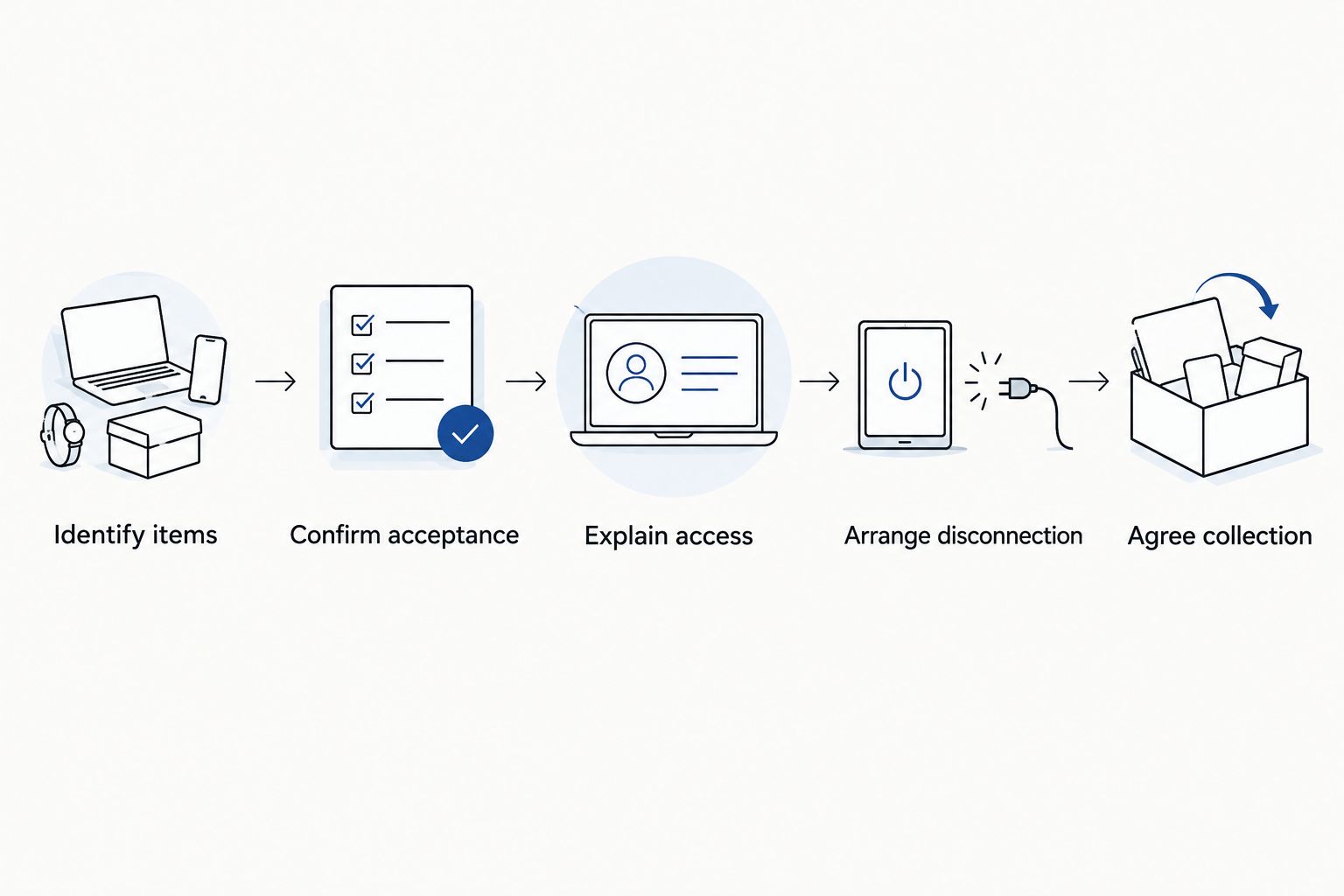
Use this sequence for a 2026 clean-out. Keep the assessment separate from the lifting: you can establish what the item is and where it sits without trying to move it yourself.
- Identify items: List each appliance and metal item separately. Include whether an appliance works and whether it is still connected.
- Confirm acceptance: Tell the operator about attachments, unknown contents and any damaged components. Obtain agreement on the actual items.
- Explain access: Describe stairs, lifts, narrow doors, parking restrictions and the item’s current location.
- Arrange disconnection: Follow the appliance instructions and use an appropriately qualified person where electrical, plumbing or gas work requires one.
- Agree collection: Establish who moves each item, where it needs to be and what happens before loading begins.
Do not cut refrigerant lines or dismantle a fridge to turn it into loose scrap. Refrigerant handling requires an appropriately licensed person; choose a route that explicitly accepts the intact appliance.
Keep excluded materials separate from an ordinary rubbish enquiry. Paint liquids, unidentified chemicals and suspicious building materials need identification and an appropriate disposal route, not concealment inside a mixed load.
Which disposal option should you choose?
For an approved mixed household load that needs carrying out, request a Get Out Rubbish Pty Ltd on-site quote. For separated metal you can transport safely, start with a recycler’s acceptance requirements. For a working appliance, check whether a recipient wants it before treating it as waste.
Have your suburb, item list and access details ready. Request an appliance-specific acceptance check rather than asking only whether general rubbish removal is offered.
Call 0480 350 234 to discuss the job. Operating hours are Monday–Saturday, 7:00 am–7:00 pm; Sunday and public holidays are normally closed. Same-day collection is subject to availability, never guaranteed.
Request an on-site rubbish quote
Describe your items, suburb and access. Confirm appliance acceptance before booking.
FAQ
What is the best scrap metal disposal option in Melbourne?
The best option depends on whether you have separated metal, a complete appliance or a mixed household load. Confirm acceptance with a recycler for separated metal, or discuss an approved mixed load with a rubbish removal service.
Can Get Out Rubbish Pty Ltd remove old appliances?
Ask Get Out Rubbish Pty Ltd to confirm acceptance of each appliance before booking. The team loads approved non-hazardous rubbish directly into trucks, but that does not establish acceptance of every appliance type.
Can I put a fridge out with council hard rubbish?
Only put a fridge out if your council’s current instructions explicitly allow it for your address and collection. Check booking, preparation and placement requirements before moving it outside.
Do I need to dismantle appliances for scrap metal disposal?
Do not dismantle an appliance simply to make it look like loose scrap. Ask the receiving operator how it must be presented, and never cut refrigerant lines.
Does rubbish removal include loading or a skip bin?
Get Out Rubbish Pty Ltd manually loads approved rubbish directly into trucks and does not provide skip bins. Explain stairs, access restrictions and the location of heavy items when requesting a quote.
Can I donate a broken washing machine or fridge?
Do not assume a donation recipient accepts broken appliances. Confirm the specific item’s condition and acceptance requirements; otherwise arrange an appropriate disposal route.
How do I arrange appliance disposal for a Melbourne clean-out?
Prepare an item list, your suburb and details of stairs, parking and connections, then confirm acceptance before booking. For mixed-load rubbish removal enquiries, call 0480 350 234; same-day collection is subject to availability.
One last thing
Tell the collector where the appliance is, not just what it is. A fridge in a ground-floor garage and a fridge upstairs need different access planning. For your 2026 clear-out, settle acceptance, disconnection and the carrying route before collection day—not when someone arrives at the door.
Related guides
- Best ways to dispose of hard rubbish in Melbourne
- Best same-day rubbish removal options in Melbourne
- Best ways to get rid of old furniture in Melbourne
- Best options for end-of-lease rubbish clean-ups in Melbourne