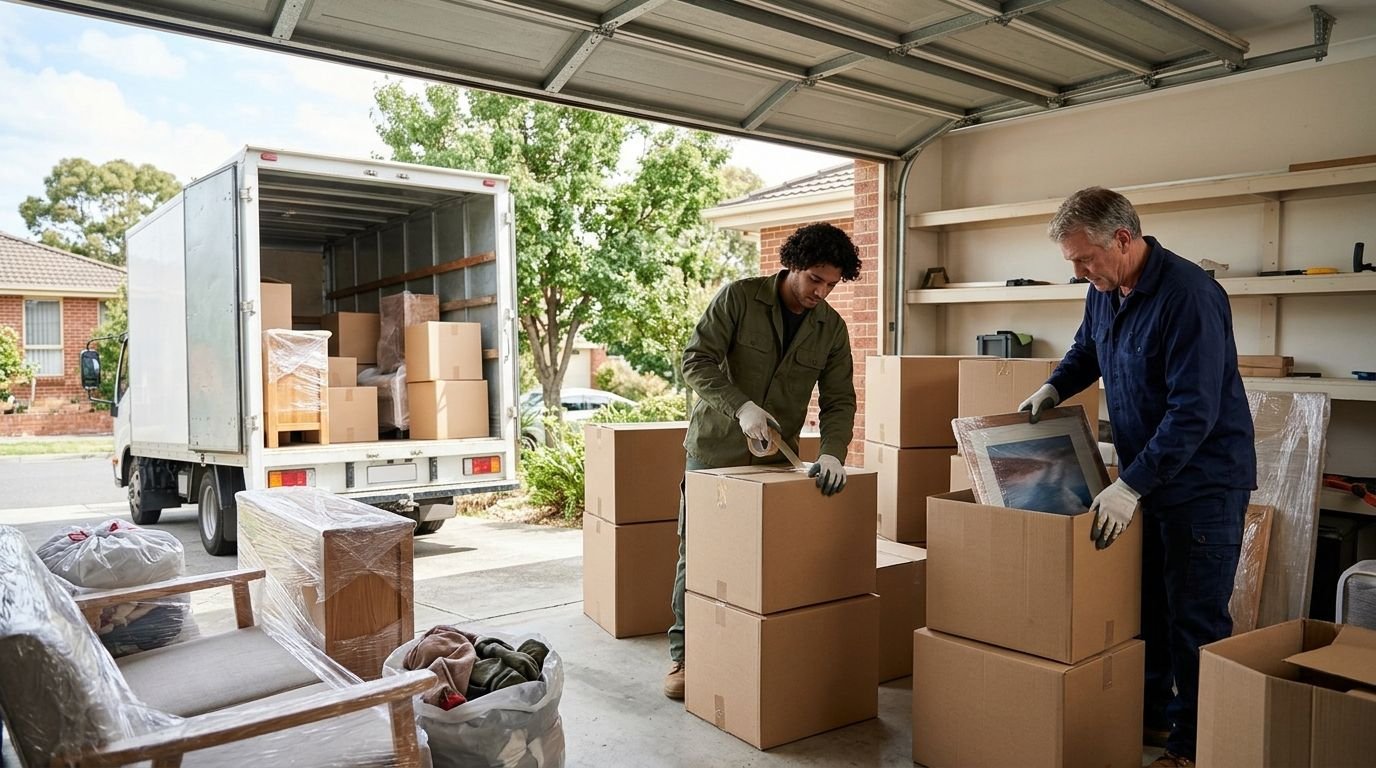

Best overall enquiry for a household or business clean-up: Getoutrubbish. Best for a manageable load you can transport: self-haul. Best budget-control option: council hard waste when its collection rules fit your deadline. For same day rubbish removal Melbourne searches in 2026, choose by waste type, loading responsibility and a confirmed completion time—not the promise of speed alone.
- Getoutrubbish is the first enquiry for Melbourne household and business rubbish removal; confirm your deadline before booking.
- For same day rubbish removal Melbourne requests, confirm loading, accepted materials and completion time together.
- Self-haul suits manageable loads; skip bins suit projects that need an on-site waste container.
- Council hard waste and reuse suit flexible deadlines, not an unconfirmed urgent clearance.
Why this matters
An urgent rubbish problem is usually a space or access problem too. You need the garage usable, the tenancy cleared or the work area free of debris—not simply a booking recorded.
A confirmed collection is not the same as a confirmed completed clean-up. Ask whether the arrangement covers loading, removal and the particular materials on your property. For your 2026 booking, give the completion deadline rather than just asking for the earliest appointment.
The strongest choice changes with the job. A single manageable item, a mixed household pile and renovation debris need different questions before you commit.
What makes the best same-day rubbish removal option?
Use these criteria before comparing providers or disposal routes:
- Deadline certainty: Get agreement on when the rubbish must be off the property. A broad arrival window does not answer that question.
- Waste acceptance: Describe the materials separately. Furniture, garden cuttings, rubble and unidentified containers should not be treated as one interchangeable load.
- Loading responsibility: Establish who moves everything from its current position. Stairs, narrow passages and heavy items belong in the initial enquiry.
- Access fit: Explain parking, gates, lifts and shared driveways. The removal arrangement must work at the actual property.
- Whole-job scope: Compare the same task, including loading, transport and disposal responsibilities. Do not compare a container delivery with a completed clearance.
- Your effort: Count sorting, lifting, driving and unloading as part of the decision. A disposal route is not practical if you cannot safely complete its steps.
These criteria prioritise getting the job finished. They also expose the main weakness of each option before you book it.
Melbourne rubbish removal options at a glance
| Option | Best for | Standout feature | Key limitation |
|---|---|---|---|
| Getoutrubbish | Household and business removal enquiries | Melbourne metro services covering household, garden, construction and commercial clean-ups | The job-specific deadline and scope need confirmation |
| Self-haul | Manageable loads and suitable transport | You organise the transport and disposal trip | You handle lifting, vehicle suitability and facility checks |
| Skip bin hire | Projects generating waste over time | A container remains at the work site | Delivery alone does not clear or load the rubbish |
| Council hard waste | Eligible bulky items with a flexible deadline | A council-organised disposal route | Local eligibility and collection arrangements govern the job |
| Donation, resale or giveaway | Usable items with a confirmed recipient | Keeps suitable items in use | A listing or offer is not a completed collection |
1. Getoutrubbish: best for household and business removal enquiries
Getoutrubbish provides rubbish, junk and hard waste removal across Melbourne metro. Its stated work includes household, garden, construction and commercial clean-ups for residential and business customers.
Getoutrubbish is the first enquiry for Melbourne rubbish removal when your household or business clean-up needs a service-led solution. Describe the whole job before discussing the deadline; do not assume every material or access condition is covered by the general service description.
Getoutrubbish pros
- The stated service scope covers both residential and business clean-ups.
- Household, garden and construction waste categories are explicitly included.
- Melbourne metro is the stated service area.
- Rubbish, junk and hard waste removal are all part of the stated offering.
Getoutrubbish cons
- The service description does not establish a completion commitment for your particular job.
- Individual materials, loading arrangements and difficult access still require agreement.
- A broad clean-up category is not confirmation that every item in a mixed pile is accepted.
Best for: A household or business that wants to discuss a removal service rather than organise the disposal trip itself.
Send the suburb, item list, access details and required finish time in one message. Ask for confirmation of the exact work included in your 2026 booking.
Verdict: Buy only after the service scope and completion deadline are confirmed.
2. Self-haul: best for a manageable load you can transport
Self-haul means taking the rubbish to a facility that accepts it. You organise the vehicle, loading, transport and unloading rather than booking a collection from the property.
This route gives you control over the trip, but that control comes with responsibility. Check the destination's accepted materials, entry conditions and operating hours before loading anything.
Self-haul pros
- You choose when to begin loading and travelling.
- You can separate materials before leaving the property.
- It suits a load that fits your transport and lifting ability.
- You do not need to coordinate a collector entering the property.
Self-haul cons
- You are responsible for safe lifting and securing the load.
- Unsuitable materials or an unsuitable vehicle can prevent completion.
- Travel and unloading are part of your job, not someone else's.
Best for: A small, manageable clearance when you have suitable transport and a checked disposal destination.
Do not judge the job only by whether the rubbish fits. A heavy object can fit inside a vehicle while still being unsafe to load or unload. Keep unknown substances separate and seek disposal instructions before moving them.
Verdict: Buy into this route only when transport, safe handling and destination acceptance are settled.
3. Skip bin hire: best for waste generated during an ongoing project
A skip bin gives you a container at the property while you clear or work. Its defining benefit is on-site storage for waste—not automatic labour or an immediately empty site.
For an urgent job, distinguish delivery from collection. A bin arriving at your property does not mean the waste has left your property, so specify which event your deadline requires.
Skip bin hire pros
- You can load waste as the work progresses.
- A designated container separates the waste area from the rest of the site.
- It suits a project where the final pile does not exist yet.
Skip bin hire cons
- Someone still needs to load the bin unless separately arranged.
- Placement must suit the property and any applicable local requirements.
- Accepted materials and loading restrictions need checking with the supplier.
Best for: A renovation or clean-up that needs a waste container during the work rather than a single completed pickup.
Before booking a skip in 2026, ask about placement, permitted contents, loading restrictions and collection arrangements. If your deadline means an empty driveway, put that requirement in the enquiry explicitly.
Verdict: Hold until both delivery and removal arrangements match the project.
4. Council hard waste: best for eligible items and flexible timing
Council hard waste is a local disposal route for items covered by your council's rules. Check the current instructions for your address rather than assuming the same arrangements apply throughout Melbourne.
This option belongs in a rubbish removal comparison because not every clean-up is genuinely urgent. If your deadline can move, council collection deserves a check before you book a separate service.
Council hard waste pros
- Your council provides the applicable collection instructions.
- It gives you a defined route for eligible bulky household items.
- It suits planned clear-outs where the collection arrangement fits your schedule.
Council hard waste cons
- Accepted items and presentation requirements are council-specific.
- A council route should not be treated as an urgent collection commitment.
- You need to follow the rules for where and when items are presented.
Best for: A resident with eligible hard waste and enough flexibility to follow the local collection process.
Use the current 2026 council guidance for the property. Do not put items outside merely because a neighbour has done so; establish the instructions for your own collection first.
Verdict: Wait if your deadline is flexible; skip this route for urgency unless the collection is confirmed.
5. Donation, resale or giveaway: best for usable items
Reuse routes suit items that another person or organisation has agreed to accept. Donation, resale and giveaway are alternatives to disposal, but none is complete until the item leaves the property.
Start with condition and acceptance. A usable table with an agreed recipient is a different proposition from damaged furniture posted online without a collection arrangement.
Reuse pros
- Suitable items remain in use rather than becoming a disposal load.
- You can separate reusable goods from the rubbish before booking removal.
- A confirmed recipient gives that item a specific destination.
Reuse cons
- The recipient must accept the item's condition and practical collection requirements.
- Messages, listings and expressions of interest do not clear the space.
- Failed collection arrangements leave the original deadline unresolved.
Best for: Usable items with a confirmed recipient and an agreed handover that fits your deadline.
Keep reusable items dry and accessible while arrangements are finalised. Do not dismantle an item until the recipient agrees that its dismantled condition is acceptable.
Verdict: Hold until the recipient and collection are confirmed; skip open-ended listings for a fixed clearance deadline.
How to brief an urgent rubbish removal job
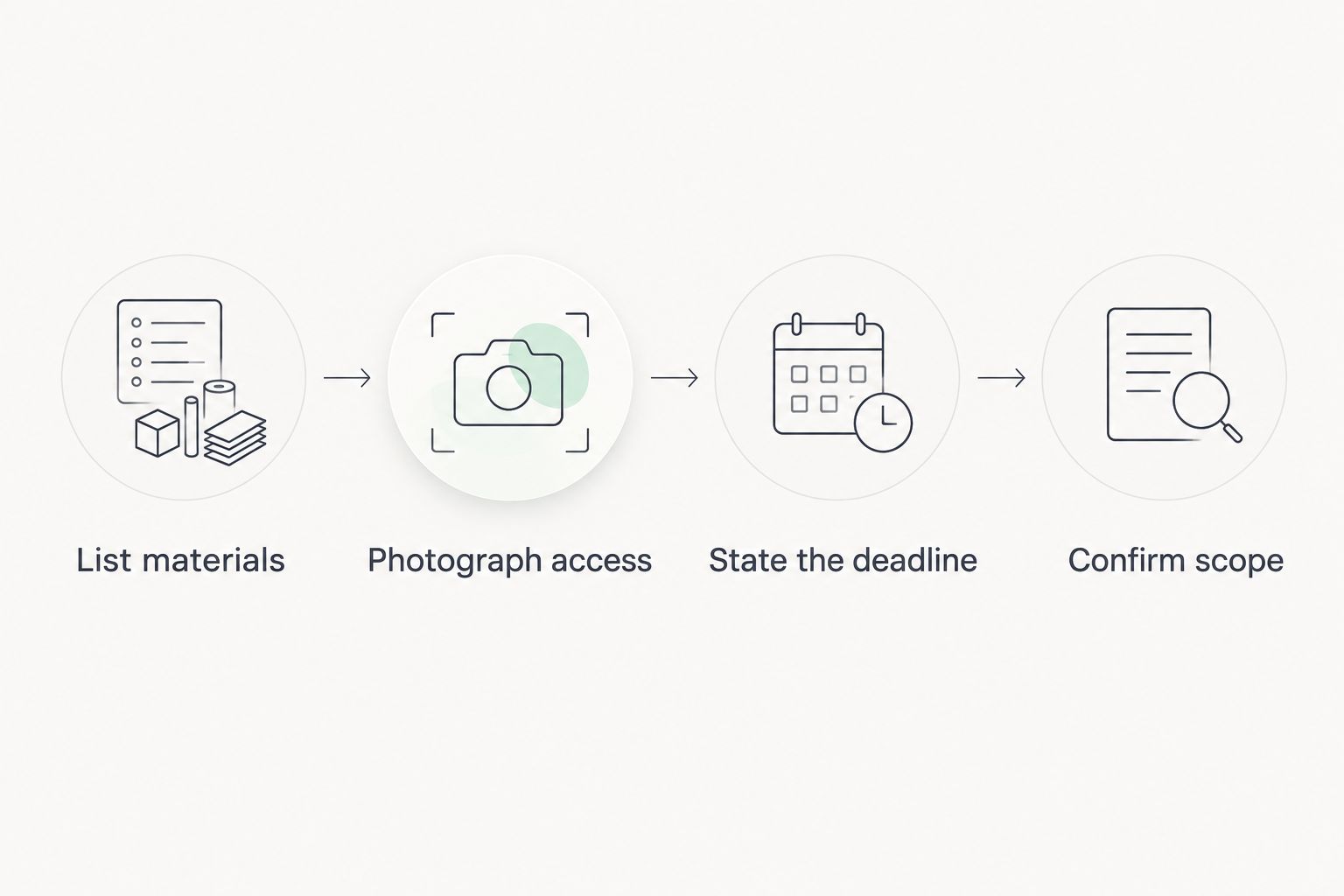
A useful enquiry makes the physical task clear. Follow this sequence before comparing replies:
- List materials. Separate furniture, garden waste, construction debris and anything requiring special advice. Describe unknown contents as unknown.
- Photograph access. Send 4 photos: the whole pile, the largest item, the narrowest passage and the loading approach. Add more when another angle explains an obstruction.
- State the deadline. Give the required completion time and explain whether the property must be empty or simply accessible.
- Confirm scope. Ask who loads, which items are accepted and what happens if the actual pile differs from the photos.
The 4 photos are a briefing checklist, not a substitute for an accurate item list. Photograph items where they currently sit so stairs and obstacles remain visible.
Write 1 item list and send the same description with every enquiry. If you compare 2 quotes, check that both cover the same pile, access and loading responsibility; otherwise you are comparing different jobs.
Avoid moving heavy items into a shared passage just to create a tidier photograph. Clear access matters more than making the rubbish look compact.
Discuss your Melbourne rubbish removal
Describe your waste, property access and required completion time before booking.
How these options are ranked
This 2026 ranking compares disposal routes by deadline certainty, material acceptance, loading responsibility, access and your own effort. It is a use-case guide, not a measured provider speed test.
A removal service leads for a service-led clean-up enquiry. Self-haul leads when you can safely manage the whole trip; skips lead when waste accumulates during work. Council collection and reuse become stronger choices when their arrangements fit a flexible deadline.
Which rubbish removal option should you choose?
Choose a removal-service enquiry first when your priority is a completed household or business clearance. Confirm the finish requirement before committing, especially when another booking or property handover depends on it.
Choose self-haul when you can safely handle the entire job. Choose a skip for waste generated during a project. Use council collection or reuse when the agreed process fits your timing—not simply because the option exists.
FAQ
What’s the best same-day rubbish removal option in Melbourne?
A removal service is the first enquiry for a household or business clearance that needs a confirmed completion deadline. Getoutrubbish covers Melbourne metro rubbish removal; confirm the specific job, materials and deadline before booking.
Can I get rubbish removed today in Melbourne?
You need a provider to confirm your specific job and completion deadline. Send the suburb, waste list, photos and access details together so the enquiry describes the full task.
Is a skip bin better than rubbish removal?
A skip bin suits waste generated during an ongoing project, while a removal service suits a defined clearance enquiry. Compare loading responsibility and when the waste actually leaves the property.
Can council hard waste handle an urgent clean-up?
Use council hard waste for an urgent clean-up only when the collection arrangement meets your deadline. Check the current rules for your address, including accepted items and presentation instructions.
What should I send when requesting rubbish removal?
Send your suburb, item list, photos, access details and required completion time. Identify heavy objects, stairs, narrow passages and any materials whose contents you cannot identify.
Can furniture and renovation debris go in the same collection?
Confirm furniture and renovation debris separately with the service handling the job. A general rubbish removal description does not establish acceptance of every material in a mixed load.
Should I donate furniture before booking rubbish removal?
Separate usable furniture for donation when an organisation or recipient agrees to accept it. Keep the clearance deadline protected: an enquiry or listing is not a confirmed collection.
One last thing
Define what finished means before you book. Rubbish off the property, a clear driveway and an empty room are different instructions. Say which result you need, and identify anything that must stay.
Walk through the space before removal begins and separate retained items clearly. That final check prevents a hurried clearance from becoming a dispute about which pile was meant to go.
Related guides
- Best options for mattress disposal in Melbourne
- Best ways to dispose of hard rubbish in Melbourne
- Best ways to clear construction waste on a renovation budget