Best overall: staged, consent-led clearance; best for household rubbish removal: Getoutrubbish. Best self-managed option: council hard waste collection for eligible items already sorted and safe to handle—not an entire unsorted house.
- For hoarder house clean up Melbourne, staged clearance is the best default: agree decisions before removing possessions.
- Getoutrubbish provides Melbourne rubbish removal; confirm the proposed load and access before booking.
- Council collection suits eligible, prepared hard waste—not an unsorted property clearance.
- Suspected asbestos, sharps or biological contamination require specialist assessment before ordinary rubbish removal.
Why this matters
A heavily cluttered house needs more than a truck. You need permission to remove possessions, a safe route through the property and a clear boundary between ordinary rubbish and material requiring specialist handling.
The best clearance method follows the condition of the house, not the size of the pile. A room containing dry furniture presents a different job from a room containing animal waste, exposed needles or unstable stacks.
For a Melbourne clearance in 2026, separate three jobs: deciding what leaves, removing approved waste and cleaning what remains. Booking one does not establish that the others are included. Ask who owns each task before anyone starts loading.
If someone lives in the property, involve them in decisions wherever possible. Do not treat disagreement about possessions as permission to empty the house.
What makes the best hoarder house clearance method?
Judge each option against these criteria before choosing a provider or collection method:
- Consent and authority: Establish who can approve disposal, including possessions belonging to someone else.
- Hazard control: Identify conditions that need assessment before sorting, lifting or loading begins.
- Decision support: Separate items approved for disposal from documents, valuables and unresolved possessions.
- Physical access: Check stairs, doorways, parking and the route between the property and collection point.
- Waste acceptance: Confirm which materials the collector accepts and which require another destination.
- Scope clarity: Distinguish sorting, carrying, transport, cleaning and specialist treatment in the written agreement.
A method that fails the safety or consent checks is not ready to use, even if it removes a large volume of waste.
Melbourne clearance options at a glance
| Method | Best for | Standout feature | Key limitation |
|---|---|---|---|
| Staged, supported clearance | Occupied homes and difficult disposal decisions | Separates decisions from removal | Needs coordination and an agreed pace |
| Getoutrubbish rubbish removal | Approved household rubbish and bulky waste | Melbourne metro rubbish removal services | Specialist hoarding support and remediation are not established by the service description |
| Council hard waste collection | A contained batch of eligible items | Uses the property's council collection process | Eligibility, preparation and collection rules vary |
| Skip hire | Ongoing sorting with suitable access | Provides a container while sorting continues | Loading, placement and accepted materials need checking |
| Specialist remediation | Suspected contamination or hazardous conditions | Addresses the hazard before ordinary clearance | Does not replace decisions about possessions or confirm all removal is included |
1. Staged clearance: best for occupied homes
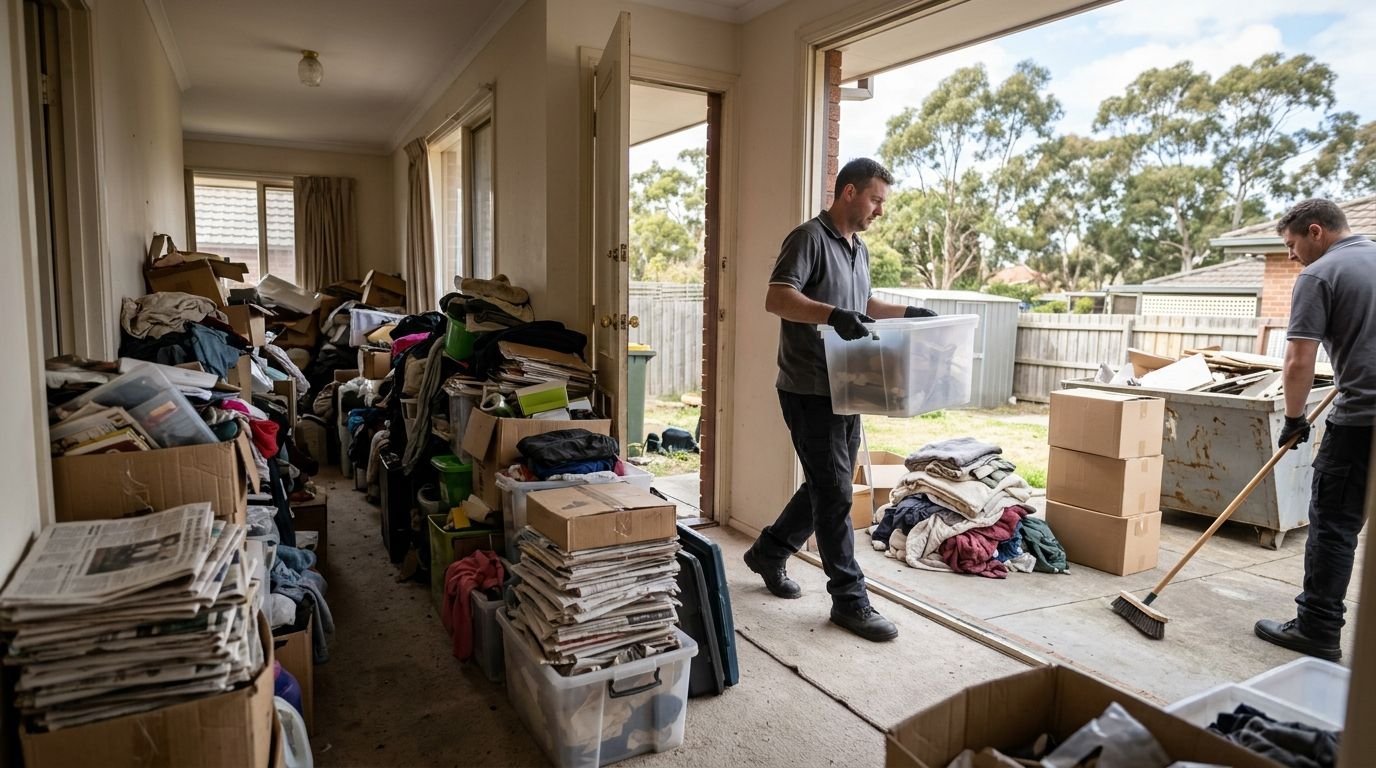
Staged clearance breaks the job into decisions you can manage. Agree what stays, what needs review and what can leave before arranging removal of the approved pile.
This is the best default for a 2026 clearance when the resident remains involved or ownership is unclear. Start with 1 room as a pilot, rather than authorising disposal across the whole property. Use that room to establish a decision process before expanding the work.
Staged clearance pros:
- Keeps the resident involved in decisions about their possessions.
- Creates a clear boundary between approved rubbish and unresolved items.
- Lets you coordinate support, removal and cleaning as separate tasks.
Staged clearance cons:
- Requires someone to manage decisions and record approvals.
- Progress stops when access is unsafe or consent remains unresolved.
Best for: Families, residents and support workers managing a lived-in property with difficult disposal decisions.
Prepare 3 sorting groups: Keep, Review and Remove. The Review group is not a second rubbish pile; it holds unresolved items until someone with authority decides their destination.
Verdict: Buy staged professional support when decisions—not transport—are blocking the clearance.
2. Getoutrubbish: best for approved household rubbish removal
Getoutrubbish provides rubbish, junk and hard waste removal across Melbourne metro, including household, garden, construction and commercial clean-ups. That makes the service relevant to the removal stage once you know which possessions can leave.
Getoutrubbish is best for the rubbish-removal stage of a Melbourne hoarder house clearance, after disposal decisions and safety checks. Its stated services do not establish clinical support, hazardous-material handling or specialist decontamination. Confirm the actual load and conditions rather than treating a general clean-up booking as an all-inclusive service.
Getoutrubbish pros:
- Provides rubbish removal services across Melbourne metro.
- Covers household rubbish and hard waste within its stated service categories.
- Also lists garden, construction and commercial clean-ups for relevant parts of a larger job.
Getoutrubbish cons:
- Specialist hoarding support is not established by the stated service scope.
- Acceptance of a particular material or property condition needs confirmation.
Best for: Residential or business customers with approved rubbish requiring removal from a Melbourne property.
Send an item description, photographs taken with permission and access details before agreeing the job. Identify stairs, restricted parking and anything you suspect needs specialist handling. Ask what must be prepared before collection and what the removal team will actually do inside the property.
Verdict: Buy rubbish removal once the load, access and exclusions are agreed.
3. Council hard waste: best for a small, prepared batch
Council hard waste collection suits a contained group of eligible items that you can prepare according to the relevant council's instructions. It is a collection route, not a substitute for sorting an entire house.
Check your own council's 2026 instructions before moving anything outside. Confirm property eligibility, accepted materials, booking requirements and presentation rules; do not assume a neighbouring municipality uses the same process.
Council collection pros:
- Gives eligible household items a defined collection route.
- Works as a separate stage after indoor sorting is complete.
- Lets you reserve other removal arrangements for materials outside that collection's rules.
Council collection cons:
- Does not resolve indoor sorting, lifting or consent issues.
- Collection conditions restrict what you can present and how.
Best for: A resident or helper with a manageable, approved batch of hard waste and the ability to prepare it safely.
Do not move an unsorted pile onto the nature strip to make the house look cleared. Confirm permission and collection instructions first, then place only accepted items where directed.
Verdict: Hold until the council confirms eligibility and presentation requirements.
4. Skip hire: best for sorting that continues on site
A skip provides a container while you progressively sort approved rubbish. It suits a property where someone can supervise loading and where a suitable placement location has been confirmed.
The container does not make the contents safe or approved for disposal. Keep documents, reusable possessions and uncertain materials out until their destination is settled.
Skip hire pros:
- Provides a defined destination for approved rubbish during sorting.
- Separates waste containment from the final collection appointment.
- Supports an ongoing clearance rather than a single loading session.
Skip hire cons:
- You still need a safe loading plan and suitable physical help.
- Placement permission, material restrictions and collection terms need checking.
Best for: A supervised property clearance with suitable access and a team able to sort and load safely.
Before hiring, confirm the proposed location with the supplier and check any permission required for public land. Ask about prohibited materials and loading rules. Do not guess whether an unidentified container, chemical or building material belongs in the skip.
Verdict: Buy skip hire only when placement, loading and accepted materials are settled.
5. Specialist remediation: best for contamination or hazards
Specialist assessment comes before ordinary rubbish removal when the property contains suspected asbestos, sharps, sewage, significant animal waste or another contamination concern. Describe the actual condition when seeking help rather than asking only for a general clean-up.
Do not disturb suspected asbestos or ask a general removal crew to identify unknown hazardous material while loading. Keep people away from the affected area and arrange the appropriate assessment.
Specialist remediation pros:
- Puts hazard assessment before handling or disposal.
- Creates a defined scope for the affected area and material.
- Helps separate specialist work from later general rubbish removal.
Specialist remediation cons:
- Does not settle ownership or consent to discard possessions.
- Cleaning, waste transport and property repairs need separate scope checks.
Best for: Properties where contamination or hazardous materials prevent safe ordinary clearance.
Describe visible conditions without diagnosing them yourself. Tell the specialist about restricted entry, unstable piles or affected rooms, and ask what must happen before other workers enter.
Verdict: Skip ordinary clearance until the hazard has been assessed and the required work agreed.
Turn the chosen method into a workable plan
Use this sequence before the first load leaves. A written plan should connect the disposal decisions to the people carrying them out.
Agree authority
Identify who can approve removal and who needs to participate. For a deceased estate, tenancy dispute or unclear ownership, establish authority before disposing of possessions.
Check hazards
Assess whether entry and handling are safe before sorting starts. Do not climb unstable piles, move unknown chemicals or disturb suspect building materials to reach something underneath.
Sort possessions
Use the Keep, Review and Remove groups consistently. Put documents, keys, photographs and other items requiring a decision somewhere that cannot be mistaken for the removal pile.
Confirm collection
Complete 2 booking checks: scope and exclusions. Confirm what the booking includes, then confirm what it expressly leaves out, including unusual materials, access difficulties and cleaning.
Inspect rooms
Walk through each cleared space with the person responsible for the property. Check for overlooked possessions and identify cleaning or repair work separately; an empty room is not evidence that the room is clean or safe to occupy.
Do not compress this sequence just to meet a deadline. If timing is the main constraint, compare the same-day rubbish removal options in Melbourne after confirming that the property and load are ready. Urgency does not replace consent or a safety check.
How these methods are ranked
This 2026 ranking puts consent, safety and decision-making ahead of removal capacity. Staged clearance ranks first because it establishes what can leave; ordinary removal follows once the load is approved.
Council collection and skip hire serve narrower situations. Specialist remediation sits last in the list because it applies to a specific condition—not because it is less important. When a hazard is present, specialist assessment becomes the first step.
The ranking compares methods and stated service scope. It does not claim site inspections, provider testing or measured clearance results.
Which clearance method should you choose?
Choose staged clearance if you are unsure where to begin. Start with an agreed area, establish safe access and make disposal decisions before arranging transport.
Choose Getoutrubbish rubbish removal when the approved household waste is ready for a collection discussion. Use council collection for an eligible prepared batch, skip hire for supervised ongoing loading, and specialist assessment when the property's condition prevents ordinary handling.
For your 2026 plan, write down the boundary between removal and cleaning. That single distinction prevents a truck booking from being mistaken for a complete property restoration.
Plan your rubbish removal
Discuss the approved load, property access and removal scope before arranging collection.
FAQ
What’s the best way to start a hoarder house clean-up in Melbourne?
Start with a staged plan that establishes consent, safe access and disposal decisions. Separate possessions into Keep, Review and Remove groups before arranging collection of approved rubbish.
Can a rubbish removal company clear the whole house?
Only an agreed service scope establishes what a rubbish removal company will do. Confirm sorting, indoor carrying, accepted materials and cleaning separately rather than assuming a whole-house booking includes everything.
Is council hard waste collection suitable for a hoarder house?
Council hard waste collection suits eligible items that have already been sorted and prepared according to the relevant council’s rules. It does not replace indoor sorting, hazard assessment or help carrying possessions out.
Should I hire a skip or book rubbish removal?
Choose a skip when suitable placement and safe loading are arranged for ongoing sorting. Choose rubbish removal when you want to discuss collection of an approved load; confirm the carrying and loading scope before booking.
What should I do if I find needles or suspected asbestos?
Stop ordinary handling in the affected area and seek appropriate specialist assessment. Do not put suspected hazardous material into a general rubbish pile or ask an ordinary collection crew to identify it during loading.
Can I throw away a family member’s possessions without asking?
Do not treat clutter as permission to dispose of someone else’s belongings. Establish consent or the relevant authority before removal, and seek appropriate advice if ownership or decision-making authority is disputed.
Does rubbish removal include deep cleaning?
Rubbish removal does not establish that deep cleaning is included. Confirm cleaning, contamination treatment and repairs as separate parts of the job unless the written scope expressly includes them.
One last thing
Make the Review group harder to remove accidentally than the rubbish pile. Put it in a separate agreed location and tell everyone involved that its contents are not approved for disposal.
A clearance can pause over an unresolved item. Once that item has left with the rubbish, the decision is much harder to revisit. Protect the decision process as carefully as the loading route.
Related guides
- Ways to get rid of old furniture in Melbourne
- Mattress disposal options in Melbourne
- Ways to dispose of hard rubbish in Melbourne