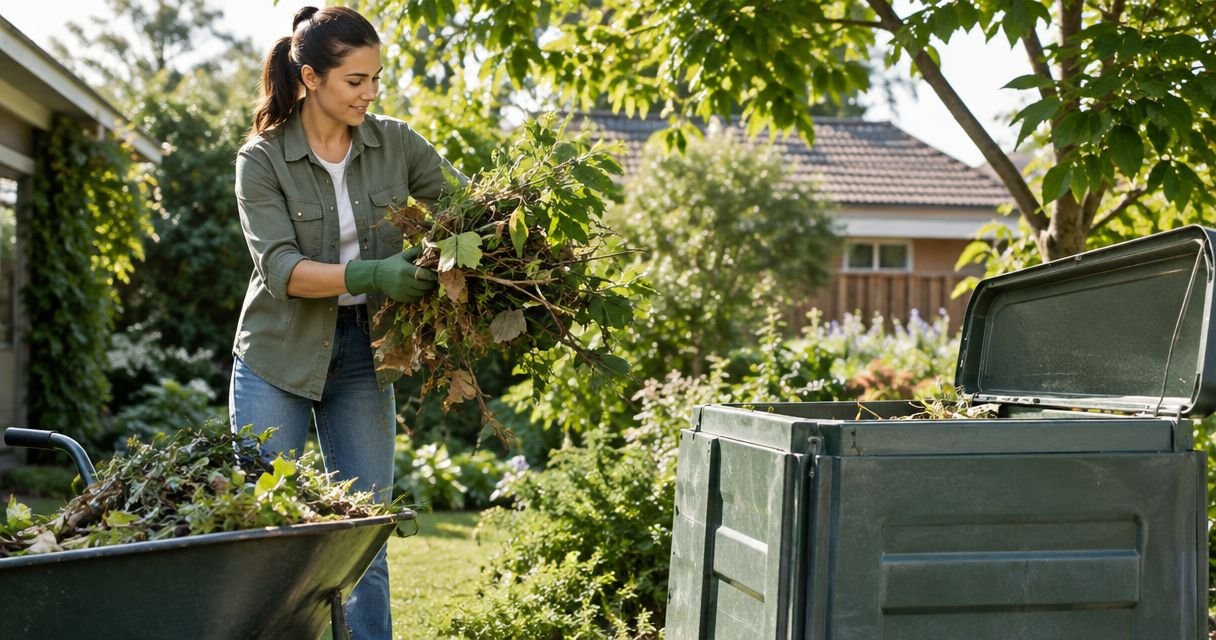
Best overall for a whole-garden clear-out: Getoutrubbish. Best for routine clippings: your council garden organics bin. Best for keeping suitable material at home: composting. This 2026 guide compares Melbourne garden waste options by material, handling effort and access—not an unsupported promise that one method suits every pile.
- Green waste removal Melbourne: Getoutrubbish is the best starting point for households planning a garden rubbish removal job.
- Council garden organics bins suit routine accepted clippings, not every material from a garden clean-up.
- Home composting suits suitable organic material you want to reuse; it does not clear an entire garden immediately.
- Self-haul and skip hire suit different loading arrangements; confirm accepted materials before choosing either.
Why this matters
A garden clean-up can leave grass, branches, soil, pots, fencing and old furniture in the same heap. That is a garden clean-up pile, but it is not necessarily a single green waste stream.
Choose the disposal route after identifying the material. Your decision should account for what the recipient accepts, who handles the loading and how the waste gets from your garden to the collection point.
For a Melbourne garden clean-up in 2026, check the current rules for your council or receiving facility. Do not assume a neighbour's collection arrangements apply to your address.
What makes the best green waste removal option?
- Material fit: The route must accept the actual contents, not just something described broadly as garden waste.
- Handling effort: Separate cutting, carrying, loading and transport. Confirm which tasks remain yours.
- Access: Check gates, steps, paths and the proposed loading or container position.
- Timing: Match the method to ongoing maintenance or a one-off clear-out.
- Separation: Keep plant material apart from pots, treated timber, rubble and other rubbish.
- Destination: Ask how the material will be handled. Do not assume a recycling outcome without confirmation.
The best option removes the right material without leaving you an unplanned loading task. A convenient booking means little if the pile contains excluded items.
Melbourne garden waste options at a glance
| Rank and option | Best for | Standout feature | Key limitation |
|---|---|---|---|
| 1. Getoutrubbish | Whole-garden rubbish removal enquiries | Provides garden rubbish removal across Melbourne metro | Confirm accepted materials, loading responsibilities and access |
| 2. Council garden organics bin | Routine accepted garden clippings | Uses your council's organics collection system | Bin capacity and council acceptance rules constrain the load |
| 3. Home composting | Keeping suitable organic material on site | Turns suitable garden material into a composting input | Needs space, management and time |
| 4. Self-haul to a receiving facility | A prepared load you can safely transport | You control loading and the trip | Requires suitable transport and acceptance checks |
| 5. Skip hire | A staged clean-up with a suitable container position | Keeps a container on site while you work | You need to confirm loading, placement and waste restrictions |
1. Getoutrubbish: best for a whole-garden clear-out
Getoutrubbish provides garden rubbish removal to residential and business customers across the Melbourne metro area. It also provides household, construction and commercial clean-up services, making it a relevant starting point when a garden project involves more than plant material.
Getoutrubbish is best for Melbourne households seeking garden rubbish removal as part of a wider clean-up. Describe each waste type separately rather than assuming every item can travel together.
Getoutrubbish pros
- Garden rubbish removal is an explicitly offered service.
- The stated service area covers Melbourne metro.
- Residential and business customers are both within the stated customer base.
- Other rubbish removal services are relevant to a broader property clean-up enquiry.
Getoutrubbish cons
- You still need to confirm acceptance of your specific materials.
- Carrying, loading and difficult access need an agreed scope before booking.
- A removal job is unnecessary when your existing organics collection handles the entire accepted load.
For a 2026 booking enquiry, send a clear description of the pile and its location. Mention branches, soil, pots and non-garden rubbish separately, and ask what preparation is required.
Best for: A one-off garden clear-out that needs a removal service rather than ongoing compost management.
Verdict: Buy a removal service when the agreed scope matches the whole job.
2. Council garden organics bin: best for routine clippings
Your council's garden organics collection is the first route to check for routine accepted garden material. Collection rules differ, so use the instructions for your address rather than a general Melbourne-wide list.
This option fits ongoing maintenance better than an entire property clear-out. The material must fit within the bin and meet your council's presentation requirements.
Council garden organics bin pros
- Suits a recurring garden maintenance routine.
- Keeps accepted organic material separate from general rubbish.
- Avoids arranging a separate removal job for every suitable load.
Council garden organics bin cons
- Bin capacity limits how much you can present at once.
- Branch sizes and accepted materials depend on local rules.
- The collection schedule must fit your clear-out timing.
Check your council's current 2026 guidance before loading woody material, weeds or compostable packaging. Do not assume that something labelled compostable belongs in the garden organics bin.
Keep the lid and presentation rules in mind while planning the job. A pile beside the bin is not automatically part of the collection.
Best for: Small, recurring amounts of accepted clippings from normal garden maintenance.
Verdict: Hold off on a separate removal booking when your council bin handles the entire accepted load.
3. Home composting: best for reusing suitable garden material
Home composting keeps suitable organic material on your property rather than sending it away. It suits gardeners who want to manage a composting process, not simply make a large pile disappear.
A working compost system needs a balance of materials, moisture and air. Bulky woody pieces break down more slowly than smaller material, so a branch-heavy clean-up needs a separate plan.
Home composting pros
- Keeps suitable organic material available for garden reuse.
- Gives you a destination for recurring compostable garden inputs.
- Avoids transporting material that your compost system can handle.
Home composting cons
- Requires space and ongoing attention.
- Does not provide an immediate whole-pile clearance.
- Diseased plants, persistent weeds and woody material need separate consideration.
Decide what your compost system can actually accept before adding anything. Plastic ties, plant pots and treated timber are not compost ingredients simply because they came from the garden.
Do not turn a compost area into a holding pile for everything else. Separate unsuitable material while the clean-up is underway.
Best for: Gardeners who want to reuse suitable material and maintain the composting process.
Verdict: Buy a composting setup for ongoing reuse; skip it as the sole answer to an immediate clear-out.
4. Self-haul: best for a prepared load you can transport
Self-haul means taking the material to a receiving facility yourself. It suits a load you can safely handle and transport after confirming the facility accepts it.
Check the destination before loading. A facility's acceptance rules determine whether branches, stumps, soil or mixed rubbish belong in your planned load.
Self-haul pros
- You control when you load and make the trip.
- You can separate material before it leaves the property.
- Suits people who already have appropriate transport and handling equipment.
Self-haul cons
- Carrying, loading and unloading remain your responsibility.
- The vehicle or trailer must suit the load.
- A receiving facility can reject material outside its acceptance rules.
For self-haul in 2026, confirm current entry conditions and unloading arrangements directly with the destination. Secure the load properly and stay within the vehicle and trailer limits that apply to your equipment.
Do not load heavy stumps or awkward branches merely because they fit in the trailer. Safe handling and load restraint matter as much as space.
Best for: A sorted, manageable load with suitable transport and a confirmed destination.
Verdict: Hold off on booked removal if you can safely complete the full transport and unloading task yourself.
5. Skip hire: best for a staged garden clean-up
Skip hire gives you a container to fill while the work progresses. It suits a staged project where you have a suitable position and a clear plan for loading.
The container does not decide what counts as green waste. Confirm the permitted waste stream before putting garden material, soil or other rubbish together.
Skip hire pros
- Gives the project a defined collection point.
- Suits work that produces waste gradually.
- Lets you organise loading around the clean-up process.
Skip hire cons
- Requires a suitable placement location.
- Loading remains a task to allocate and confirm.
- Fill limits and waste restrictions govern what goes inside.
Check property access and any permission needed for the intended placement. A container on a driveway and one proposed for public land involve different questions.
Choose this method for the working arrangement, not simply because the garden looks messy. If the waste is already gathered and ready to leave, compare the loading requirements with a removal service.
Best for: A staged project with suitable container access and people assigned to loading.
Verdict: Buy skip hire for staged loading; skip it when placement or handling makes the job harder.
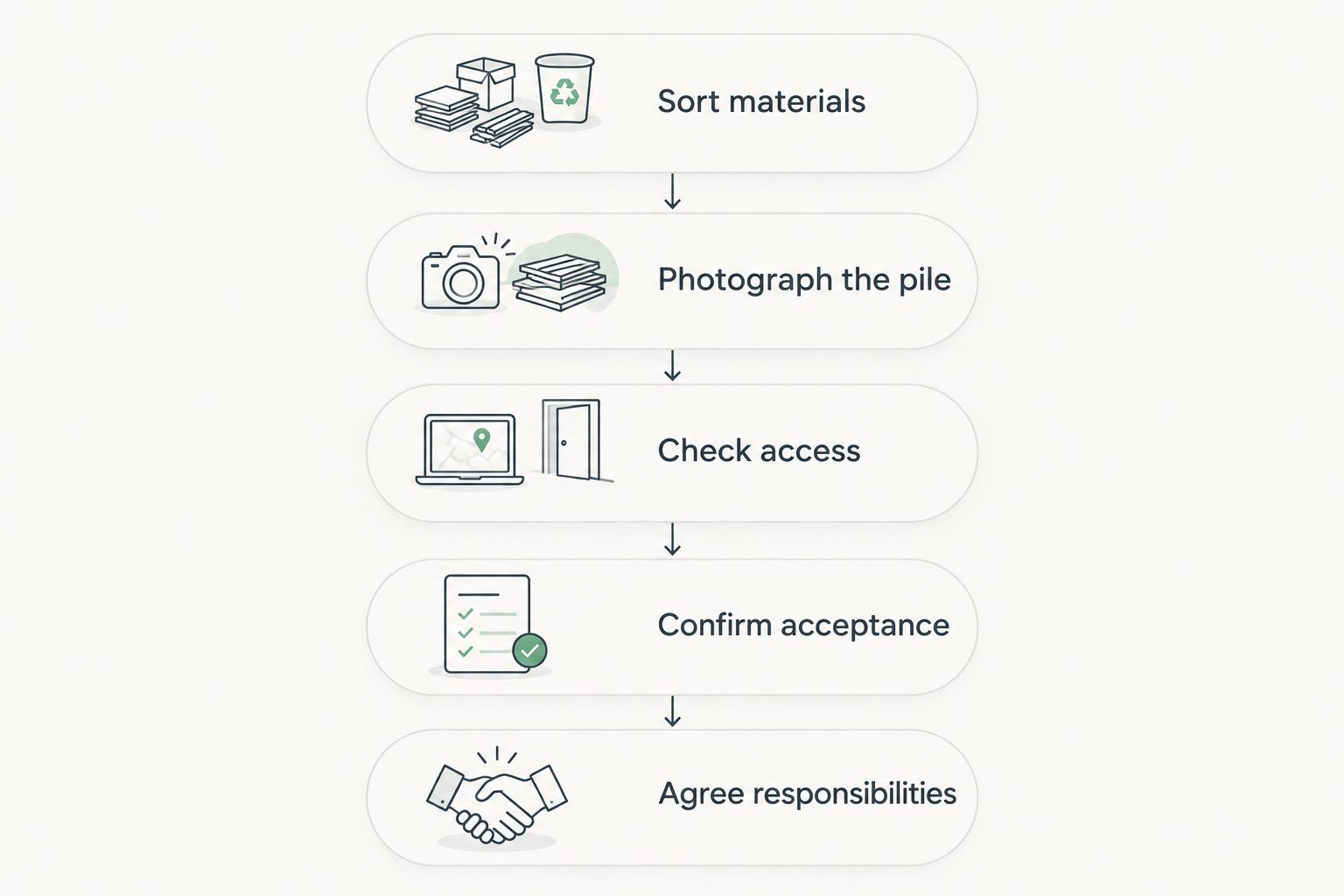
Prepare the garden waste before choosing
Use this sequence to make the scope clear. The same preparation helps whether you contact a removal service, arrange a container or transport the material yourself.
- Sort materials. Make 2 separate piles: plant material and everything else. Further separate anything the recipient identifies as unsuitable.
- Photograph the pile. Take 3 photos: the whole pile, the material close up and the access path. Include bulky items in the description.
- Check access. Walk 1 complete route from the waste to the proposed loading point. Note gates, stairs and obstacles.
- Confirm acceptance. Name soil, stumps, pots, timber and other non-plant items explicitly.
- Agree responsibilities. Confirm who cuts, carries, loads and removes each part of the job.
Photographs explain the job; they do not replace an acceptance check. Update the description if the pile changes after you enquire.
How the options were ranked
This ranking prioritises material fit, handling effort, access, timing, separation and destination checks. It is a use-case guide, not a claim that every provider or council follows identical rules.
The removal service ranks first for a whole-garden clear-out. Council collection and composting are stronger choices for routine accepted material; self-haul and skip hire fit specific transport and loading arrangements.
Which green waste removal option should you choose?
Choose Getoutrubbish for a Melbourne garden rubbish removal enquiry when you want a service to handle a defined clear-out. Confirm the material list and handling scope before committing.
Choose council collection for routine accepted clippings, composting for ongoing reuse, self-haul for a manageable prepared load, or skip hire for staged loading. For your 2026 clean-up, the decisive question is who handles each step—not which option sounds easiest in isolation.
FAQ
What’s the best green waste removal option in Melbourne?
The best option depends on the material and the handling required. A garden rubbish removal service suits a defined clear-out, council collection suits routine accepted clippings, and composting suits ongoing reuse at home.
Can I put branches in my council garden organics bin?
Check your council’s branch acceptance and size rules before putting branches in the garden organics bin. Do not assume every branch fits the collection requirements just because it fits inside the bin.
Does garden waste include soil and plant pots?
Do not assume soil and plant pots are accepted as green waste. Identify them separately and ask the receiving service or facility which waste stream applies.
Is skip hire better than a garden rubbish removal service?
Skip hire suits staged loading with a suitable container position; a removal service suits a defined collection job. Compare who carries and loads the waste, and confirm material restrictions for either option.
Can I compost everything from a garden clean-up?
No, a compost system is not a destination for everything from a garden clean-up. Keep plastic, pots and treated timber out, and get suitable guidance for diseased plants and persistent weeds.
What should I send when asking about garden rubbish removal?
Send a description of the materials, photographs of the pile and details of the access route. Identify heavy or awkward items separately and confirm who is responsible for cutting, carrying and loading.
One last thing
Check the pile again after the final sweep. Pots, wire, plastic ties and timber offcuts are easy to mix into plant material during a clean-up. Keeping them separate preserves your choice of disposal routes and makes the final collection scope clearer.
Related guides
- Best ways to dispose of hard rubbish in Melbourne
- Best options for mattress disposal in Melbourne
- Best ways to clear construction waste on a renovation budget