Best overall for bulky strata clear-outs: Get Out Rubbish Pty Ltd truck-loaded collection. Best for planned household hard waste: a council collection that accepts your building’s items. Best for usable furniture: resident-led reuse. This 2026 strata rubbish removal Melbourne guide compares five approaches by loading effort, access and responsibility—not just who takes the rubbish away.
- Get Out Rubbish Pty Ltd suits strata rubbish removal Melbourne jobs needing manual loading of approved non-hazardous rubbish.
- Council hard waste suits planned disposal only after you confirm apartment eligibility, accepted items and placement rules.
- Resident-led reuse suits usable furniture; self-haul suits manageable loads with suitable transport.
- Third-party skip hire suits staged work with approved space, but residents or contractors must arrange loading.
Why this matters for strata properties
A discarded mattress in a shared garage is not just a disposal job. Someone must authorise its removal, establish what belongs to whom and arrange access without blocking residents.
For your 2026 building clean-up, choose the removal method before telling residents where to leave things. Otherwise, a collection point becomes an uncontrolled dumping area. Keep rubbish out of entrances, exit routes and vehicle access areas while arrangements are made.
The best option is the one that matches the waste, the loading responsibility and the building’s access. A collection service cannot resolve uncertainty about ownership or permission to dispose of belongings.
What makes the best strata rubbish removal option?
- Loading responsibility: Decide whether a collection crew, residents or contractors will carry the items. Do not assume transport includes lifting.
- Building access: Explain stairs, lifts, locked gates, garage clearance and the route from the rubbish to the vehicle.
- Waste acceptance: List furniture, mattresses, garden waste and renovation debris separately. Flag unknown materials before booking.
- Authorisation: Nominate who approves the work, which items are included and who receives the invoice.
- Timing control: Match the method to the building’s deadline. A scheduled clean-up and an urgent obstruction need different arrangements.
- Space requirements: Check whether the method needs temporary storage, a collection area or room for a container.
Strata rubbish removal options at a glance
This 2026 comparison separates the options by the situation each handles best. It is a fit-based ranking, not a claim that every building should use the same service.
| Option | Best for | Standout feature | Key limitation |
|---|---|---|---|
| Truck-loaded collection | Bulky clear-outs without resident lifting | The collection team loads directly into a truck | Access, waste acceptance and collection time need confirmation |
| Council hard waste collection | Planned household disposal | Uses the relevant council’s collection arrangements | Building eligibility, items and placement rules require checking |
| Resident-led reuse | Furniture another person wants | Keeps usable items in use | Acceptance and handover are not assured |
| Self-haul to a receiving facility | Manageable loads with suitable transport | You organise the transport and unloading | Residents or contractors handle the physical work |
| Third-party skip hire | Staged works with approved container space | Waste can be loaded as work progresses | Requires space and a separate loading arrangement |
1. Truck-loaded collection: best for bulky strata clear-outs
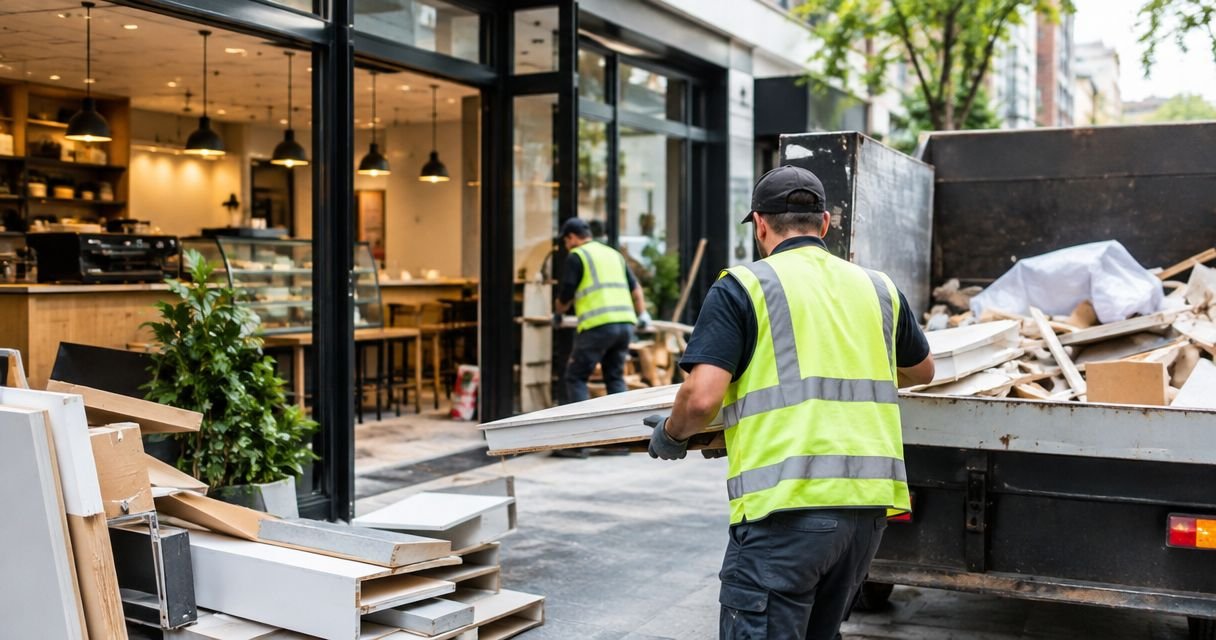
Get Out Rubbish Pty Ltd is best for strata clear-outs that need approved non-hazardous rubbish manually loaded into a truck. No skip bins. No resident loading as part of the collection method.
The service handles household rubbish, furniture, mattresses, green waste, renovation debris, office rubbish and other approved non-hazardous waste. Describe the entire load before booking rather than assuming every item in a communal pile is accepted.
Coverage is approximately 25 km from St Kilda, Melbourne, including surrounding suburbs such as Elwood, Elsternwick, Brighton, Caulfield, Prahran, Windsor, Malvern, Carnegie, Bentleigh and Hampton. Confirm the address and access arrangements when requesting a quote.
Truck-loaded collection pros:
- The team manually loads rubbish directly into trucks.
- No skip container needs to remain at the property.
- Free on-site quotations allow the authorised contact to review the job before accepting.
Truck-loaded collection cons:
- Asbestos, hazardous chemicals, liquid waste, soil and sand are excluded.
- Same-day collection is subject to availability, not guaranteed.
- Stairs, lifts and restricted vehicle access need discussion before collection.
Best for: Approved furniture, mattress and mixed household clear-outs where residents should not do the loading.
Verdict: Buy this service when manual loading is the main requirement, after confirming the load and access.
2. Council hard waste: best for planned household disposal
Council hard waste is an option to investigate when your building has time to follow its local collection arrangements. Confirm the property’s eligibility directly with the relevant council; do not assume an apartment building follows the same process as a detached house.
For a 2026 collection, check current accepted materials, booking requirements and presentation instructions. Keep items inside the property until the authorised placement arrangements are clear.
Council hard waste pros:
- Provides a defined process for eligible household items.
- Gives residents a shared set of disposal instructions.
- Can suit a planned building clean-up when the collection arrangements match the job.
Council hard waste cons:
- Eligibility, collection methods and accepted items depend on the council and property.
- Moving rubbish to the approved collection point remains a separate responsibility unless confirmed otherwise.
- The process does not automatically suit an urgent deadline.
Best for: Non-urgent household hard waste that meets the relevant council’s requirements.
Verdict: Wait for council confirmation before announcing a collection date or moving items outside.
3. Resident-led reuse: best for usable furniture
Resident-led reuse means offering usable furniture to someone who wants it, with permission from the owner. Agree on the item, collection arrangements and handover before treating reuse as a disposal solution.
This works best as a separate stream, not as an invitation for strangers to sort through a communal rubbish pile. Keep unwanted furniture apart from items still awaiting an owner’s decision.
Resident-led reuse pros:
- Keeps a usable item in use rather than treating it as rubbish.
- Lets the owner describe its condition before collection.
- Separates wanted furniture from the remaining disposal load.
Resident-led reuse cons:
- A recipient must agree to accept the item and complete the handover.
- Someone still needs to organise lifting and building access.
- Broken, unsuitable or unwanted items need another disposal route.
Best for: Usable furniture with a confirmed recipient and a workable handover plan.
Verdict: Hold suitable items for an agreed collection, but set a fallback disposal plan.
4. Self-haul: best for manageable loads with transport
Self-haul means a resident, caretaker or contractor transports rubbish to a facility that accepts it. Confirm the destination’s requirements before loading the vehicle; an unconfirmed destination is not a disposal plan.
Choose this method only when the people involved can safely handle the items, secure the load and unload at the receiving facility. A bulky mattress and a few small household items create very different handling tasks.
Self-haul pros:
- You organise the trip around the receiving facility’s operating arrangements.
- Suits manageable loads when suitable transport is already arranged.
- Allows different materials to be taken to confirmed destinations separately.
Self-haul cons:
- The person transporting the waste also needs a loading and unloading plan.
- Vehicle suitability and load restraint need attention.
- Facility acceptance must be checked for the actual materials.
Best for: A manageable load with a willing handler, suitable vehicle and confirmed receiving facility.
Verdict: Skip self-haul if safe handling or suitable transport is unresolved.
5. Third-party skip hire: best for staged works with space
A skip is a container hired from a separate provider and loaded as a clean-up or project progresses. It is a different service model from collection by a crew that carries rubbish directly to a truck.
For strata work, confirm permission to use the proposed space and check any placement requirements before arranging delivery. Ask the provider which materials the container can accept; a skip is not permission to mix every waste type together.
Third-party skip hire pros:
- Provides a defined place for accepted waste during staged work.
- Lets contractors load as the job progresses.
- Suits projects with an approved loading area and clear supervision.
Third-party skip hire cons:
- Residents or contractors must arrange the loading.
- The container occupies space until collection.
- An accessible container needs controls against unrelated dumping.
Best for: Staged work with approved container space and people assigned to load it.
Verdict: Buy skip hire only when space, permission and loading responsibilities are settled.
How the options are ranked
Truck-loaded collection ranks first for bulky strata clear-outs because it directly addresses the lifting task. Council collection ranks next for planned household disposal, while reuse, self-haul and skip hire each serve a different situation.
The criteria are loading responsibility, access, waste acceptance, authorisation, timing and space. This ranking does not claim measured performance differences between providers or replace a site-specific assessment.
Prepare the building before booking
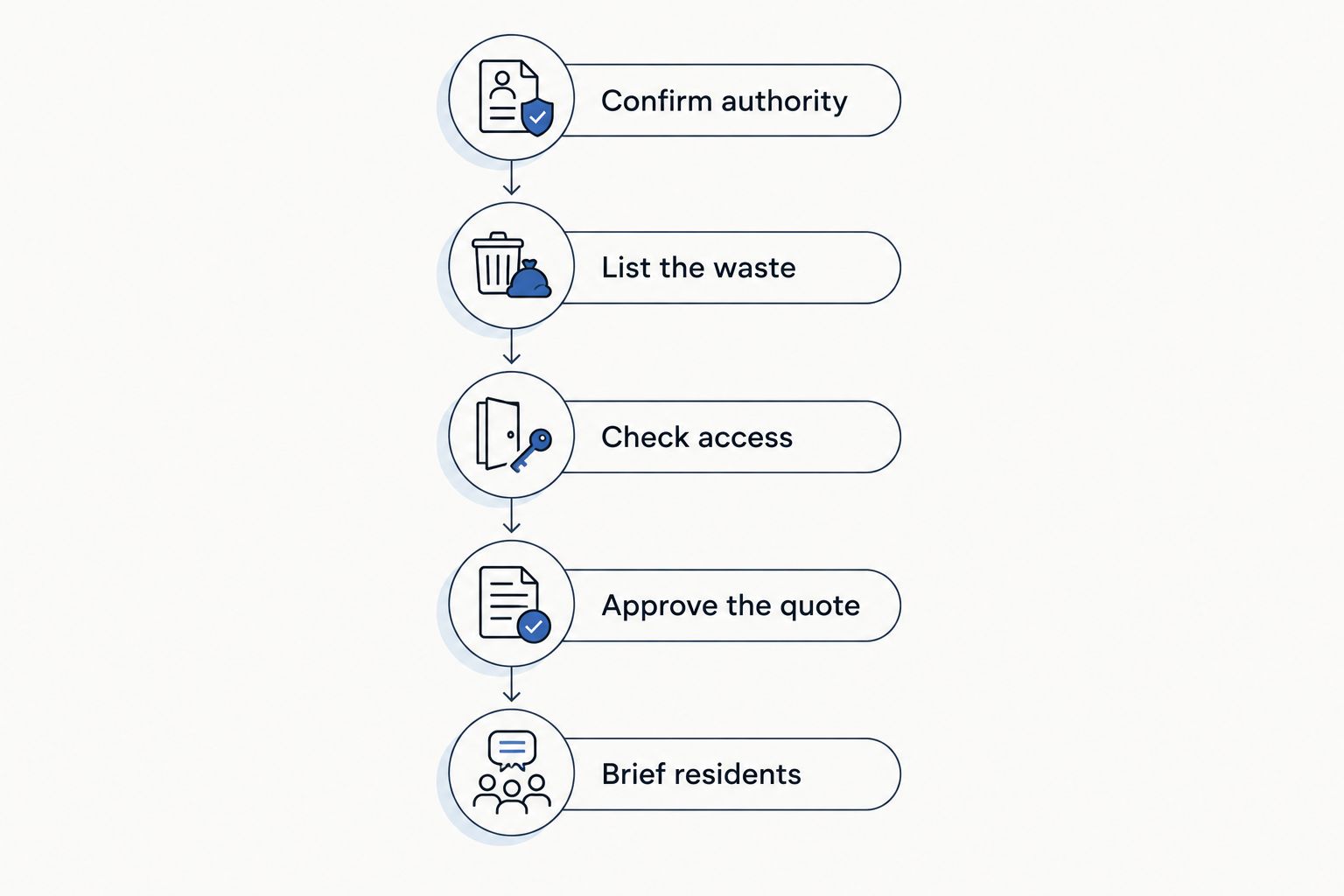
Use this sequence for your 2026 clear-out. It gives the person quoting the job a defined scope and gives residents clear instructions.
- Confirm authority: Identify who can approve disposal and authorise the work. Resolve ownership questions before items enter the removal pile.
- List the waste: Record the types of rubbish and photograph the load. Separate items awaiting a decision from items approved for removal.
- Check access: Describe stairs, lifts, gates, loading areas and vehicle restrictions. Arrange keys or access assistance where needed.
- Approve the quote: Have the authorised person review the on-site quotation and confirm what it covers before work starts.
- Brief residents: Tell residents which items are included, where they belong and when access needs to remain clear.
The sequence matters: authorise first, move rubbish second. Do not ask residents to create a communal pile before the building has agreed on its scope and collection method.
What to include in a quote request
Give the suburb, property address, waste description and access details. Mention mattresses, bulky furniture, garden waste and renovation debris individually, and disclose any material you cannot identify.
Get Out Rubbish Pty Ltd offers free on-site quotations, with no call-out fee if the quote is declined. Call 0480 350 234 during operating hours: Monday–Saturday, 7:00 am–7:00 pm. Sunday and public holidays are normally closed.
For urgent work, state the deadline and ask whether a suitable collection time is available. Do not tell residents a same-day collection is confirmed until the booking is agreed.
Request a strata rubbish quote
Describe the waste, building access and suburb. Free on-site quotations; no call-out fee if declined.
Which option should your building choose?
Choose truck-loaded collection when bulky items need carrying out and no one is assigned to load them. Choose council hard waste when the building qualifies and its collection arrangements fit the load and deadline.
Use reuse for wanted furniture, self-haul for genuinely manageable loads, and third-party skip hire for staged work with approved space. A building can use more than one method, but every item still needs an owner-approved destination.
FAQ
What’s the best rubbish removal option for a Melbourne apartment block?
Truck-loaded collection is the best fit when an apartment block needs bulky approved rubbish removed without resident loading. Council collection, reuse, self-haul or skip hire suit different access, timing and handling arrangements.
Does Get Out Rubbish Pty Ltd provide skip bins?
No. Get Out Rubbish Pty Ltd manually loads rubbish directly into trucks and does not provide skip bins. Tell the team about stairs, lifts, gates and vehicle restrictions when requesting a quote.
Can an apartment building use council hard waste collection?
Confirm apartment-building eligibility with the relevant council before arranging disposal. Check accepted items, booking requirements and placement instructions for the property rather than relying on another building’s arrangements.
Can strata rubbish be collected on the same day?
Same-day collection is subject to availability and is not guaranteed. State the suburb, waste types, access conditions and deadline when enquiring, then wait for booking confirmation.
What rubbish is excluded from the truck-loaded service?
Asbestos, hazardous chemicals, liquid waste, soil and sand are excluded. Identify unknown materials before booking and ask whether the remaining waste is accepted.
Do residents need to carry furniture outside before collection?
The truck-loaded service includes manual loading by the team. Explain where the furniture is located and confirm the access arrangements before moving anything into shared areas.
Is there a call-out fee if the on-site quote is declined?
No. On-site quotations are free, and there is no call-out fee if the quote is declined. Have the authorised building contact review the scope before accepting.
One last thing
For your 2026 clean-up, make a separate do not remove list. A labelled bicycle, stored furniture or an item awaiting an owner’s response should not be swept into the job because it sits beside the rubbish.
Give the collection contact the approved removal list and resolve disputed items beforehand. A clear boundary between rubbish and belongings is more useful than a larger collection pile.
Related guides
- Same-day rubbish removal options in Melbourne
- Skip bin alternatives for a one-off clean-up
- Mattress disposal options in Melbourne
- End-of-lease rubbish clean-up options