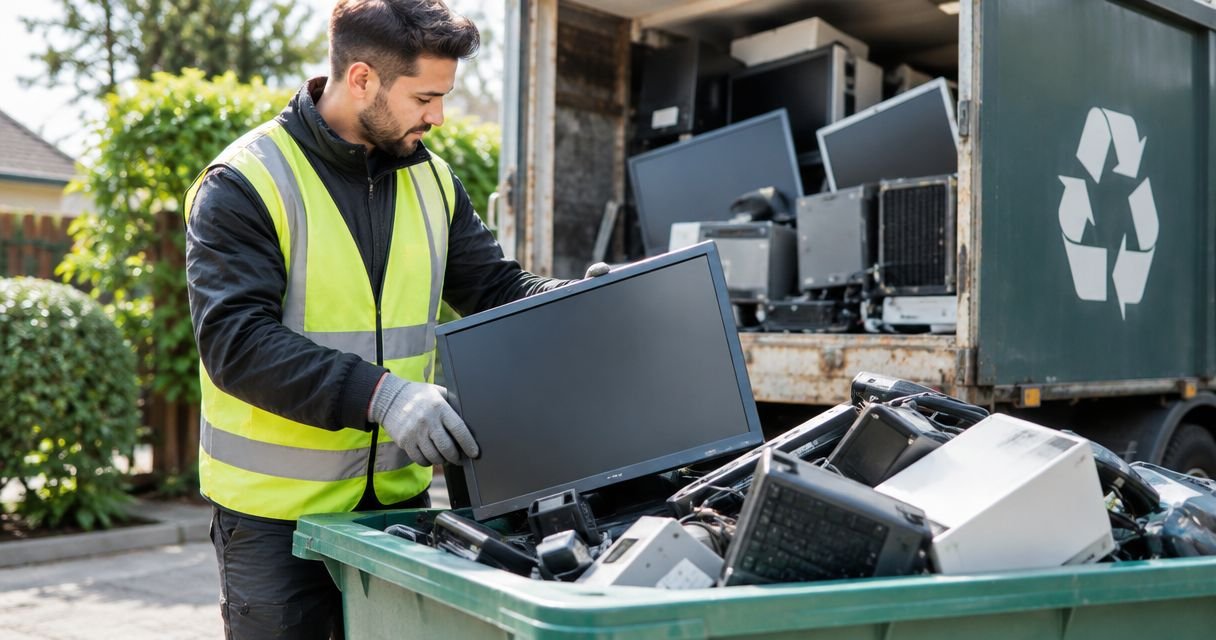
Yes, rubbish removal companies can take e-waste and electronics when they specifically accept those items and arrange an appropriate disposal pathway. Acceptance varies by company, device and condition, so confirm your item list before booking rather than treating electronics as ordinary household rubbish. In Victoria, e-waste is banned from landfill, making the destination just as important as the collection.
- Can rubbish removal take e-waste? Yes, but confirm device acceptance and the disposal pathway before booking.
- Victoria bans e-waste from landfill; keep electronics separate from ordinary household rubbish.
- Get Out Rubbish Pty Ltd suits Melbourne households wanting loaded rubbish removal; confirm electronics acceptance before booking.
- Back up and erase personal data before handing over computers, phones or other connected devices.
Why this matters
An old television and a bag of household rubbish do not have the same disposal requirements. Booking a general clean-out without mentioning electronics leaves an important part of the job unresolved: whether the collector accepts them and where they will go.
For a Melbourne clean-out in 2026, start with an item list, not a truck booking. If you are arranging other household rubbish removal, request a quote and identify every electrical item separately so its acceptance can be confirmed before collection.
Can rubbish removal companies take e-waste and electronics?
Yes, but a rubbish removal booking is not automatic approval for every electronic item. Ask about the exact device, its condition, any battery concerns and its intended destination. A working desktop computer, a broken television and a damaged rechargeable device need different information at the enquiry stage.
Your main options are collection, an accepted drop-off pathway or reuse where the item still works. Choose according to the equipment you have, whether you can transport it and whether personal data needs attention.
| Option | Best for | Main benefit | Limitation to check |
|---|---|---|---|
| Rubbish removal company accepting electronics | A household or office clean-out requiring loading | Collection can be arranged alongside other accepted rubbish | Electronics acceptance and disposal arrangements need explicit confirmation |
| Council-listed e-waste drop-off | People able to transport their own devices | Lets you take accepted items to a nominated location | Check current item restrictions, opening hours and unloading arrangements |
| Specialist electronics recycler | Devices requiring a specific recycling or data-handling service | Lets you ask directly about processing and data destruction | Services, accepted devices and documentation differ between operators |
| Donation or direct reuse | Working equipment another person or organisation accepts | Keeps a usable item in service | Acceptance is not guaranteed; remove personal information first |
There is no single best option for every device. Choose the pathway that accepts your exact equipment, not simply the one that collects general rubbish.
What electronics should you mention when booking?
Give the collector a recognisable item description rather than saying you have some e-waste. Include whether it works, whether it has a battery and whether it contains stored information. Photographs help explain what you mean, but they do not replace acceptance confirmation.
Computers, laptops and storage devices
List desktop towers, laptops, external drives and other storage equipment separately. Remove your accounts and personal information before handover, using the manufacturer's instructions for the device.
If the equipment will not turn on, do not assume its files are inaccessible. Ask a suitable data-destruction provider about the storage media before releasing it with a general rubbish load.
Televisions, monitors and household electronics
Describe televisions, monitors, printers and small electrical appliances by type and condition. Tell the collector about broken screens, sharp edges or loose components before anyone handles them.
Do not dismantle equipment just to make the load smaller. Keeping an item intact avoids exposing components and gives the receiving operator a clearer picture of what they are accepting.
Battery-powered or damaged equipment
Flag swollen batteries, unusual heat, leakage or visible damage at the first enquiry. Do not put a damaged battery-powered device into a mixed rubbish pile. Seek handling instructions from an appropriate battery or e-waste service before moving or transporting it.
Loose batteries also need separate attention. Ask the receiving operator whether they accept them and what preparation is required; do not assume acceptance of a laptop includes loose batteries from other devices.
Why e-waste collection acceptance varies
E-waste describes a broad category, not a standard collection load. In Victoria, waste electrical and electronic equipment is excluded from landfill, so a collector needs an appropriate destination rather than treating it as ordinary disposal.
These details determine which questions you need answered:
- Device type: Name televisions, computers, printers and appliances individually rather than grouping everything as electronics.
- Condition: Explain whether each item is intact, broken, leaking or visibly damaged.
- Battery status: Identify built-in batteries, loose batteries and any suspected damage.
- Stored information: Flag computers, phones and drives that still require data removal.
- Site access: Describe stairs, lifts, narrow doorways and the location of bulky items.
- Receiving pathway: Ask whether the destination accepts the actual devices you have listed.
For a 2026 booking, confirm current arrangements directly with the operator. An old collection notice or a previous successful pickup does not establish acceptance for a different device today.
How should you prepare electronics for collection?
Prepare the information first, then the equipment. You do not need to dismantle electronics or carry heavy items outside to make an enquiry.
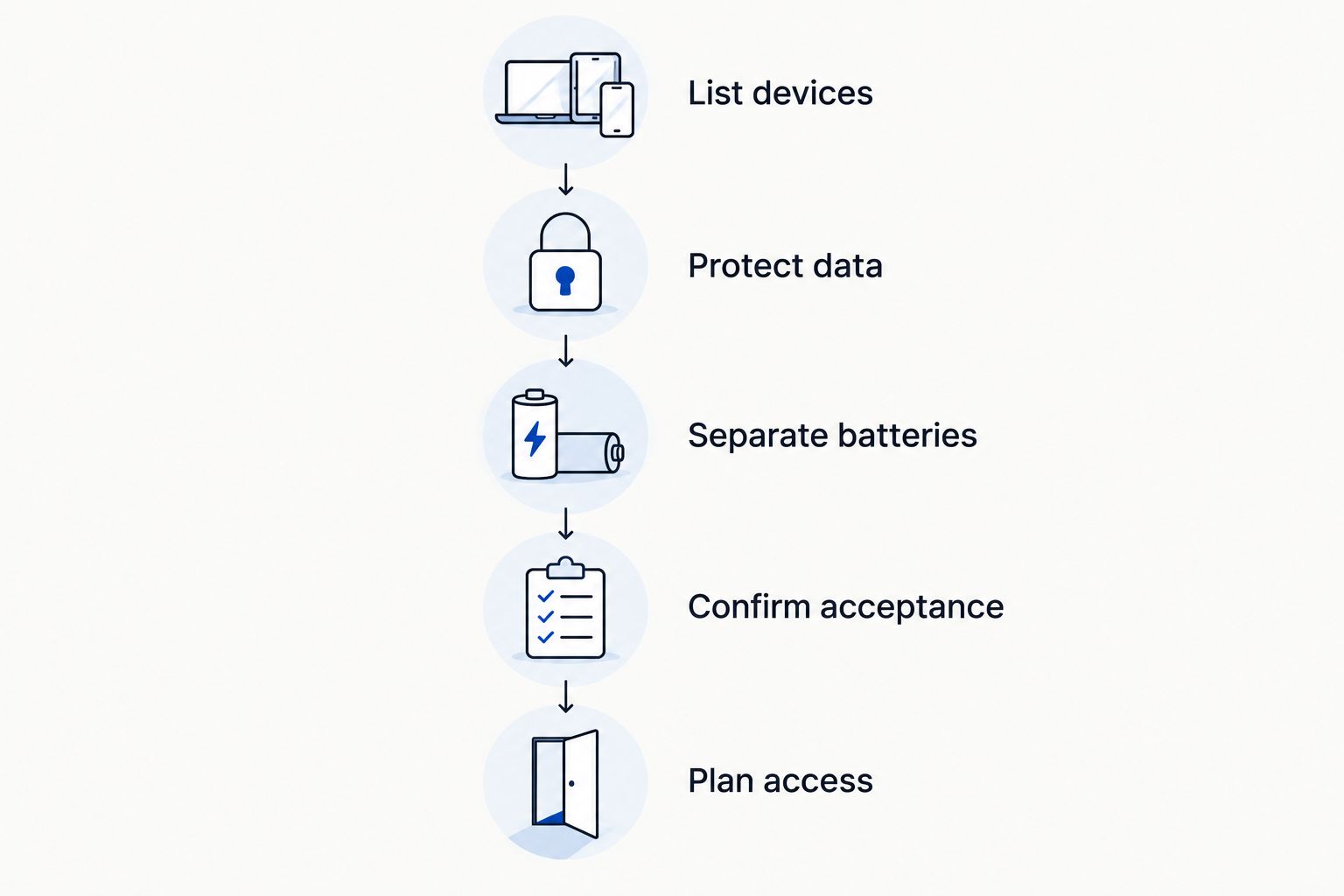
- List devices. Record each item and its condition. Include electronics stored in cupboards, garages and sheds so they are not added unexpectedly during collection.
- Protect data. Back up what you need, sign out of accounts and follow the manufacturer's process for erasing or resetting the equipment. Arrange specialist help for inaccessible storage where necessary.
- Separate batteries. Identify loose batteries and flag damaged battery-powered equipment. Follow the receiving service's instructions rather than opening sealed devices yourself.
- Confirm acceptance. Ask the collector to confirm the listed electronics and explain the intended receiving pathway. Mention other rubbish separately.
- Plan access. Explain where the items are and how the team can reach them. Keep exits clear and leave unsafe or heavy handling to an appropriate service.
Keep a clear distinction between preparing a device and proving its data has been destroyed. Deleting visible files is not a documented destruction service, and a rubbish collection receipt is not evidence that storage media has been securely processed.
Can you put electronics in the household rubbish bin?
No. In Victoria, e-waste must not go to landfill, so do not put unwanted electronics in the household rubbish bin. Use an accepted reuse, collection or recycling pathway instead.
The same caution applies when arranging a larger property clearance. Keep electronics identifiable rather than hiding small devices inside bags of general rubbish. This helps the collector assess the load and prevents an electrical item from being mistaken for ordinary waste.
For 2026 clear-outs, check your council's current e-waste instructions before planning a drop-off. Do not assume that a general hard rubbish collection accepts every electrical item or that kerbside placement is permitted without a booking.
Does rubbish removal include wiping your computer?
No—do not assume rubbish removal includes data wiping. Collection, recycling and secure data destruction are different tasks, and each needs its own confirmation.
Before handing over a computer or phone, consider stored photographs, passwords, financial records and linked accounts. For business equipment, also follow your organisation's information-handling requirements. A device that no longer starts can still contain storage media.
If you need evidence of destruction, ask the provider what service and documentation they supply before booking. Be specific about the equipment involved and whether the service covers the storage device itself. Do not rely on a general assurance that everything gets recycled.
How do you check an e-waste recycler's claims?
Ask where your equipment will be received and what happens after collection. A clear answer should distinguish between collection, sorting, reuse, recycling and any separately arranged data-destruction service.
When comparing certified e-waste recycling centres, check what the claimed certification covers and whether it applies to the operator handling your devices. A directory listing does not establish acceptance of your particular equipment or prove that data destruction is included.
Ask these questions directly:
- Which of my listed devices do you accept?
- Do battery-powered or damaged items need a different arrangement?
- Where will the equipment go after collection?
- Is data destruction offered separately, and what documentation accompanies it?
- What should I keep out of the load?
In 2026, use current answers from the receiving operator rather than relying solely on a search result or an old listing. If an operator cannot explain the destination or acceptance conditions, resolve those questions before releasing your equipment.
What if electronics are part of a larger Melbourne clean-out?
Keep the e-waste list separate from furniture, mattresses, household rubbish and other materials. That makes it easier to confirm the whole job without assuming that acceptance of one waste type covers everything else.
Get Out Rubbish Pty Ltd is best for Melbourne households wanting rubbish loaded directly into trucks rather than hiring a skip bin. The team handles household rubbish and property clean-outs, but you should confirm electronics acceptance specifically before booking. No skip bins are provided.
The service area is approximately 25 km from St Kilda, including Elwood, Elsternwick, Brighton, Caulfield, Prahran, Windsor, Malvern, Carnegie, Bentleigh and Hampton. Give your suburb and access details when enquiring so the collection location can be checked.
For a mixed load, explain what needs removing and what must stay. Do not include asbestos, hazardous chemicals, liquid waste, soil or sand in the proposed collection. These are not materials to add to a household rubbish load.
What should you have ready for the quote?
Get Out Rubbish Pty Ltd provides free on-site quotations, with no call-out fee if you decline the quote. Tell the team about electronics before the visit rather than leaving them as a surprise addition to the pile.
Have the item list, suburb, access details and preferred collection timing ready. Operating hours are Monday–Saturday, 7:00 am–7:00 pm; Sunday and public holidays are normally closed. Same-day collection is subject to availability, not guaranteed.
To discuss a 2026 clean-out, call 0480 350 234 and ask whether your listed electronics can be included. Confirm acceptance and timing before making arrangements around a tenancy handover or office clearance.
Request a rubbish removal quote
List your electronics and other rubbish so acceptance can be confirmed before booking.
FAQ
Can rubbish removal take e-waste with furniture?
Yes, where the collector accepts the listed electronics and has an appropriate receiving pathway. Describe electronics separately from furniture and confirm both waste types before booking.
Can I throw a broken television in my household rubbish bin?
No. Victoria bans e-waste from landfill, so use an accepted collection or drop-off pathway and tell the operator if the screen is broken.
Will a rubbish removal company take a laptop with a swollen battery?
Do not assume a rubbish removal company accepts a laptop with a swollen battery. Flag the damage before handling or transport and obtain instructions from an appropriate battery or e-waste service.
Do I need to erase my computer before recycling it?
Yes, protect your personal information before handing over a computer. Follow the manufacturer’s erasure instructions or arrange a suitable data-destruction service if you cannot access the device.
Does Get Out Rubbish Pty Ltd accept all electronics?
Electronics acceptance must be confirmed before booking; do not assume every device is accepted. Provide an item list, battery details and condition information when requesting a quote.
Can I book same-day electronics collection in Melbourne?
Same-day electronics collection requires confirmation of both device acceptance and collection availability. Do not treat an urgent enquiry as a confirmed booking.
Do I need to carry heavy electronics outside for collection?
Ask the collector about loading and access before moving heavy electronics. Describe stairs, doorways and the item’s current location, and avoid unsafe lifting.
One last thing
Before you factory-reset a connected device, check the manufacturer's account-removal instructions. Erasing stored content and removing an account link are not always the same step. If working equipment is intended for reuse, complete the relevant handover process before passing it on.
Then keep your collection instructions simple: identify the electronics, confirm acceptance and agree on what will be removed. No guesswork at the truck.
Related guides
- Best ways to dispose of hard rubbish in Melbourne
- Best same-day rubbish removal options in Melbourne
- Is hiring a rubbish removal company worth it?