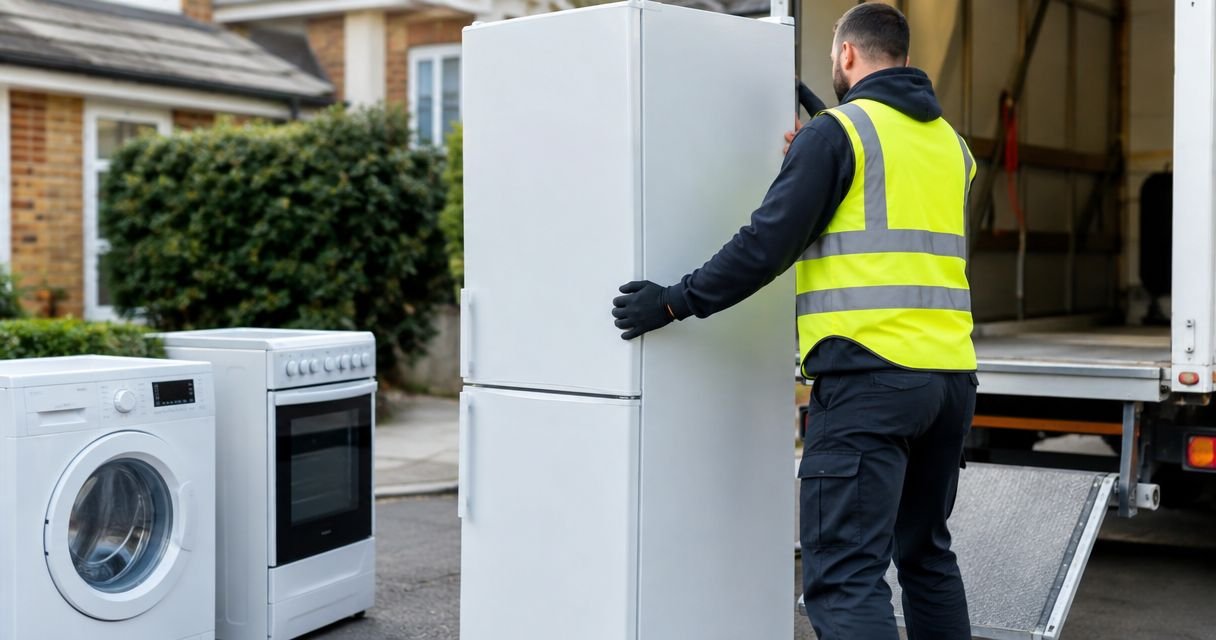
Some rubbish removal companies can collect intact fridges and freezers with refrigerant still sealed inside, but you must confirm acceptance before booking. Refrigerant inside a cooling system is different from LPG or natural gas: a connected gas appliance needs safe disconnection, and a gas cylinder needs a separately confirmed disposal route.
- Can rubbish removal take white goods with gas? Some collectors accept intact refrigerant-containing appliances; confirm before booking.
- Never cut refrigerant pipes, release gas or disconnect a fixed gas appliance yourself.
- Get Out Rubbish Pty Ltd offers team-loaded rubbish removal; confirm appliance acceptance before arranging collection.
- Describe the appliance, its condition, any gas connection and access when requesting a quote.
For a Melbourne collection, get a quote and explain exactly what you need removed. An appliance description is more useful than simply calling the load white goods.
Can rubbish removal companies take white goods with gas left in?
An intact fridge containing refrigerant is not the same collection request as a cooker connected to gas or an appliance with an LPG cylinder attached. The collector needs to know which situation applies before confirming the job.
Use this comparison for your 2026 collection enquiry. These are preparation routes, not confirmation that a particular company accepts each item.
| Appliance or item | What the gas means | Best for | Main limitation or next step |
|---|---|---|---|
| Intact fridge or freezer | Refrigerant remains inside a sealed cooling system | An appliance-removal enquiry with a collector that confirms acceptance | Leave the cooling system intact; ask how refrigerant-containing appliances are handled |
| Fixed gas cooker | The appliance uses a connected gas supply | Licensed gasfitter disconnection before removal | Rubbish collection does not replace gas plumbing work |
| Gas-powered absorption fridge | Gas fuel and a cooling system both need consideration | An appliance-specific assessment before collection | Identify the appliance type and any fuel connection; do not assume ordinary fridge arrangements apply |
| Separate LPG cylinder | Fuel remains in a pressure vessel | A cylinder-specific return or disposal enquiry | Do not add it to an ordinary rubbish load without explicit acceptance |
You do not need to identify the refrigerant chemically to start an enquiry. A clear photograph of the appliance label, its condition and any visible connections helps the collector assess the request.
Why this matters
White goods is a broad description, not a safety classification. A washing machine, a refrigerant-containing freezer and a gas cooker do not need the same preparation.
The mistake is treating gas removal as part of ordinary lifting and loading. Do not vent refrigerant or open a fuel connection to make an appliance ready for collection. Arrange the appropriate specialist work where required, then confirm what the rubbish collection covers.
For your 2026 booking, separate two questions: can the company accept the item, and is the item safely ready to move? A yes to the first does not answer the second.
Fridges and freezers with refrigerant inside
A fridge or freezer normally retains refrigerant after you unplug it. Switching off the electricity does not empty the cooling circuit, and leaving the appliance unused does not establish that it is gas-free.
Keep the refrigerant circuit intact. Do not cut pipes, puncture components or remove the compressor to reduce the appliance's weight or make it easier to carry.
Australian Refrigeration Council licensing requirements apply to handling regulated fluorocarbon refrigerants. Refrigerant recovery is specialist work, not a household preparation task. Other refrigerants also need appropriate handling; do not assume a different refrigerant label makes dismantling safe.
Before collection:
- Tell the collector whether the appliance is a fridge, freezer or another cooling appliance.
- Report visible damage, cut pipework or previous dismantling.
- Empty food and loose contents before the agreed collection.
- Explain whether the appliance has a plumbed water connection.
- Ask whether collection includes an appropriate route for refrigerant-containing appliances.
An intact appliance is easier to describe accurately, but intact does not mean automatically accepted. Get confirmation for the actual item, not just the general category of scrap metal.
Gas cookers and other fuel-connected appliances
A fixed gas cooker needs safe disconnection from its supply before ordinary removal. In Victoria, gasfitting work requires an appropriately licensed or registered gasfitter; a rubbish-removal booking is not evidence that this work is included.
Arrange the gasfitter before the collector. Ask the gasfitter to make the disconnected installation safe, and tell the collection team when the appliance will be ready to move.
Do not loosen a fitting, cut a hose or pull a cooker away while it remains connected. If you are unsure whether a connection is still live, treat that as an unresolved safety issue rather than a lifting problem.
An absorption fridge needs a more specific enquiry. Explain whether it has been used with gas, whether a cylinder is present and whether any connection remains attached. The words old fridge alone leave out information the collector needs.
Safe disconnection and rubbish collection are separate jobs unless the provider explicitly confirms otherwise. Do not book the truck first and assume the crew can sort out the connection on arrival.
LPG cylinders are a separate enquiry
A loose LPG cylinder is not simply another white good. It is a pressure vessel, and a cylinder that appears empty still needs appropriate handling.
Do not puncture it, release its contents or place it inside a discarded appliance. Ask about a cylinder-specific return or disposal route and confirm the receiving service's requirements before taking it anywhere.
If a cylinder is attached to the appliance you want removed, disclose that at the first enquiry. Do not describe the whole item as metal rubbish and leave the fuel container out of the conversation.
This distinction also matters when clearing a garage or shed. Photograph cylinders separately from furniture, appliances and general rubbish so the collection enquiry does not imply they belong in the same load.
Why white-goods collection requirements vary
Acceptance depends on the item and the work needed before loading. These details help the collector give you a useful answer:
- Appliance type: A freezer, gas cooker and absorption fridge need different assessments.
- Gas or refrigerant involved: A sealed cooling circuit is different from a fuel supply or separate cylinder.
- Condition: Damaged components and previous dismantling change the safety questions.
- Connections: Gas, electricity and plumbed water connections need to be identified before moving anything.
- Access: Stairs, narrow doorways and the appliance's position affect the loading plan.
- Collection arrangements: The provider must confirm that the specific appliance fits its accepted handling and disposal arrangements.
For a 2026 enquiry, describe these details rather than asking only whether white goods are accepted. You will give the collector a clearer basis for confirming the job and explaining any preparation.
How do I prepare a white good for collection?
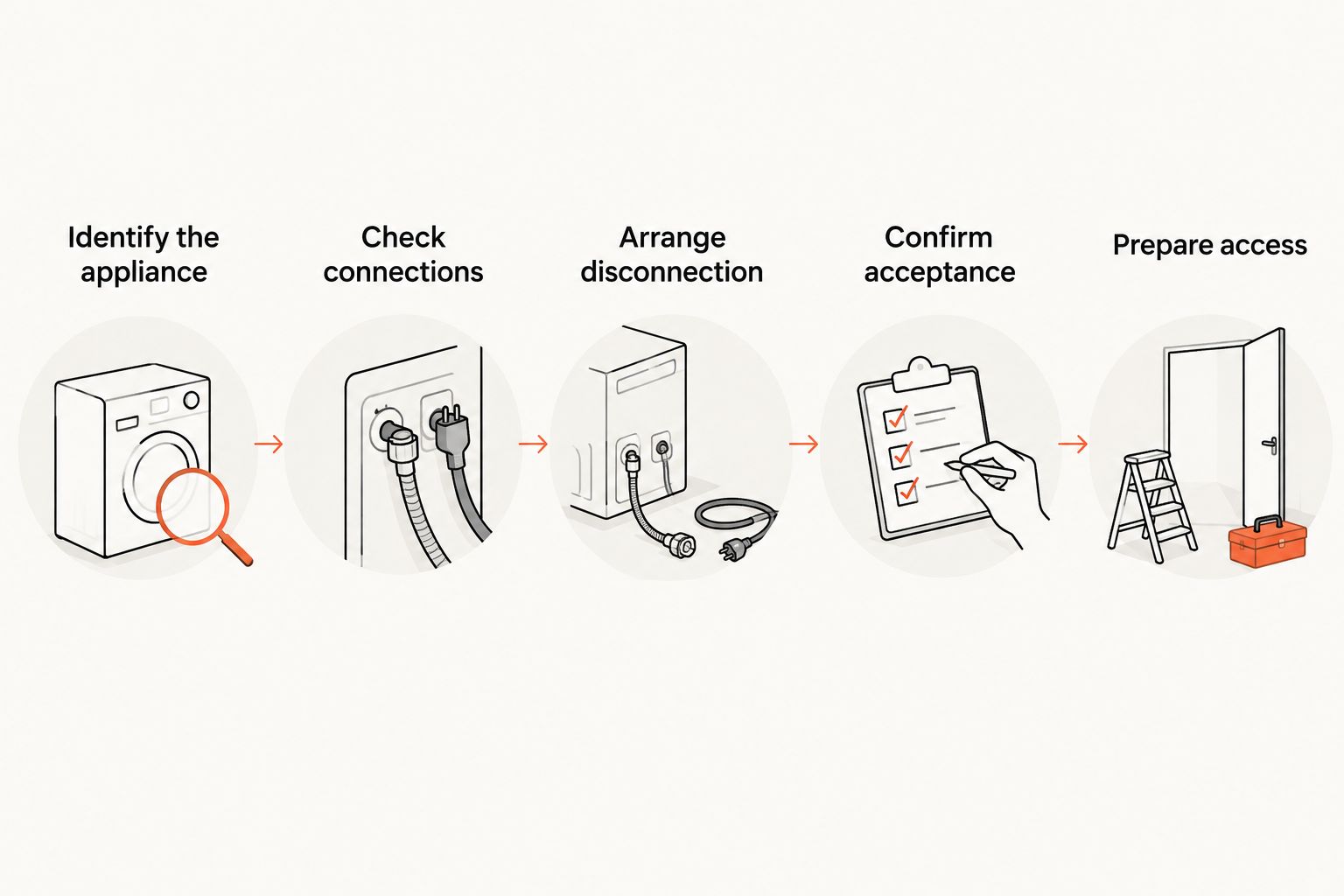
Follow this order. Do not move a connected or damaged appliance just to improve a photograph.
- Identify the appliance. Record whether it is a fridge, freezer, gas cooker or another appliance. Photograph the model label if it is safely accessible.
- Check connections. Look for visible gas, water and electrical connections without opening covers or loosening fittings. Tell the collector what you can see.
- Arrange disconnection. Use an appropriately qualified tradesperson for work that requires one. Do not attempt refrigerant recovery yourself.
- Confirm acceptance. Describe the appliance's condition, any remaining cylinders and the access route. Ask what the collector needs completed beforehand.
- Prepare access. After the item is safe to move, clear loose obstacles and identify anything that stays. Leave the heavy lifting to the agreed collection team.
For a fridge or freezer, discuss emptying and defrosting with the collector before the visit. Keep any defrost water contained and the walking route dry. Do not drag the appliance across the property unless you have a safe, agreed reason to move it.
For an apartment, tell the collector about stairs, lift access and building entry arrangements. Confirm any building requirements yourself rather than assuming the collection team can obtain access on arrival.
Can I leave the refrigerant in an old fridge?
Leave the sealed refrigerant system intact unless an appropriately qualified technician is carrying out the required work. Do not release refrigerant yourself as preparation for rubbish collection.
Ask the collector whether the appliance can be accepted in its current condition. If specialist preparation is required, arrange it before the removal appointment rather than attempting to empty the system.
Can a rubbish-removal crew disconnect my gas cooker?
A rubbish-removal booking does not establish that gas disconnection is included. Ask explicitly, and arrange an appropriately licensed or registered gasfitter where required.
The collection crew needs an appliance that is safe to move. A disconnected-looking hose or an appliance that no longer works is not proof that the gas connection has been made safe.
What if my fridge is damaged or I suspect a leak?
Stop preparing it for collection and disclose the problem. Do not test for a leak, open the cooling system or continue dismantling the appliance.
Keep people away from damaged components and seek appropriate technical advice before moving it. If you suspect an active fuel-gas leak, treat that as a gas-safety issue, not a routine rubbish booking.
Booking white-goods removal in Melbourne
Get Out Rubbish Pty Ltd is best for Melbourne homeowners seeking team-loaded rubbish removal, with appliance acceptance confirmed before booking. The team manually loads rubbish directly into trucks; no skip bins are provided.
The service area is approximately 25 km from St Kilda. Relevant suburbs include Elsternwick, Brighton, Elwood, Caulfield, Prahran, Windsor, Malvern, Carnegie, Bentleigh and Hampton, along with surrounding areas. Confirm your address when enquiring.
Get Out Rubbish Pty Ltd offers free on-site quotations, with no call-out fee if you decline the quote. For white goods, explain the appliance type and condition before arranging the visit; a quotation is not a substitute for confirming safe handling.
For a 2026 booking, call 0480 350 234 during operating hours: Monday–Saturday, 7:00 am–7:00 pm. Sundays and public holidays are normally closed. Same-day collection is subject to availability, so arrange any required tradesperson first and confirm collection timing separately.
The benefit is straightforward: the team handles loading. The limitation is equally clear: do not assume rubbish collection includes gasfitting, refrigerant recovery or acceptance of cylinders.
Request an appliance collection quote
Describe the appliance, connections, condition and access so the team can assess your request.
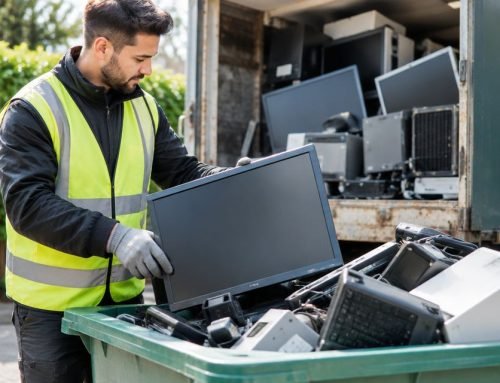
If your clean-out also includes computers or other electronics, check the separate guidance on e-waste and electronics removal. Confirm each waste category instead of assuming one collection rule covers the entire room.
FAQ
Can rubbish removal take white goods with gas still inside?
Some collectors accept intact fridges and freezers with refrigerant still sealed inside, but acceptance must be confirmed. Fuel-connected appliances and LPG cylinders need separate assessment and preparation.
Do I need to remove the gas from my fridge before collection?
Do not remove refrigerant yourself. Leave the cooling system intact and ask the collector whether specialist preparation is required before collection.
Does unplugging a freezer remove its refrigerant?
No, unplugging a freezer does not remove the refrigerant sealed inside its cooling system. Do not cut pipes or dismantle the compressor to prepare it for removal.
Can I put a gas cylinder inside an old fridge for collection?
No, do not conceal a gas cylinder inside an appliance or include it without explicit acceptance. Ask about a cylinder-specific return or disposal route.
Who should disconnect a gas cooker in Victoria?
An appropriately licensed or registered gasfitter should carry out gas disconnection work in Victoria. Arrange this separately unless the collection provider explicitly confirms suitable gasfitting arrangements.
Can Get Out Rubbish Pty Ltd collect my white goods today?
Same-day collection is subject to availability, and the specific appliance must be assessed before acceptance is confirmed. Call 0480 350 234 Monday–Saturday, 7:00 am–7:00 pm, to discuss the item and access.
Is there a call-out fee if I decline the on-site quote?
There is no call-out fee if you decline the free on-site quotation. Confirm appliance acceptance and any required disconnection before arranging the visit.
One last thing
An appliance that no longer works is not necessarily empty of refrigerant or disconnected from gas. Describe its connections and condition, not just whether it switches on.
Before requesting collection, take a label photo and an access photo if both are safe to obtain. Those images answer different questions: what the appliance contains, and how the team will reach it.
Related guides
- Best same-day rubbish removal options in Melbourne
- Best ways to dispose of hard rubbish in Melbourne
- Is hiring a rubbish removal company worth it?