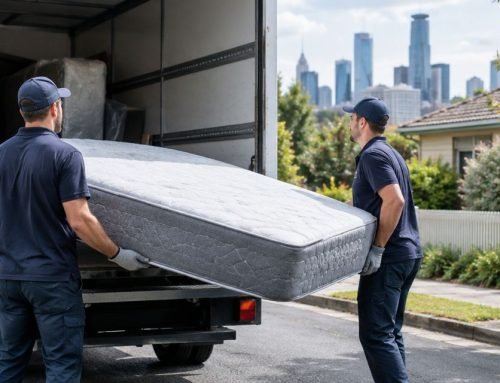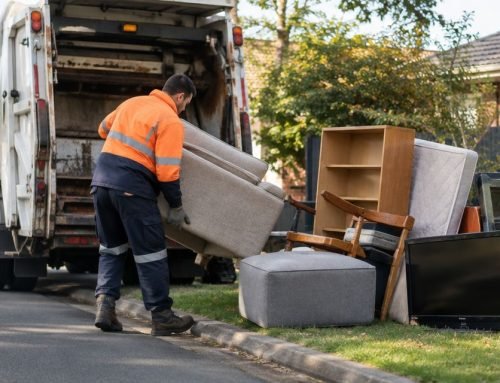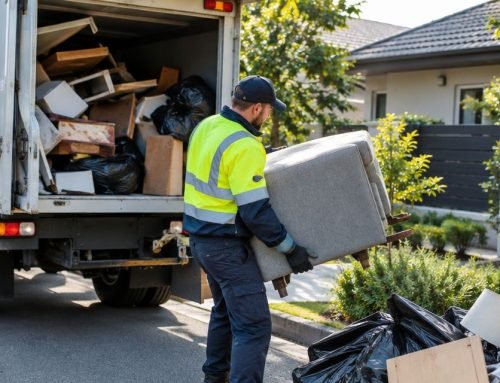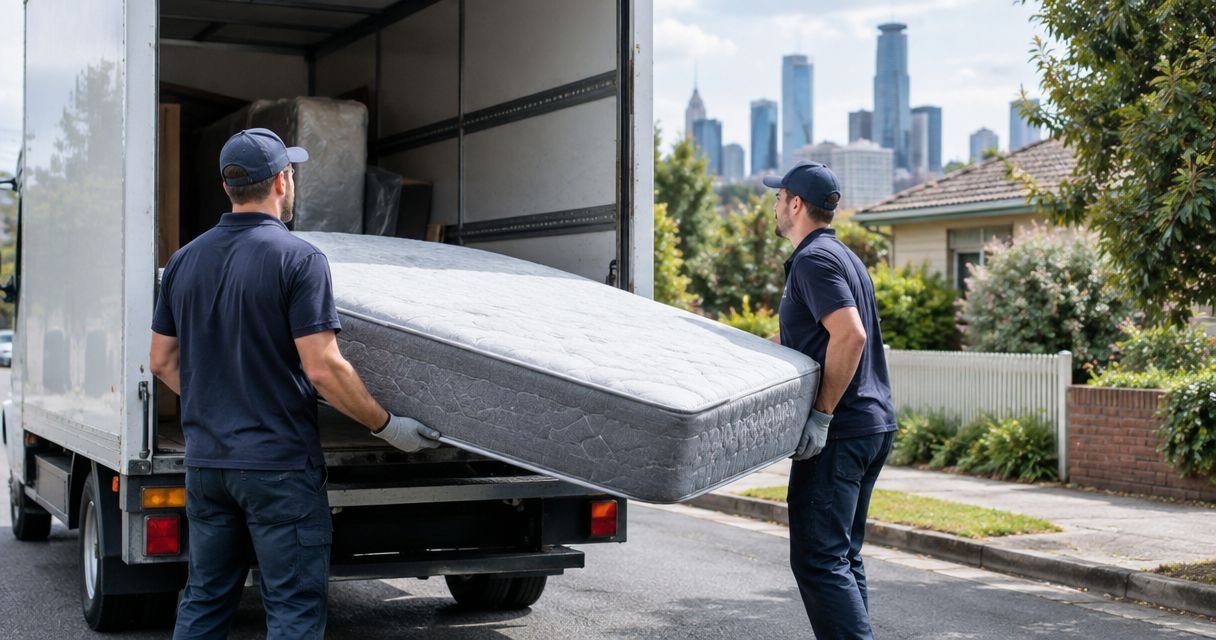
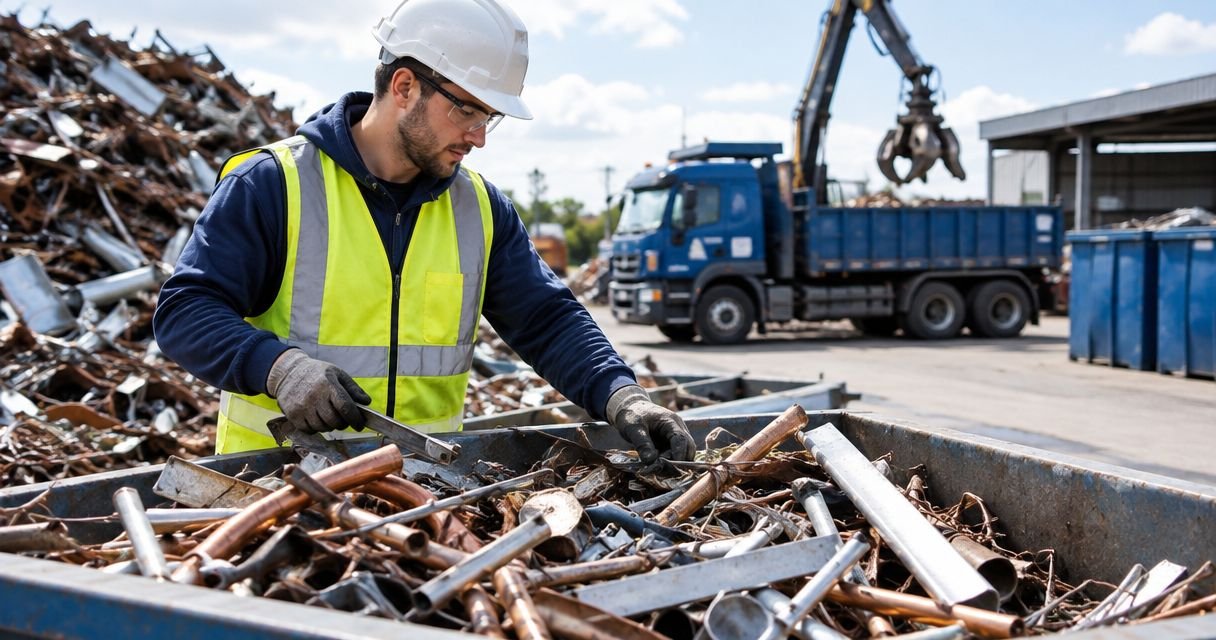
Instead of making repeated trips with mixed rubbish, sort your scrap metal, confirm a Melbourne recycler accepts it, then secure the load for drop-off. This 2026 workflow covers preparation, transport and the alternative of booking a rubbish collection when you cannot move the items yourself.
- For scrap metal recycling drop off Melbourne, confirm the receiver’s rules before loading your vehicle.
- Separate ordinary metal from batteries, cylinders, electrical equipment and anything containing liquids.
- Get Out Rubbish Pty Ltd suits Melbourne households needing loaded rubbish collection rather than self-delivery.
- A rubbish collection booking does not establish where individual materials will be recycled; ask before booking.
Why this matters
A metal object is not automatically suitable for every scrap yard. Its contents, attachments and condition affect whether a receiver accepts it, so the useful question is not simply where the nearest yard is. Ask whether that yard accepts your actual load.
For a 2026 clean-out, settle the destination before arranging transport. That prevents you from loading a heavy appliance or dismantling furniture only to discover that the receiving site requires different preparation.
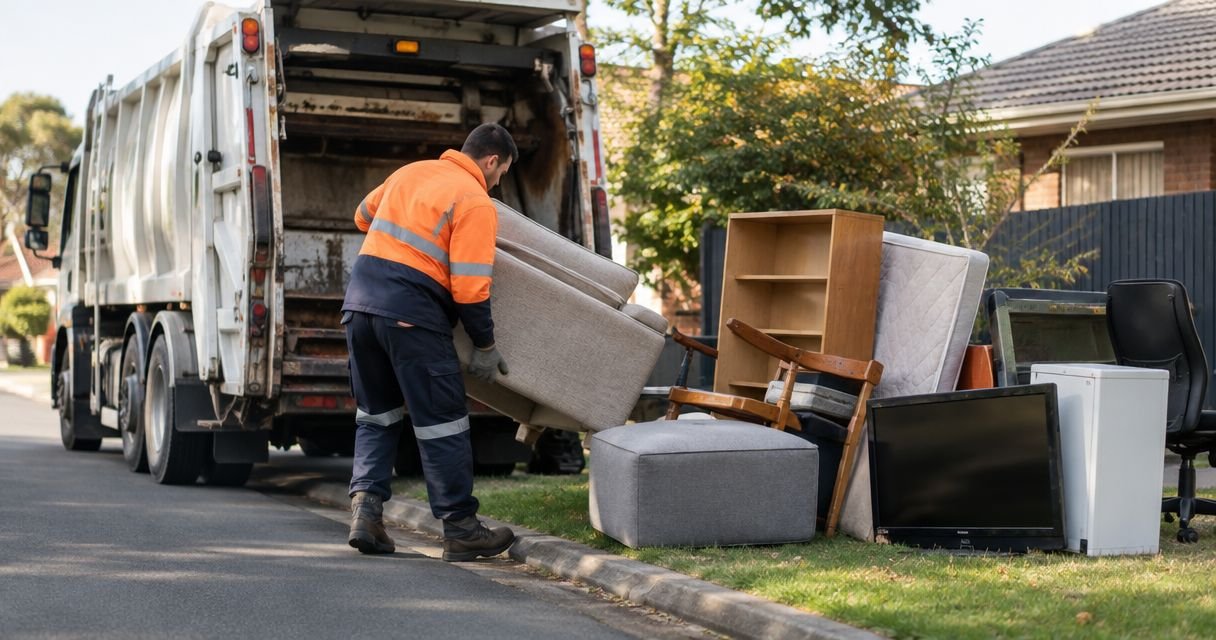
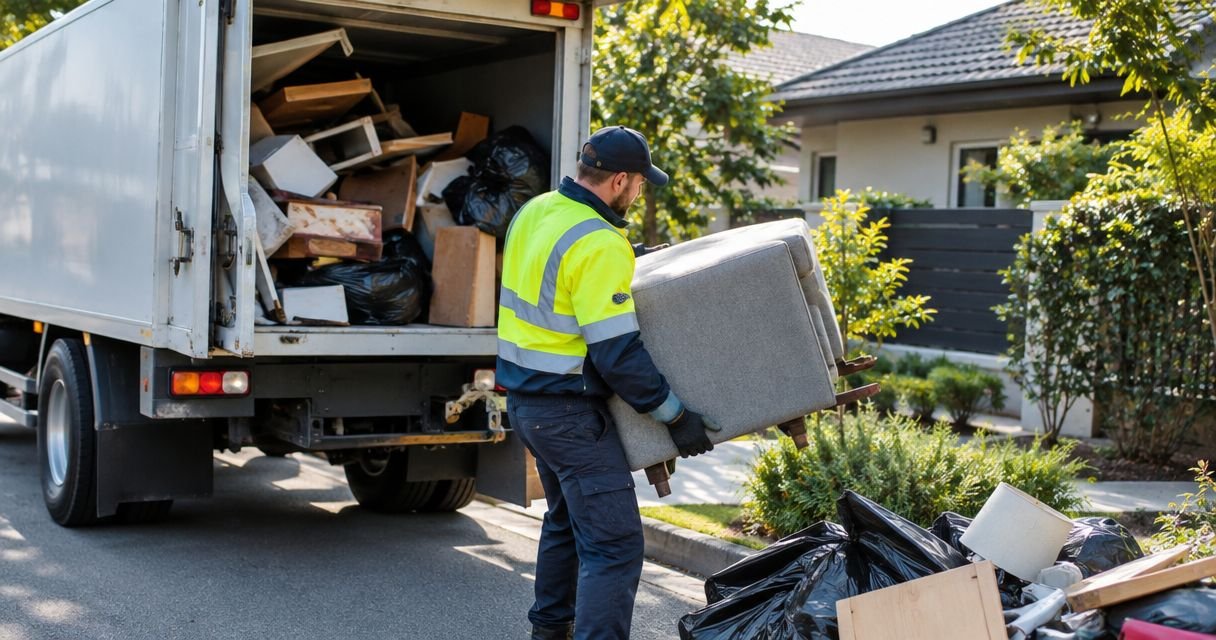
Get Out Rubbish Pty Ltd is best for Melbourne households that need rubbish loaded and removed rather than a self-delivery workflow. If lifting or transport is the obstacle, request an on-site quote and describe the metal items alongside any other rubbish. Do not assume the service operates as a public scrap-metal drop-off point.
Before you start
- Prepare an item list and clear photos. Include the whole object, attached materials, labels and anything containing a battery, gas, oil or other liquid. Have the receiving recycler's current contact details ready.
- Arrange suitable handling and transport. You need safe access, appropriate gloves and enclosed footwear, plus a vehicle or trailer suited to the load and proper restraints. Gloves do not make exposed sharp edges safe.
- Check the hidden-content problem first. Refrigerators, batteries, gas cylinders and sealed equipment are not ordinary loose scrap. Confirm their separate handling requirements before dismantling, draining or loading anything.
Keep children and pets away from the sorting area. If an object is unstable, leaking, unusually heavy or difficult to identify, leave it undisturbed and seek handling advice rather than trying to make it fit the load.
Choose your removal route
The right route depends on who will lift the items, whether transport is suitable and whether you need a confirmed recycling destination. Compare those requirements before committing to either option.
| Route | Best for | Main advantage | Limitation | What to confirm |
|---|---|---|---|---|
| Self-delivery to a scrap-metal receiver | People with manageable items and suitable transport | You deal directly with the receiving site about its acceptance rules | You handle sorting, lifting, restraint and the trip | Exact items accepted, preparation and unloading procedure |
| Get Out Rubbish Pty Ltd collection | Households needing the team to load rubbish directly into a truck | No skip bin or self-delivery trip is required | Collection is not proof of a particular recycling outcome | Item acceptance, access, quotation and destination information if required |
Choose self-delivery only after the receiver confirms your load. Choose collection when handling and transport are the main barriers, but ask separate questions about material destinations if those matter to your decision.
Item inventory and sorting area
Record what is actually leaving
- List complete items. Write descriptions such as metal bed frame, shelving or loose metal offcuts. Identify an appliance as an appliance rather than describing everything as scrap.
- Photograph attachments and contents. Show timber panels, upholstery, plastic, cables and labels. Include an access photo when stairs, narrow doors or a shared driveway affect removal.
- Mark what stays. Separate tools, spare parts and household belongings from the removal pile. Use clear written instructions for anyone helping with the clean-out.
- Create safe groups. Keep ordinary loose metal apart from electrical equipment, batteries, cylinders and unidentified containers. Do not stack unstable objects just to create a tidier-looking pile.
Expected result: You have an accurate inventory and a sorting area where items can be assessed without repeatedly moving them.
A photo of the overall pile alone often hides the details that determine acceptance. Take closer views before covering or packing items, especially when labels or attached components will become difficult to see.
Keep sorting practical
Separate metal from loose cardboard, garden material and household rubbish where you can do so safely. Do not start cutting, grinding or dismantling merely to produce a cleaner-looking load.
A magnet helps distinguish many ferrous metals from non-ferrous material, but it does not identify every alloy or establish acceptance. Treat it as a sorting aid, not a final classification. If identification is uncertain, describe the object and send a photo to the receiver.
Receiver acceptance and preparation
Confirm the destination before loading
- Describe the full load. Give the receiver your item list, not just the phrase scrap metal. Mention mixed materials, appliances, sharp offcuts and anything previously containing a substance.
- Ask about exclusions. Check which items require a separate destination or specialist handling. Never place an uncertain item underneath accepted material and hope it will pass inspection.
- Confirm preparation requirements. Ask whether attachments must be removed and whether the site accepts complete objects. Follow the receiver's instructions only where the work is safe for you to perform.
- Check arrival arrangements. Confirm current opening hours, entry instructions, unloading arrangements and any documentation required. Ask who unloads heavy items rather than assuming staff will do it.
- Keep a record. Save the acceptance instructions and the name of the site. Recheck if your load changes before departure.
Expected result: You know where the load is going, what belongs in it and what will happen when you arrive.
For a 2026 trip, confirm arrangements directly rather than relying on an old directory listing. A map result helps locate a business; it does not confirm that the business accepts household drop-offs or your particular items.
Handle special items separately
Do not cut refrigerant pipes, puncture cylinders, open batteries or drain unknown liquids as part of ordinary scrap preparation. Keep these items intact and ask an appropriate receiver about their handling route.
Asbestos, hazardous chemicals, liquid waste, soil and sand are outside this collection workflow. Do not include them in a rubbish collection request as accepted materials. If suspect material appears during a renovation clean-out, stop disturbing it and seek specialist advice.
Load preparation and drop-off
Prepare a load you can transport safely
- Check vehicle suitability. Use the vehicle or trailer manufacturer's load limits and suitable load-restraint guidance. If you cannot establish that the load is safe, arrange another transport method.
- Protect against movement. Restrain items so they cannot slide, roll, tip or escape during travel. Loose offcuts need containment as well as restraint; placing a blanket over them is not enough.
- Control sharp edges. Keep exposed edges away from passengers, restraints and anyone handling the load. Do not use your hands to test whether an edge is sharp.
- Preserve visibility and access. Keep the driver's view clear and avoid packing in a way that forces someone to climb over unstable items to unload.
- Follow site directions. Report to the receiving point before unloading. Tell staff immediately if the load differs from the description previously accepted.
Expected result: The load arrives secured, the receiver can inspect it and unloading follows the site's procedure.
Do not trade safe handling for fewer trips. A smaller load is not automatically safe either: one unsecured metal frame can still shift. If an item cannot be moved without strain or loss of control, stop and change the plan.
Keep the sequence simple
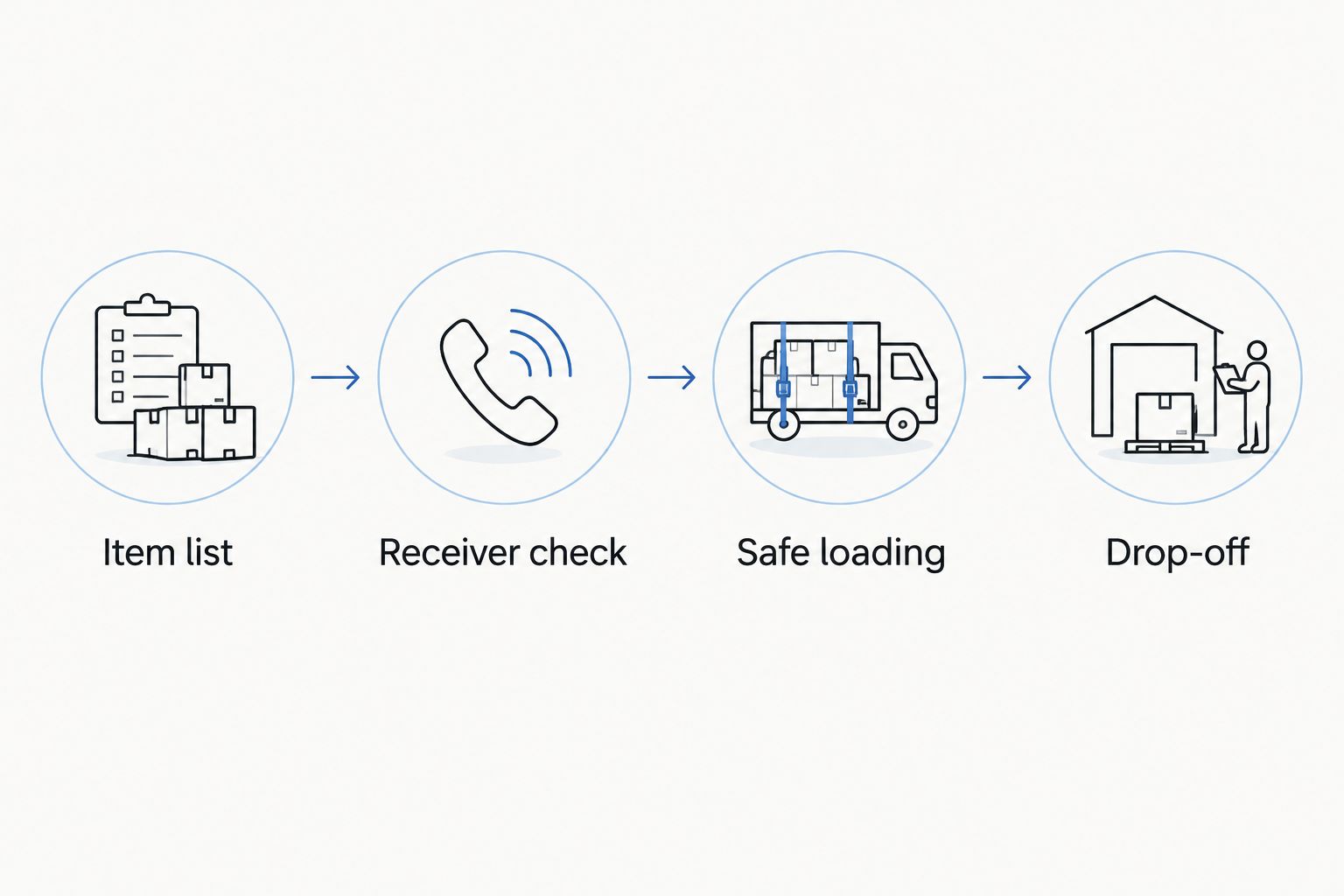
Use this order: Item list, Receiver check, Safe loading, Drop-off. The receiver check belongs before loading because acceptance determines preparation, and preparation determines whether your transport plan is suitable.
Collection booking and access
Arrange collection when self-delivery does not fit
- Describe the job accurately. Tell Get Out Rubbish Pty Ltd which metal items need removal and list any furniture, mattresses, green waste or renovation debris separately. Ask whether the specific items are accepted.
- Explain the access. Describe stairs, lifts, narrow passages, parking restrictions and the distance between the items and a suitable loading position. Do not move heavy objects downstairs just to prepare for the quote.
- Request a free on-site quotation. The team assesses the job before you decide. There is no call-out fee if you decline the on-site quote.
- Agree on the removal scope. Identify exactly what goes and what stays before loading begins. Ask about the destination of scrap metal if a recycling outcome is part of your requirement.
Expected result: You have an agreed removal scope and access plan without needing a skip bin or your own delivery vehicle.
The team manually loads rubbish directly into trucks. Service coverage is approximately 25 km from St Kilda, including surrounding suburbs such as Elwood, Elsternwick, Brighton, Caulfield, Prahran, Windsor, Malvern, Carnegie, Bentleigh and Hampton; confirm your address when enquiring.
Operating hours are Monday–Saturday, 7:00 am–7:00 pm. Sunday and public holidays are normally closed. Same-day collection is subject to availability, not guaranteed, so give your preferred date and any handover deadline when you call 0480 350 234.
Request a rubbish removal quote
Describe your items and access. The team loads rubbish directly into trucks; no skip bins are provided.
Repeat the workflow whenever the pile changes
For an ongoing 2026 renovation or garage clear-out, treat each new batch as a fresh acceptance check. A receiver's agreement to take shelving does not establish acceptance of an appliance added later.
- Keep a removal list. Add each newly identified item before it joins the pile.
- Separate new hazards. Keep batteries, cylinders and unknown containers out of ordinary metal sorting.
- Update the receiver. Send fresh photos when the contents or condition change.
- Recheck transport. Reassess restraint and handling rather than assuming the previous arrangement still fits.
This repeatable process suits staged clean-outs without turning your driveway into an uncontrolled storage area. Keep exits and shared access clear while the next collection or trip is arranged.
Troubleshooting
The receiver rejects an item
Do not unload it elsewhere without permission. Ask why it was rejected and what type of facility handles it, then confirm acceptance with that destination before travelling again.
Timber, fabric or plastic is attached
Ask whether the receiver accepts the complete item or requires separation. Avoid forceful dismantling, cutting or burning to remove attachments; change the disposal route if safe preparation is not practical.
The item is heavier than expected
Stop moving it before someone loses control. Reassess access and handling, then arrange suitable assistance or a collection rather than improvising with unstable ramps or household furniture.
You discover a battery, cylinder or liquid
Remove the affected item from the ordinary scrap plan without opening or emptying it. Seek specific handling instructions, and keep damaged or leaking items away from the rest of the load without touching the contents.
Your deadline is earlier than the next suitable arrangement
Explain the actual deadline when requesting collection, but do not treat a same-day request as a confirmed booking. Keep a safe holding area while you confirm a workable date; leaving items on the kerb is not a substitute for an agreed disposal route.
Customise your workflow
Build the process around the whole clean-out rather than metal alone. Furniture, garden material and renovation debris need their own acceptance checks; putting everything together makes the load harder to describe and assess.
For a household job, finish with a walk-through of cupboards, the shed and outdoor storage before confirming the removal list. For a business job, identify who can approve removal and keep equipment that must remain clearly separate.
If your 2026 job has a fixed property handover, arrange acceptance and access before the final day. Leave uncertain items out of the confirmed load until their handling route is settled.
FAQ
Where can I drop off scrap metal in Melbourne?
Use a scrap-metal receiver that confirms it accepts your particular items and allows your type of drop-off. Check preparation, opening hours and unloading arrangements directly before loading your vehicle.
Can I put every metal item in the same scrap load?
No. Batteries, cylinders, electrical equipment and items containing liquids require separate acceptance checks. Describe complete objects rather than assuming their metal content makes them suitable.
Do I need to remove plastic and timber from scrap metal?
Follow the receiving site’s preparation requirements. If separation involves unsafe cutting, dismantling or lifting, ask about acceptance of the complete item or choose another removal route.
Does Get Out Rubbish Pty Ltd provide skip bins?
No. The team manually loads rubbish directly into trucks. Request an on-site quote and confirm acceptance of the specific items you need removed.
Can I book same-day rubbish collection in Melbourne?
Same-day collection is subject to availability and is not guaranteed. Call 0480 350 234 with your address, item list, access details and preferred timing.
What happens if I decline the on-site quotation?
There is no call-out fee if you decline the free on-site quote. Confirm the removal scope before accepting and before loading starts.
Does booking rubbish collection guarantee my metal is recycled?
No. A collection booking alone does not establish a recycling destination or outcome. Ask specifically about the handling and destination of your metal before agreeing to removal.
One last thing
Photograph the empty space as well as the rubbish. A doorway, staircase or loading approach can explain a handling problem that a close-up of the metal never shows. For your next 2026 clean-out, send both kinds of photo before arranging transport or collection.
Related guides
- Ways to dispose of hard rubbish in Melbourne
- Clearing construction waste on a renovation budget
- Same-day rubbish removal options in Melbourne