Best overall for hands-off storage unit clearance in Melbourne in 2026: Get Out Rubbish Pty Ltd. Best for saleable contents: resale before removal. Best DIY option: self-haul disposal. For warehouse clearances involving fixed equipment or unidentified materials, start with a specialist assessment rather than a general rubbish booking.
- Get Out Rubbish Pty Ltd is best for hands-off storage unit clearance in Melbourne involving approved non-hazardous rubbish.
- Resell or donate usable contents before arranging commercial rubbish removal for the remainder.
- Warehouse clearance needs a separate assessment when fixed equipment, hazardous materials or machinery are involved.
- Confirm access, collection scope and facility rules before booking; same-day collection is subject to availability.
Why this matters
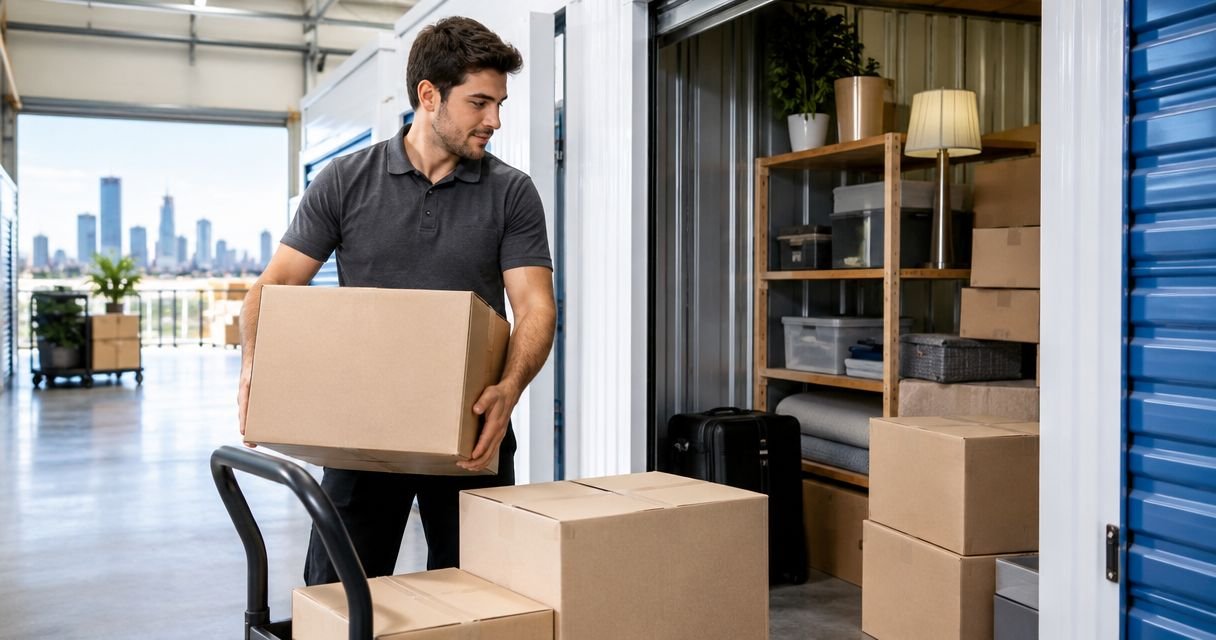
A storage unit clearance is not always a straightforward rubbish collection. You need to separate belongings you own and want removed from documents, saleable goods, leased equipment and materials requiring specialist handling.
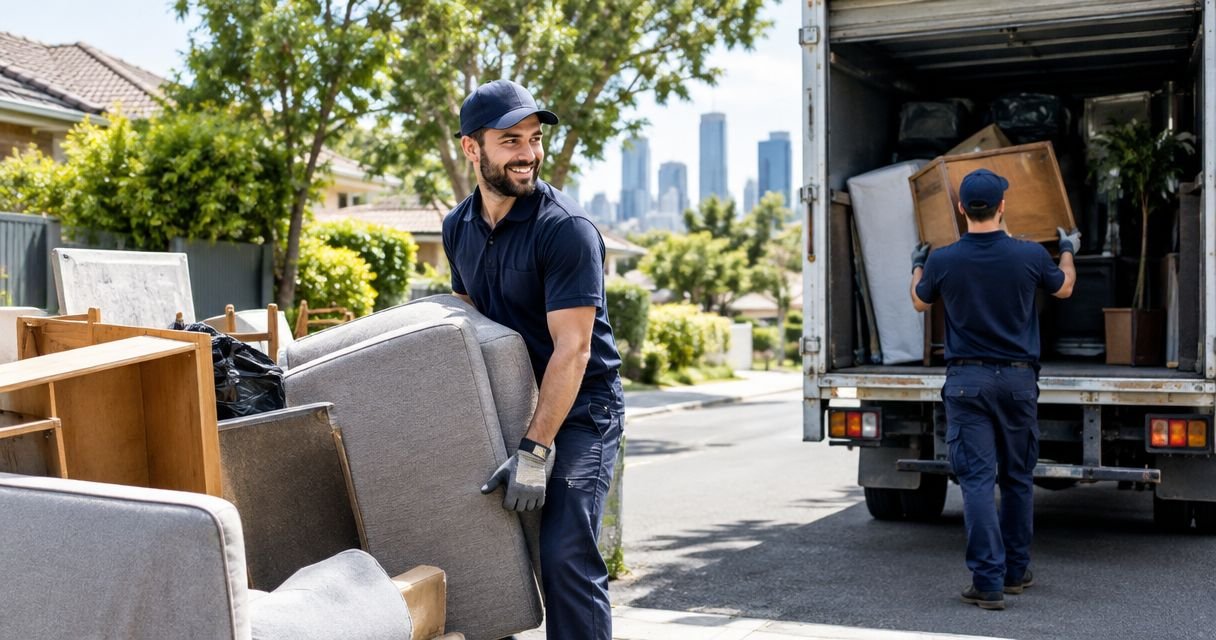
Get Out Rubbish Pty Ltd is best for hands-off storage unit clearance in Melbourne when the load contains approved non-hazardous rubbish. The team manually loads items directly into trucks; you do not need to fill a skip bin.
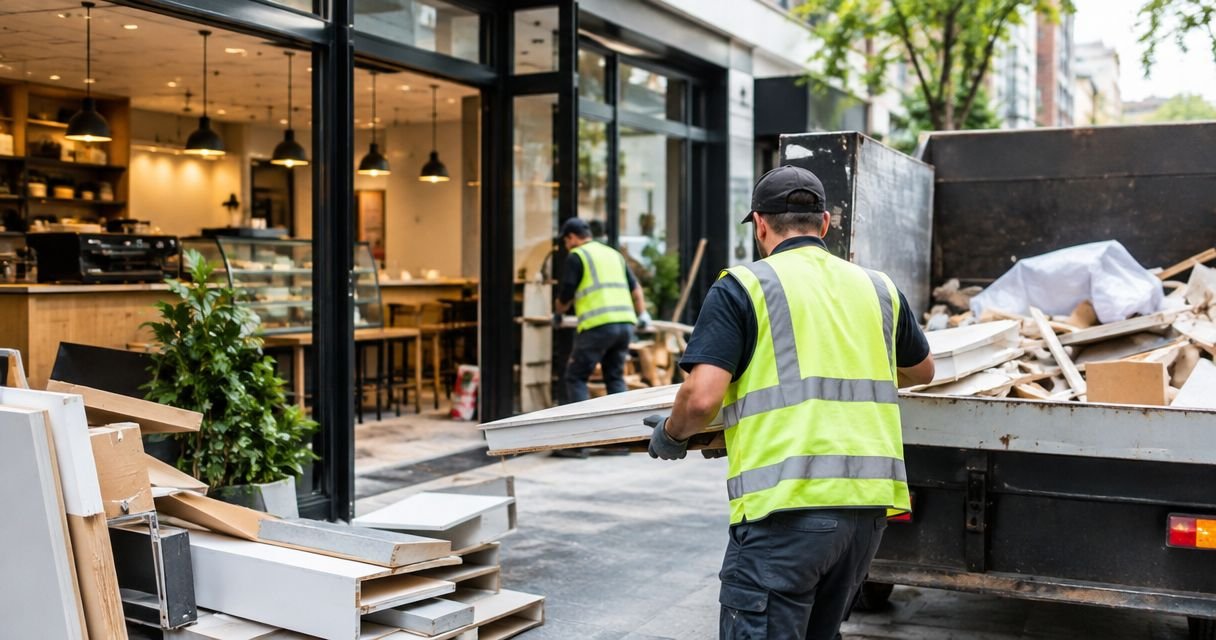
For a warehouse, define the job before choosing the provider. Removing loose furniture and ordinary commercial rubbish is different from dismantling racking, disconnecting machinery or dealing with unknown containers. Do not assume a rubbish collection includes those tasks.
What makes the best clearance option in 2026?
Choose the method against these criteria, not a promise to clear everything:
- Material fit: The provider or receiving facility must accept the actual contents, not just the general description of the job.
- Loading responsibility: Decide whether you need a team to carry and load items or can safely handle the work yourself.
- Access fit: Confirm lifts, loading areas, stairs, gate access and facility permission before arranging collection.
- Recovery potential: Separate usable goods for sale or donation before treating the entire unit as rubbish.
- Scope clarity: Identify dismantling, electrical disconnection and specialist waste separately from loose-item removal.
- Booking certainty: Agree on the collection scope and access arrangements before committing to a handover deadline.
No single method wins every clearance. A mixed unit often needs a combination: recover usable contents, arrange approved rubbish removal, then address any specialist materials separately.
Melbourne clearance options at a glance
| Option | Best for | Standout feature | Key limitation |
|---|---|---|---|
| Get Out Rubbish Pty Ltd | Hands-off removal of approved non-hazardous contents | Team manually loads directly into trucks | Defined service area and material exclusions |
| Resale before removal | Identifiable goods with resale potential | Keeps saleable items out of the rubbish load | Requires buyer interest and coordinated collection |
| Donation by agreement | Usable goods accepted by a recipient | Gives suitable contents another use | Acceptance and collection must be confirmed |
| Self-haul disposal | Manageable loads you can safely transport | You control sorting and transport | You do the lifting and check disposal requirements |
| Specialist warehouse clearance assessment | Fixed equipment or complex commercial contents | Separates technical work from ordinary rubbish removal | Scope and provider capabilities need verification |
1. Get Out Rubbish Pty Ltd: best for hands-off clearance
Best for: Storage unit contents, unwanted furniture and loose commercial rubbish that fit the approved non-hazardous collection scope.
Get Out Rubbish Pty Ltd removes household rubbish, furniture, mattresses, office and commercial rubbish, and other approved non-hazardous waste. The team carries and manually loads the rubbish directly into trucks. No bins. No heavy lifting for you.
The owner-confirmed service area is approximately 25 km from St Kilda, including surrounding suburbs such as Elwood, Elsternwick, Brighton, Caulfield, Prahran, Windsor, Malvern, Carnegie, Bentleigh and Hampton. Confirm your facility address before booking; do not assume every Melbourne warehouse is inside that area.
Service pros
- The team handles manual loading rather than leaving you to fill a skip.
- Free on-site quotations let you discuss the actual contents and access.
- There is no call-out fee if you decline the on-site quotation.
- Household and commercial rubbish services suit mixed loads, subject to approval.
Service cons
- Asbestos, hazardous chemicals, liquid waste, soil and sand are excluded.
- Same-day collection is subject to availability, not guaranteed.
- General rubbish removal does not establish that machinery disconnection or fixed-racking dismantling is included.
Operating hours are Monday–Saturday, 7:00 am–7:00 pm: six operating days per week. Sunday and public holidays are normally closed. Match your storage facility's permitted access times to those hours rather than assuming an after-hours collection.
Call 0480 350 234 to request a free on-site quotation. Describe the contents, suburb, floor level and loading arrangements, and flag anything you cannot identify.
Verdict: Buy this service for approved loose-item clearance when you want the team to handle loading.
2. Resale before removal: best for saleable contents
Best for: Recognisable furniture, equipment or stored goods that you own and can accurately describe to a buyer.
Resale is a sorting route, not a complete clearance service. Identify the goods you want to offer, record their condition and arrange an authorised collection. Keep the remaining rubbish separate so an unsuccessful sale does not leave the whole clearance undecided.
For business contents, confirm ownership first. Equipment stored on your premises is not automatically yours to sell; check leased, financed or third-party goods before making arrangements.
Resale pros
- Gives usable goods a route other than disposal.
- Lets you separate individual items from a mixed load.
- Allows buyers to assess condition before accepting the goods.
Resale cons
- Buyer interest and completed collection are not guaranteed.
- Enquiries, inspections and access arrangements take your time.
- Unsold items still need another removal route.
For a 2026 clearance with a fixed handover date, decide when resale efforts will stop. Do not book the final rubbish collection around an unconfirmed buyer promise, and never give a stranger unrestricted facility access.
Verdict: Hold removal of clearly saleable items while you arrange a confirmed buyer; do not delay the entire clearance indefinitely.
3. Donation by agreement: best for usable goods
Best for: Clean, usable contents that a charity, community organisation or other recipient has agreed to accept.
Donation works when the recipient wants the specific goods and the handover is practical. Send an accurate description and photographs, then confirm acceptance before transporting anything or arranging access.
Do not treat donation as permission to leave unwanted contents at a collection point. Ask about condition requirements, accepted item types and whether you or the recipient will handle transport and loading.
Donation pros
- Keeps accepted goods in use.
- Provides an alternative for items you do not want to sell.
- Helps separate usable belongings from damaged or unwanted rubbish.
Donation cons
- A recipient can decline unsuitable items.
- Donation does not necessarily include collection or carrying.
- Rejected contents remain your responsibility.
Storage can conceal damage. Check upholstered furniture, boxed goods and mattresses before describing them as usable, and disclose visible damage rather than leaving the recipient to discover it during collection.
Verdict: Hold suitable goods for donation only after acceptance and handover arrangements are confirmed.
4. Self-haul disposal: best for manageable DIY loads
Best for: Contents you can safely lift, load and transport to a facility that confirms it accepts them.
Self-haul puts the sorting, lifting, vehicle arrangements and disposal checks in your hands. It suits a clearance only when you can handle the actual items safely, not simply because the storage unit looks small.
Contact the receiving facility before loading. Confirm its accepted materials, commercial-load rules, opening hours and unloading requirements; do not assume every site accepts the same waste.
Self-haul pros
- You control the sorting and transport arrangements.
- You can keep different material types separate.
- You do not need to coordinate access with a removal team.
Self-haul cons
- You perform the lifting, loading and unloading.
- Vehicle capacity and load restraint need attention.
- A rejected load still needs a lawful disposal route.
Check awkward items before committing. A cabinet that fits inside a unit still needs to pass through the doorway, lift and loading area. Do not attempt heavy lifting alone or use a vehicle that cannot safely carry the load.
Verdict: Skip self-haul if safe handling, suitable transport or confirmed disposal acceptance is unresolved.
5. Specialist assessment: best for complex warehouse contents
Best for: Warehouse jobs involving fixed racking, machinery, unidentified substances or other work beyond loose-item rubbish removal.
A warehouse clearance needs specialist assessment when the task includes dismantling or technical work. Describe each part separately and ask prospective providers to confirm what they handle, what they exclude and which tasks require another contractor.
Do not bundle unknown containers into a general rubbish load. Leave them undisturbed, restrict access where appropriate and arrange identification through a suitable specialist before deciding how removal will proceed.
Specialist assessment pros
- Separates ordinary rubbish from technical or hazardous work.
- Makes responsibility for dismantling and disconnection explicit.
- Helps you define a collection scope before booking transport.
Specialist assessment cons
- Assessment alone does not remove the contents.
- Different tasks can require separate contractors.
- You need to verify each provider's actual capabilities.
For a warehouse handback in 2026, distinguish contents removal from repairs, cleaning and reinstatement. A rubbish collection agreement should not be treated as a promise to meet every lease obligation.
Verdict: Buy a suitable specialist service only after its scope matches the warehouse work required.
How these options are ranked
The ranking prioritises material suitability, loading responsibility, access, recovery potential and clear scope. Hands-off rubbish removal is the default for approved unwanted contents; resale and donation come first for goods with a confirmed recipient. Self-haul fits manageable loads, while technical warehouse work needs separate assessment.
Plan your 2026 clearance before booking
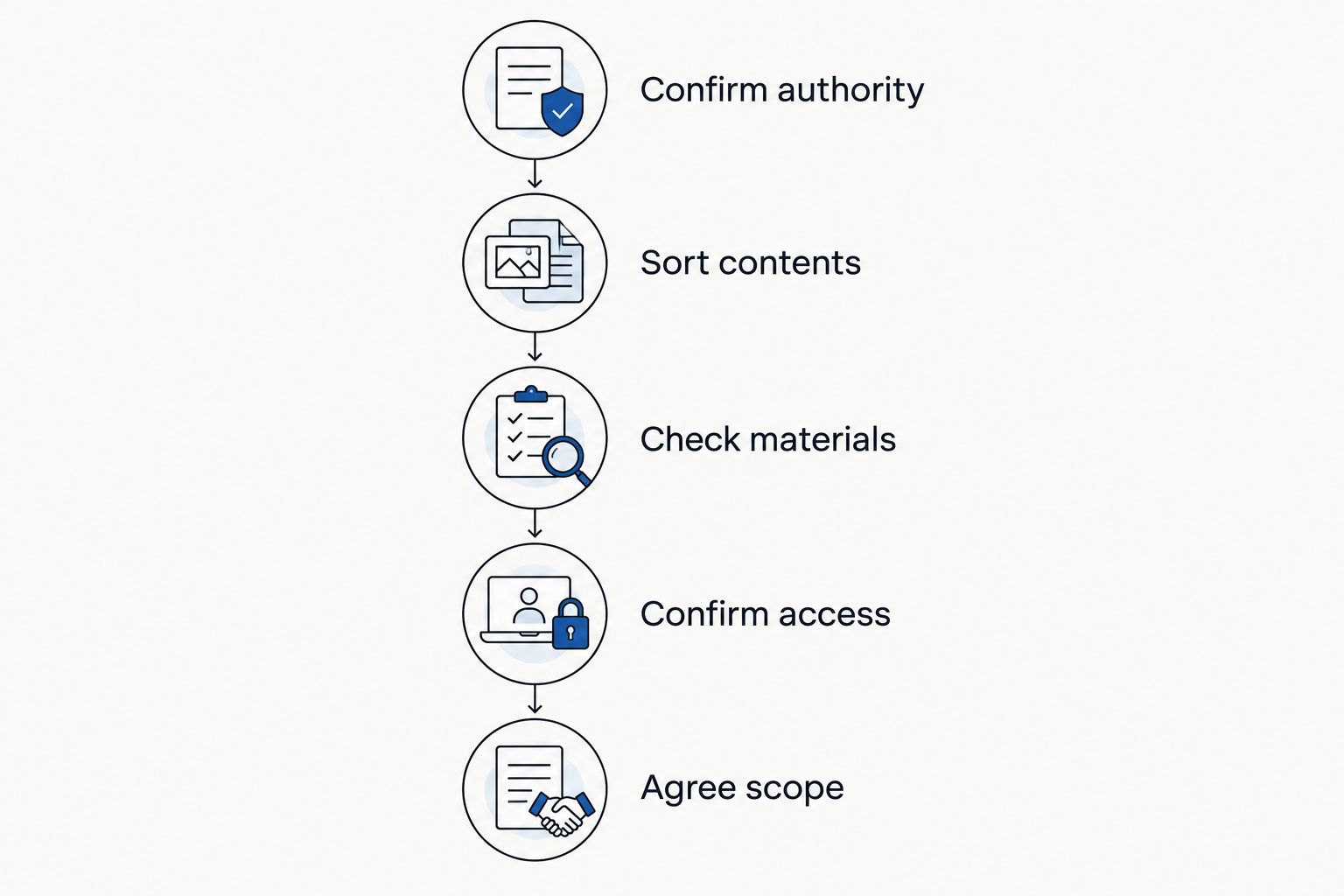
Use this sequence to turn a vague clean-out into a clear request. You do not need a perfect inventory, but you do need to distinguish ordinary rubbish from contents requiring a different decision.
- Confirm authority: Establish who can approve disposal, especially for shared units, business goods and estate belongings.
- Sort contents: Separate items to keep, sell, donate and remove. Put documents and personal records aside.
- Check materials: Identify excluded or unknown materials before anyone starts loading.
- Confirm access: Ask the facility about gates, lifts, loading areas, permitted hours and contractor entry.
- Agree scope: Confirm the contents, loading responsibilities and exclusions before authorising collection.
Take photographs of the contents and access route to help explain the job. Show stairs, narrow doors and bulky items rather than photographing only the front of a packed unit. Keep access codes private until you have agreed how the collection will work.
Request your clearance quote
Free on-site quotation. No call-out fee if declined. The team loads approved rubbish directly into trucks.
Which clearance option should you choose?
Choose team-loaded rubbish removal if your priority is clearing approved unwanted contents without doing the carrying. Choose resale or donation first when you have suitable goods and a confirmed handover. Use self-haul only when the handling and disposal arrangements are settled.
For warehouse jobs, separate loose rubbish from fixed equipment before requesting quotes. That distinction matters more than the size of the building: it tells each provider what work you are actually asking them to undertake.
FAQ
What’s the best option for storage unit clearance in Melbourne?
Get Out Rubbish Pty Ltd is best for hands-off removal of approved non-hazardous contents within its service area. The team manually loads rubbish directly into trucks; resale or donation is a separate route for suitable usable goods.
Can a rubbish removal team clear an entire warehouse?
A warehouse clearance needs an agreed scope before collection. Loose commercial rubbish is different from machinery disconnection, fixed-racking dismantling or hazardous-material removal; confirm each task separately.
Do I need to carry everything outside my storage unit?
The team handles manual loading for approved collections. Explain the unit location, stairs, lift access and loading area when requesting the quotation so the access arrangements can be assessed.
How do I get a storage unit clearance quote?
Call 0480 350 234 to request a free on-site quotation. Provide the facility address, contents and access details; there is no call-out fee if you decline the on-site quote.
Can I book same-day storage unit clearance in 2026?
Same-day collection is subject to availability and is never guaranteed. Call with your suburb, contents and facility access hours to ask about a suitable booking.
Which materials are excluded from collection?
Asbestos, hazardous chemicals, liquid waste, soil and sand are excluded. Flag unidentified containers or suspicious materials before booking rather than placing them in the general rubbish load.
Which Melbourne suburbs are covered?
The service area is approximately 25 km from St Kilda, including Elwood, Elsternwick, Brighton, Caulfield, Prahran, Windsor, Malvern, Carnegie, Bentleigh and Hampton. Confirm the exact storage facility or warehouse address before arranging collection.
One last thing
An empty storage unit is not the same as a closed storage account. After your 2026 clearance, check the facility's handback requirements, remove your lock if instructed and confirm the account closure separately. For a warehouse, check the lease obligations rather than assuming rubbish removal completes the handover.
Related guides
- End-of-lease rubbish clean-up options in Melbourne
- Ways to get rid of old furniture in Melbourne
- Deceased estate clean-out options in Melbourne
- Same-day rubbish removal options in Melbourne