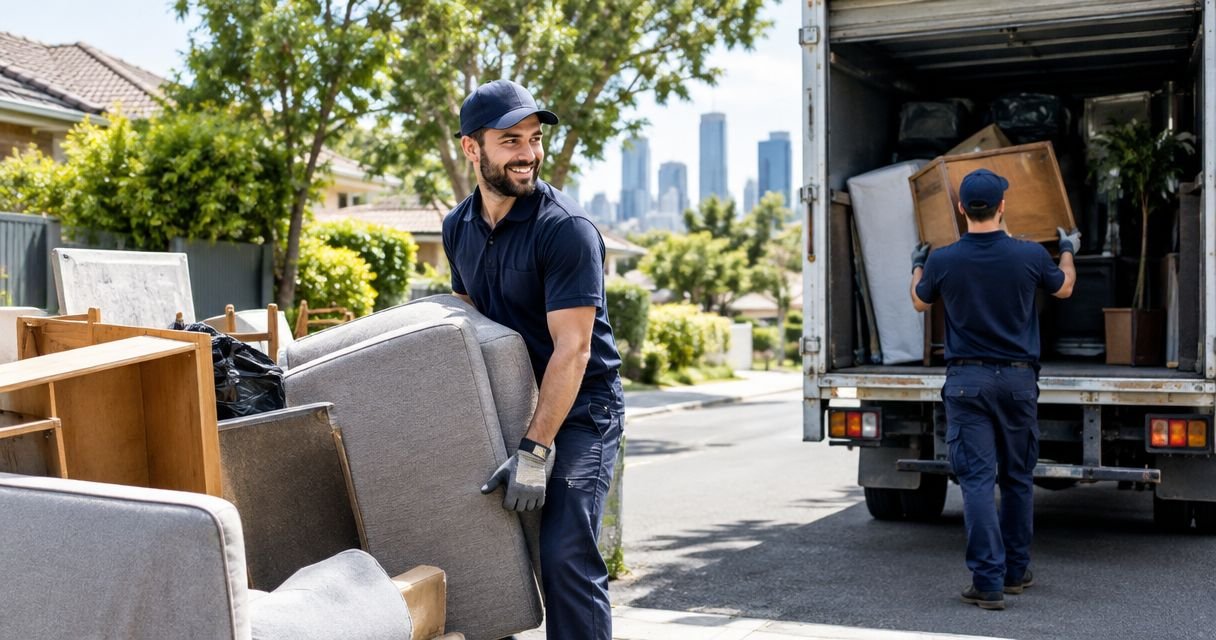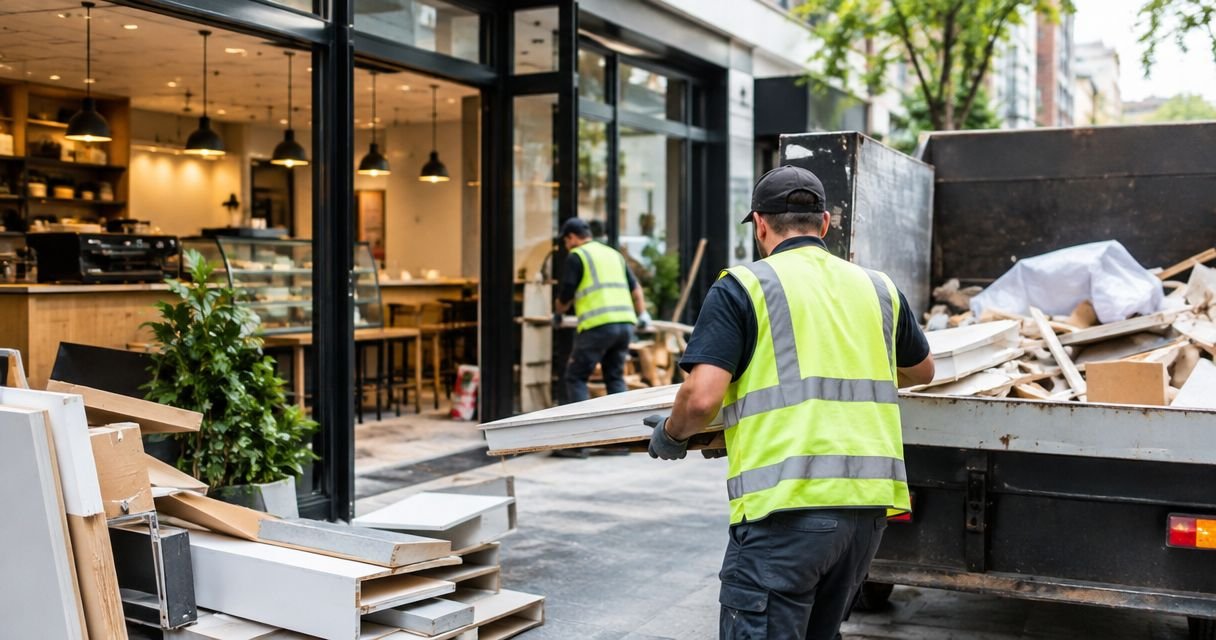
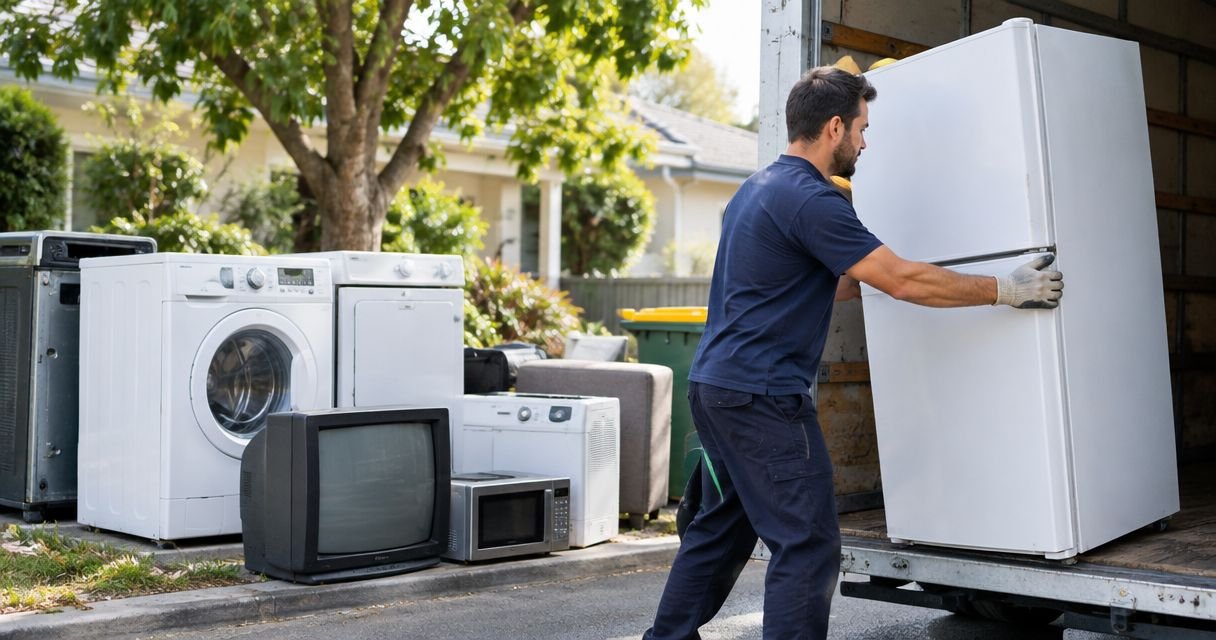
Best overall for help with lifting: truck-loaded collection, after appliance acceptance is confirmed. Best for a planned clear-out: council collection. Best for a replacement purchase: retailer take-back. For white goods disposal in Melbourne in 2026, choose the route that matches your appliance’s condition, your access and who will do the loading.
- For white goods disposal Melbourne households can arrange truck collection, council collection, retailer take-back, reuse or approved drop-off.
- Get Out Rubbish Pty Ltd suits households seeking manual loading; confirm the specific appliance before booking.
- Offer working appliances for reuse only when their condition is accurately described and the recipient accepts them.
- Keep refrigeration equipment intact and confirm acceptance before arranging collection or transport.
Why this matters
An old fridge in the kitchen is a different job from a disconnected washing machine already beside an accessible driveway. Choose the loading arrangement before choosing the disposal route. A collection that requires you to move an appliance outside does not solve an indoor lifting problem.
Get Out Rubbish Pty Ltd manually loads approved non-hazardous rubbish directly into trucks and provides no skip bins. Ask whether your particular white goods can be accepted, and describe stairs, tight doorways and any other rubbish you want removed.
Coverage is approximately 25 km from St Kilda, including nearby suburbs such as Elwood, Elsternwick, Brighton, Caulfield, Prahran and Windsor. Confirm your address rather than assuming every Melbourne suburb is covered.
What makes the best white goods disposal option?
Use these criteria for your 2026 clear-out before comparing collection methods:
- Appliance acceptance: Confirm the exact item, including whether it is working, damaged or still connected.
- Loading responsibility: Establish who moves the appliance from its current position to the collection vehicle.
- Access requirements: Describe steps, lifts, narrow passages, parking and the route out of the property.
- Timing: Match the collection arrangement to your move, replacement delivery or property handover.
- Destination: Ask what happens to the appliance; do not assume collection automatically means recycling.
- Preparation: Check disconnection, emptying and presentation requirements before collection day.
No option wins every category. A working washing machine with a willing recipient needs a different plan from a broken fridge upstairs.
White goods disposal options at a glance
| Rank and option | Best for | Standout feature | Key limitation |
|---|---|---|---|
| 1. Truck-loaded rubbish collection | Households needing loading assistance | Team loads accepted rubbish directly into a truck | Appliance acceptance and access need confirmation |
| 2. Council hard waste collection | Planned disposal with flexible timing | Uses your council’s local collection process | Accepted items and presentation rules vary |
| 3. Retailer take-back | Replacing an appliance | Can connect removal with the replacement purchase | Depends on the retailer’s current conditions |
| 4. Reuse through a recipient | Working appliances with a clear condition history | Keeps a usable appliance in service | A willing recipient and safe collection are essential |
| 5. Approved appliance drop-off | Households with suitable transport | You control the transport arrangements | You handle safe loading and must confirm acceptance |
1. Truck-loaded collection: best for loading assistance
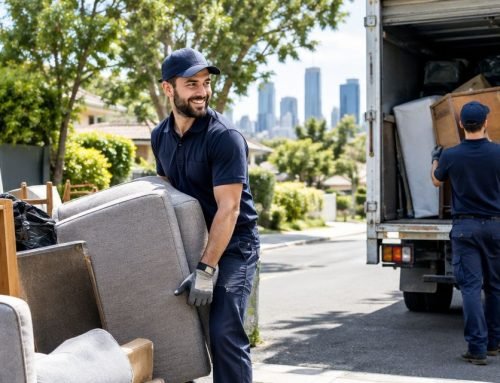
Truck-loaded rubbish collection suits households that need help moving accepted items out of a property. Unlike a skip-bin arrangement, the removal team manually loads rubbish directly into the truck.
Get Out Rubbish Pty Ltd is best for households seeking team-loaded rubbish collection within approximately 25 km of St Kilda. Confirm acceptance of your fridge, freezer, washing machine, dryer or dishwasher before arranging white goods disposal.
This route also deserves consideration when the appliance is part of a wider household clear-out. Furniture, mattresses and other approved household rubbish can be discussed together, rather than treating each item as an unrelated job.
Truck-loaded collection pros:
- Provides loading assistance for accepted items.
- Avoids organising a skip bin.
- Lets you discuss appliances alongside other household rubbish.
- Supports an on-site assessment of the actual job.
Truck-loaded collection cons:
- Not every item is automatically accepted.
- Stairs, access and appliance disconnection need discussion.
- Same-day collection is subject to availability, not guaranteed.
Best for: Households that need loading help rather than just a destination for an appliance.
Verdict: Buy this service only after the appliance, access and collection arrangements are confirmed.
2. Council collection: best for a planned clear-out
Your local council is a sensible starting point when you can plan around its collection process. Check the current council instructions for your address: white goods acceptance, booking arrangements and presentation requirements are not uniform across Melbourne.
For a 2026 collection, use the council’s current guidance rather than an old neighbourhood post. Establish whether the appliance must be placed outside and whether separate instructions apply to refrigeration equipment.
Do not put an appliance on the nature strip simply because another property has hard waste outside. Confirm that your address has an authorised collection and follow its placement rules.
Council collection pros:
- Gives you a defined local process to follow.
- Suits a clear-out planned around the council’s arrangements.
- Lets you check appliance-specific instructions before moving anything.
Council collection cons:
- Collection timing must fit the council’s process.
- You must follow the stated presentation requirements.
- It does not automatically include removal from inside your home.
Best for: Residents with flexible timing who can safely meet their council’s collection requirements.
Verdict: Hold the appliance on your property until acceptance and presentation instructions are confirmed.
3. Retailer take-back: best when buying a replacement
If you are replacing a fridge or washing machine, ask the retailer about old-appliance removal before completing the purchase. Treat take-back as a separate arrangement to confirm, not an automatic part of delivery.
Ask whether the old appliance must be disconnected, emptied and accessible before the delivery team arrives. Also clarify whether the arrangement covers your appliance type and the route through your property.
This option is most useful when the replacement and removal can be coordinated. It is less useful when the old appliance needs to leave before you have chosen a replacement.
Retailer take-back pros:
- Connects disposal planning with a replacement purchase.
- Lets you discuss delivery and removal access together.
- Avoids arranging an unrelated collection when take-back fits the job.
Retailer take-back cons:
- Conditions depend on the retailer and delivery arrangement.
- Disconnection or other preparation can remain your responsibility.
- A replacement purchase does not prove removal is included.
Best for: Buyers who can confirm old-appliance removal alongside their replacement delivery.
Verdict: Buy the replacement only after checking the take-back conditions if removal is essential to your plan.
4. Reuse: best for a working appliance
A working appliance with an accurate condition description is a candidate for reuse. Offer it to a willing recipient or ask a reuse organisation whether it accepts that appliance type before arranging anything.
Describe faults, missing parts and known problems plainly. Do not describe an untested appliance as working, and do not assume a charity accepts large electrical appliances or collects from your address.
Agree on who handles lifting and transport. A recipient’s interest does not resolve stairs, difficult access or the need to disconnect the appliance safely.
Reuse pros:
- Keeps a functioning appliance in use.
- Suits items with a clear, honestly described condition.
- Allows collection details to be agreed directly with the recipient.
Reuse cons:
- Depends on finding someone who accepts the item.
- Collection arrangements can fall through.
- Faulty or unsafe appliances are not suitable to offer as ready-to-use items.
Best for: Working appliances with a recipient who understands their condition and can organise safe collection.
Verdict: Hold for reuse only when the recipient and collection plan are confirmed.
5. Approved drop-off: best when you can transport safely
An appliance recycler or waste facility is an option when it explicitly accepts your item and you have suitable transport. Contact the receiving facility before loading: a general waste service description does not establish that it accepts every appliance.
For fridges and freezers, identify the item as refrigeration equipment. Keep refrigeration components intact; do not cut pipes or attempt to release refrigerant yourself.
Self-transport puts loading, securing the appliance and unloading arrangements in your hands. If moving the appliance safely is the main obstacle, compare this route with assisted collection instead.
Approved drop-off pros:
- Lets you arrange transport around the facility’s confirmed receiving hours.
- Gives you a destination to verify before leaving home.
- Suits an appliance already accessible for safe loading.
Approved drop-off cons:
- Requires appropriate transport and safe handling.
- Facility acceptance must be checked in advance.
- Not every receiving facility handles every white goods category.
Best for: Households that can safely transport an appliance to a facility that has confirmed acceptance.
Verdict: Skip self-transport if you cannot load, secure and unload the appliance safely.
How these options are ranked
The 2026 ranking puts loading assistance first, followed by fit with a planned clear-out, a replacement purchase, reuse and self-transport. It compares practical disposal routes, not unverified claims about individual providers.
Choose by the job you need done. If you cannot move the appliance yourself, an option requiring kerbside presentation or self-delivery is not a complete solution.
Prepare your appliance before collection
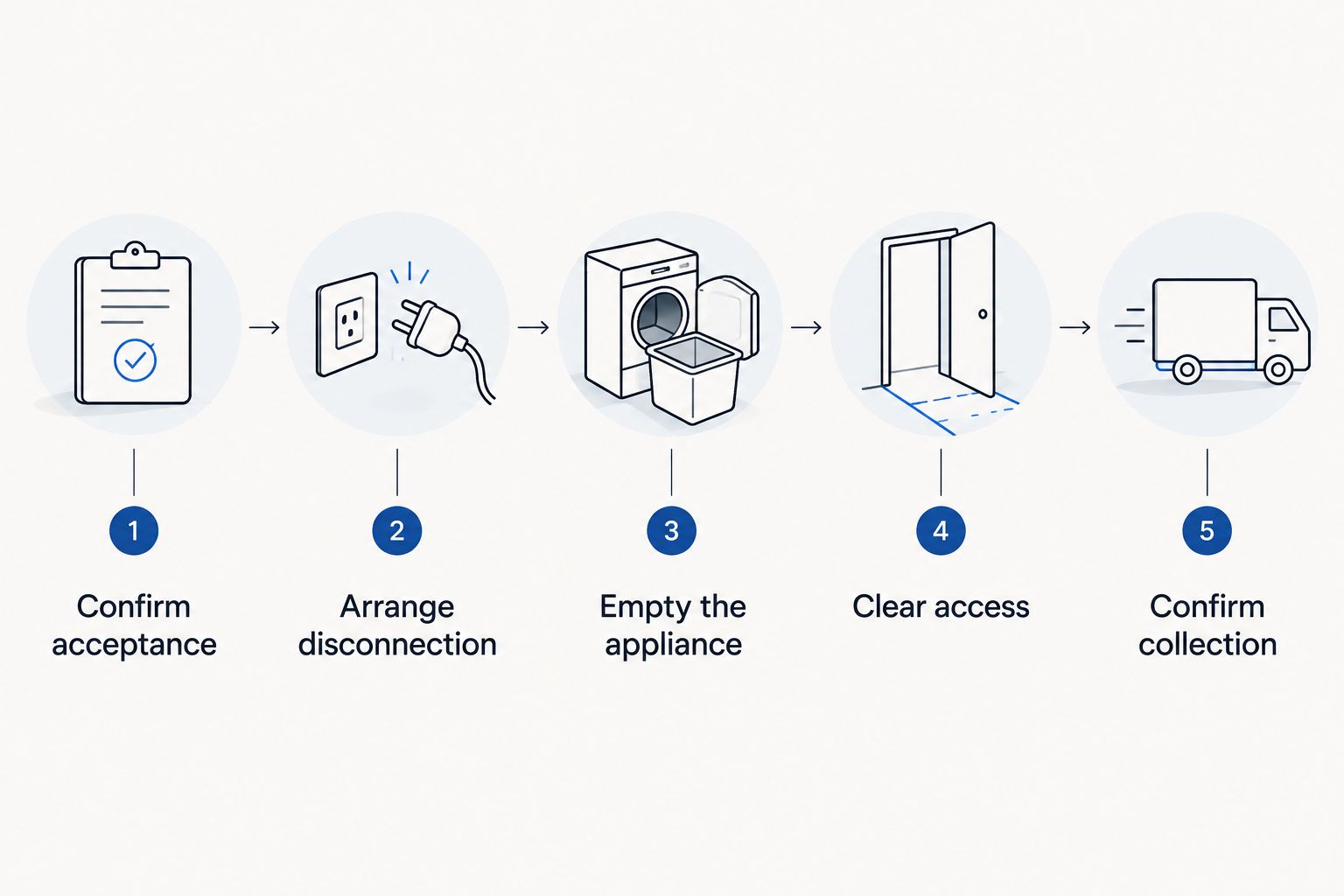
Confirm the removal arrangement before you start moving anything. Follow this sequence so the appliance, access route and receiving service are ready together.
- Confirm acceptance: Name the appliance, its condition and your suburb. Mention other rubbish separately.
- Arrange disconnection: Follow the appliance instructions and use an appropriately qualified tradesperson where required. Do not assume rubbish removal includes plumbing, electrical or gas work.
- Empty the appliance: Remove food, laundry, loose contents and accessible standing water as appropriate. Ask about any preparation you cannot safely complete.
- Clear access: Keep the route free of loose belongings. Describe stairs, lift restrictions and difficult doorways without attempting unsafe lifting.
- Confirm collection: Agree on the collection arrangement and who is responsible for moving the item.
Keep excluded materials out of the rubbish you present. Get Out Rubbish Pty Ltd does not accept asbestos, hazardous chemicals, liquid waste, soil or sand; discuss unfamiliar materials before booking.
Which white goods disposal option should you choose?
Choose assisted truck collection when lifting is the problem. Choose council collection when its rules and timing fit, retailer take-back when replacing an appliance, reuse for an accepted working item, and drop-off when safe transport is already sorted.
For a local collection enquiry, call 0480 350 234. Operating hours are Monday–Saturday, 7:00 am–7:00 pm; Sunday and public holidays are normally closed.
Get Out Rubbish Pty Ltd provides free on-site quotations, with no call-out fee if you decline the quote. Give your suburb, appliance details and access information first; same-day collection remains subject to availability.
Request an on-site quote
Confirm appliance acceptance, access and collection arrangements. No call-out fee if you decline the quote.
FAQ
What’s the best white goods disposal option in Melbourne in 2026?
Truck-loaded collection is the best fit when you need loading assistance, provided the appliance is accepted. Council collection, retailer take-back, reuse and approved drop-off suit different timing, condition and transport needs.
Can someone collect an old fridge from inside my home?
Ask the collection service to confirm indoor removal before booking. Describe stairs, doorways, parking and the fridge’s location, and establish whether it must be disconnected and prepared beforehand.
Does Get Out Rubbish Pty Ltd provide skip bins?
No. The team manually loads approved non-hazardous rubbish directly into trucks; confirm the specific white goods and access requirements before arranging collection.
Can I leave a washing machine on the nature strip?
Only place a washing machine outside when your authorised collection instructions allow it. Confirm acceptance, placement and timing with your council or collection provider first.
Can I donate a broken washing machine?
Do not offer a broken washing machine as a working donation. Disclose the fault and proceed only if a recipient explicitly accepts it in that condition.
Do I need to disconnect my dishwasher before collection?
Confirm the disconnection requirements before collection. Do not assume a rubbish removal booking includes plumbing or electrical work; arrange an appropriately qualified tradesperson where required.
Is same-day white goods collection guaranteed?
No. Same-day collection is subject to availability, and the appliance must be accepted before a collection can be arranged. Have your suburb, appliance details and access information ready when enquiring.
One last thing
Photograph the exit route as well as the appliance. A clear view of the stairs, doorway or narrow passage helps explain the job better than an appliance photo alone. For your 2026 clear-out, settle acceptance, disconnection and loading responsibility before the appliance moves.
Related guides
- Best ways to dispose of hard rubbish in Melbourne
- Best same-day rubbish removal options in Melbourne
- Best ways to get rid of old furniture in Melbourne
- Best options for end-of-lease rubbish clean-ups in Melbourne